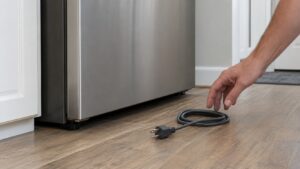
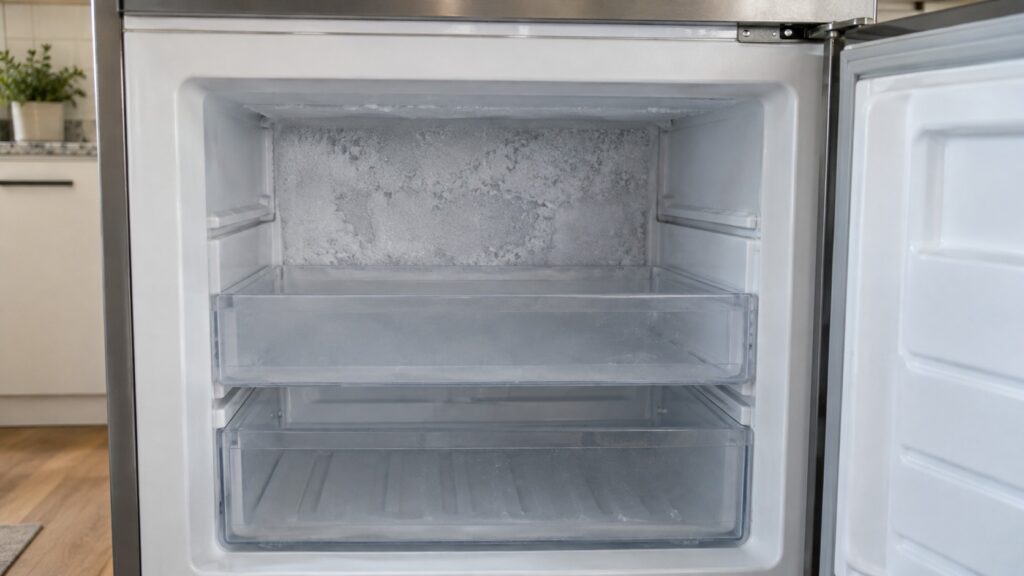
The Liebherr NoFrost defrost problem repair or replace question almost always ends in repair. The signs are frost or ice building on the rear wall of the cabinet or around the vent, a drawer that sticks, or a cabinet that cools less and less well. The usual suspects are the defrost heater, the sensor that times the defrost, the fan and the door seal. Those are parts and diagnosis, not the end of the appliance, so the decision depends on a technician’s findings and the age and condition of the cabinet.
What does a NoFrost defrost problem look like?
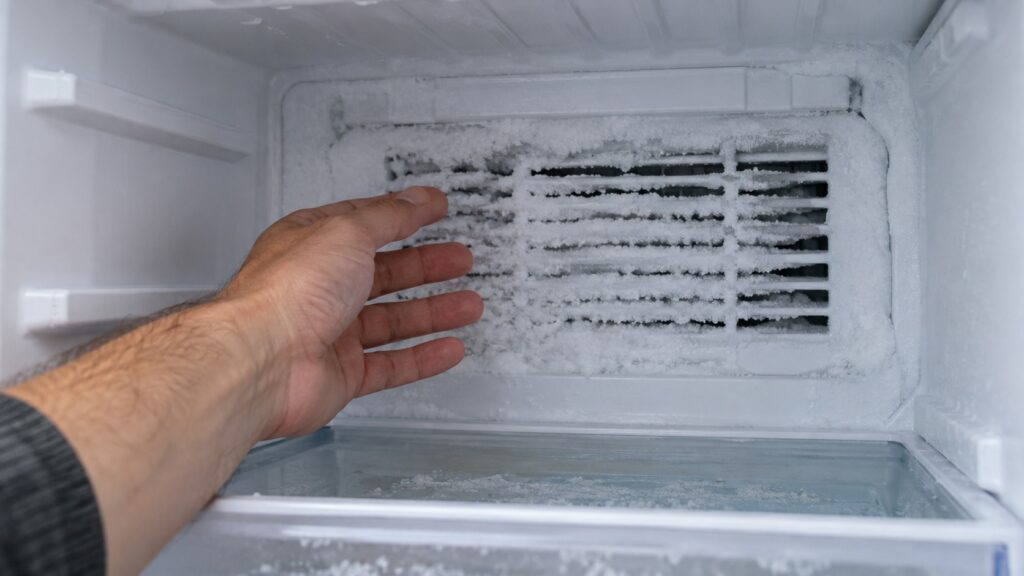
In a NoFrost cabinet, the cold coil sits out of sight behind the rear wall. Frost forms on the coil rather than on your food, and a timed defrost cycle melts it and drains the water away; our NoFrost explanation describes the cycle. When that cycle stops working, the frost stays on the coil and grows. The first thing you notice is not a coil, since you cannot see it. It is a sheet of ice on the rear wall, an icy vent, a fan that starts to buzz against ice, or food at the back that no longer stays cold.
A defrost problem is a slow failure. The cabinet may seem fine for days, then cool worse and worse as the ice blocks the air path. Take a photo of the rear wall when you first see frost, because a technician can learn from how the ice looks, where it began and how fast it returns.
What can cause it, and what is the defrost heater?
Three things must work together: something to melt the frost, something to decide when, and a path for the meltwater. The part that melts it is the defrost heater, warming the coil during the cycle. The part that decides is the control, using the coil sensor to time the cycle. Our BT sensor code guide notes that a failed coil sensor can leave the panel looking normal while frost builds behind the shelves. The path for the water is the drain.
The heater is one candidate among several. A cabinet can also ice up because the door seal leaks humid air, because the door is opened often or left ajar, or because moist food went in uncovered. Our guide to defrosting a NoFrost freezer lists those causes in order. That is why the first step is not to assume the heater has failed.
What can you do before you call?
Check the door seal and close the door fully. Do the paper test: close the door on a strip of paper and pull it at several points. Cover moist food, let hot food cool, and keep door-open time short. If there is heavy ice, you can clear it the way our defrosting guide describes: move the food to a cooler, switch the unit off the way the owner’s manual describes, leave the door open and let the ice melt naturally. Never chip at ice with a knife or use a heat source against the liner. Do not open any panel to look at the coil; that is a technician’s job.
Switching off and defrosting only resets the symptom. If the frost returns quickly with a good seal and sensible habits, a defrost system fault is likely, and that needs diagnosis. If water has run onto the floor during the defrost, mop it and keep the area dry. If water ever reaches a socket or you smell burning, switch off the breaker at the panel while standing on a dry floor, and do not pull a plug from a wet outlet.
When is repairing the better decision?
Repair clearly wins when the fault is a seal, a sensor, a fan or a defrost heater and the cabinet and compressor are sound. Our guide on whether to repair or replace a freezer makes the same point: those parts are small compared with a whole appliance, and a sound cabinet is worth keeping. On an integrated or column unit, replacement adds cabinetry work and cost, so repair is even more attractive. A technician can tell you whether the part is available for your model and what the work involves.
Ask the technician what they found, what the fault is and whether anything else is worn. A written estimate before any work begins is what lets you compare a repair against a new appliance on real numbers rather than a guess.
When does replacing deserve a look?
Replacement is worth considering when a very old appliance has a failed sealed system, when several expensive faults appear together or when the repair would approach the price of a comparable new unit. A defrost fault alone rarely meets that bar. Our guide to repairing or replacing a Liebherr fridge sets out how to weigh age, condition and the value of what the cabinet holds. A freezer or fridge that has been iced up for a long time may also have suffered food loss and a stressed compressor, which a diagnosis should look at.
Do not decide from the symptom alone. Two cabinets with the same ice can have a cheap cause and an expensive one, and only an inspection tells them apart.
What should you tell the technician?
Say which compartment is affected, when you first saw the frost, how fast it returns after you clear it and whether any code or symbol appears. Mention the model number from the rating plate. Our refrigerator repair page explains what a visit covers. If you can, keep the door closed and the cabinet running until the visit so the technician sees the fault as it happens.