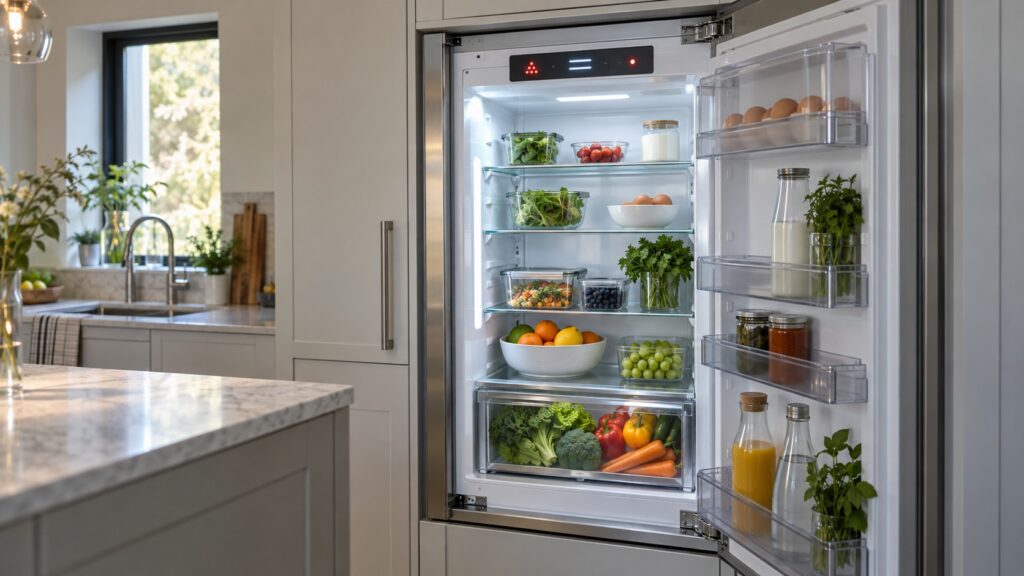
The Liebherr BT error codes are the sensor family: a BT number on the display says one temperature probe has stopped reporting a believable value, and the last digits say which probe. BT011 is the fridge-compartment air sensor, BT021 the sensor in the second compartment, BT031 the evaporator sensor, and BT071 the sensor for a specialty zone such as BioFresh. None of the four means the cooling system has failed. All four mean the control has lost its eyes in one place and is running on a fallback program until someone replaces a probe.
What do the Liebherr BT error codes mean?
A temperature probe in these appliances is a small thermistor: a bead of material whose electrical resistance changes in a known way as it gets colder. The control board measures that resistance a few times a minute and converts it to a temperature. When the measured resistance falls outside the range a working probe can produce — because a wire has broken, a connector has corroded, or the bead itself has failed — the control cannot convert it to anything sensible, and it raises a BT code naming that probe.
This is why a cabinet with a BT code often still feels cold. The compressor has not failed. The control has simply lost one input and fallen back on a timed program written for exactly this situation, which keeps food safe for a while and is not a way to run an appliance for a month.
The wider list of codes this cabinet can show, including the F-series and the temperature alarms, is in our guide to Liebherr refrigerator error codes.
How is BT011 different from BT031?
These two get confused more than any other pair on the list, and the difference is physical: one probe hangs in the air you can feel, the other is clipped to metal you cannot see.
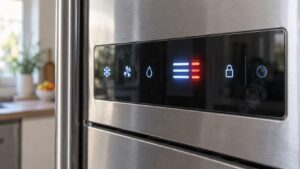
BT011 is the air sensor in the fresh food compartment. It reads the air around your food, and it is the number the display shows you. When it fails, the reading on the panel is the first thing to go strange — stuck on one value, showing something absurd, or replaced by dashes.
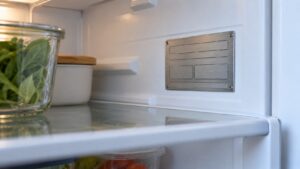
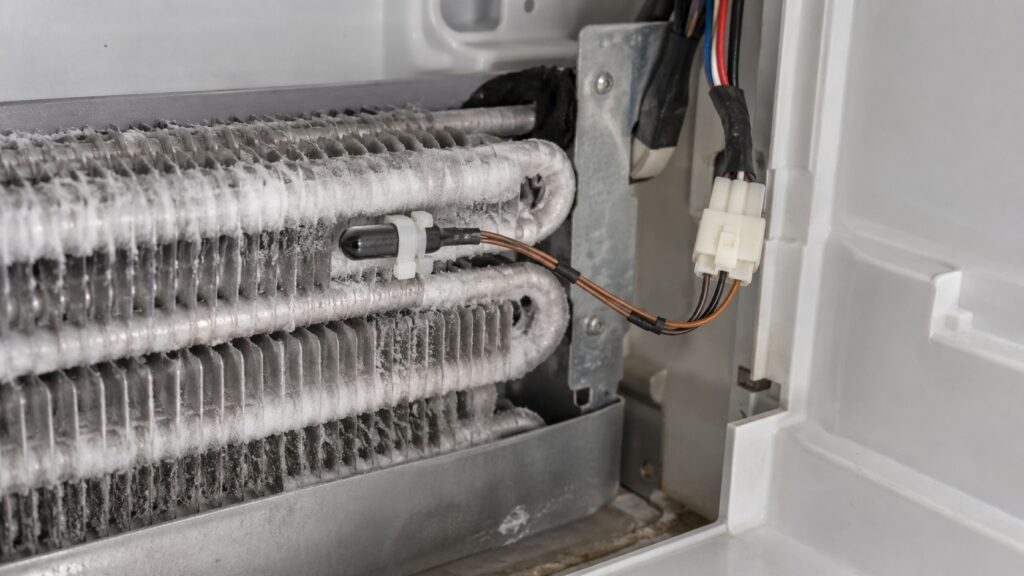
BT031 is the evaporator sensor, taped or clipped to the cold coil behind the rear wall. It exists to tell the control when the coil has become cold enough, and above all when a defrost cycle has melted the frost and can stop. When it fails, the panel frequently reads perfectly normal at first, and the complaint that arrives weeks later is frost building on the back wall, a fan starting to buzz against ice, or a compartment that cools worse and worse.
The practical test costs nothing: read the panel, then open the door and look at the rear wall. A wrong number with clear walls points at the air sensor. A believable number with a sheet of frost building behind the shelves points at the coil sensor.
What does BT021 mean on a two-compartment Liebherr?
BT021 is the same kind of failure one compartment over. On a combined fridge and freezer it is the freezer-side probe; on a two-zone cabinet it is the probe for the second zone. The code tells you where to look but not what kind of cabinet you have, so check which compartments your model actually controls separately before you decide what is affected.
What makes BT021 worth taking seriously faster than BT011 is what sits behind the door. A fresh food compartment running on a fallback program for three days costs you some lettuce. A freezer doing the same thing can drift warm slowly enough that nothing looks wrong until a package thaws and refreezes. If your appliance is connected, set a high-temperature alert before anything else — our guide on SmartDevice alerts covers the settings worth having on while you wait for a visit.
What does BT071 mean when only one drawer is wrong?
BT071 names the probe for a separately controlled zone: the drawer or compartment that holds its own climate rather than taking whatever the main compartment has. On a Liebherr that is usually the BioFresh zone, which is built to sit close to freezing without freezing, and which therefore needs a probe of its own to keep that narrow band.
The symptom that goes with it is narrow too. The main compartment behaves, the display reads normally, and the one drawer either stops holding its cold band or starts giving you lightly frozen produce. If you are not sure what that zone is supposed to do in the first place, how the BioFresh compartment works explains the band it is trying to hold and why it is so unforgiving of a drifting probe.
How do I tell which BT code I really have?
Write the code down exactly, digit for digit, before clearing anything. BT011 and BT071 are two characters apart and name two different parts of the cabinet, and a technician arriving with the wrong probe on the van is a second visit.
Then note three things: what the panel reads, whether the rear wall is clear or frosted, and which compartment has actually misbehaved. Those three answers separate the four codes without any tools at all. If more than one code has appeared, note the order they came in — a sensor code that arrives alongside a communication code is a different conversation, and the PH001 communication error page covers that side. A single sensor code with no companions is usually exactly what it says it is.
One thing not to do: do not pull the appliance out and start opening the rear panel to look at the probe. The coil area holds refrigerant lines, the wiring behind the panel is live when the appliance is plugged in, and a thermistor lead pinched during reassembly produces the same code the day after the repair.
What can I do before calling, and what needs a technician?
Three things are worth doing yourself. Cycle the power at the outlet for five minutes, because a code raised during a brownout sometimes does not come back. Make sure the doors have been closing properly, since a warm compartment invites other codes that muddy the picture — door seal replacement covers how to check a gasket. And keep the appliance running rather than switching it off, so the fallback program keeps the compartments cold.
What needs a technician is the probe itself. Replacing one means identifying the right part for your model, getting at a lead that may be routed through foam, and measuring the resistance of the old one to be sure the fault is the probe and not the harness or the board. Our page on the BT011 air sensor code and the matching pages for BT031 and BT071 each carry the checks for that one probe.
We are an independent repair company, not a factory service arm. Pricing starts from a diagnostic visit and we confirm the estimate before any work begins. Liebherr refrigerator repair covers sensors, harnesses, defrost systems and controls, and you can schedule a visit online or call 1-844-731-4681.