How Liebherr freezers are built
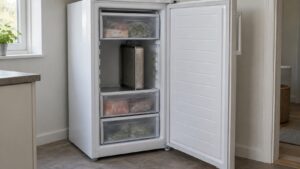
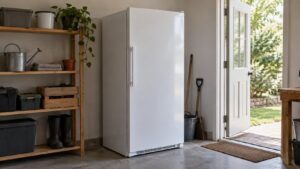
Expert Liebherr freezer repair begins with how these standalone units are engineered. Liebherr builds upright, chest, and fully integrated freezers, identified by prefixes such as G and GN (freezer) and SGN, in both frost-free NoFrost lines and manual-defrost models. NoFrost units run an automatic defrost cycle so frost never builds on the interior walls, while PowerCooling fans distribute cold air evenly and SuperFrost rapidly drops the temperature to protect food quality when a large load is added. A standalone freezer installs on its own and its service is self-contained: the compressor and sealed system, the evaporator and fan, the defrost heater and sensors, the door and gasket, and the control electronics. Because chest and upright designs fail differently, a repair starts by confirming the exact model and defrost type.
Freezing technology and alarm codes
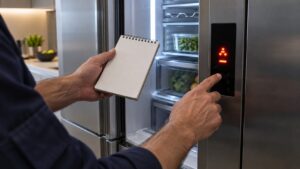
Liebherr freezers are electronic and report genuine alarms and error codes on the display, so diagnosis pairs reading the code with sealed-system and electrical testing. AL02 and E2 are high-temperature freezer alarms warning contents are thawing; F3 flags the freezer air sensor and F4 the freezer evaporator sensor; dF and AFR indicate a defrost-cycle failure on NoFrost models; DOR signals a door left open; and F5 reports a control-board failure. A DOR alarm is user-resettable once the door is sealed, while sensor, defrost, and board failures need a technician. Each code is explained on our freezer error-code guides, so you can understand the alarm before you book a visit.
Common Liebherr freezer repair problems
Frequent Liebherr freezer repair calls include a cabinet that runs warm with an AL02 or E2 alarm, an F3 or F4 sensor failure, NoFrost frost buildup from a dF/AFR defrost failure, a SuperFrost function that will not engage or stop, and a chest freezer that stops cooling entirely. A warm cabinet is traced to a failed evaporator fan, a frosted coil, a sealed-system leak, or a door left ajar. Frost on the rear wall of a NoFrost model usually follows a failed defrost heater or a defrost-sensor failure. A chest freezer that warms throughout points to a failed compressor or start device, a refrigerant leak, or a dirty condenser. Water pooling under an upright unit signals a clogged or frozen condensate drain. Most repairs are resolved in a single visit once the symptom is traced to its component.
Maintenance that prevents freezer repairs
A standalone freezer repays simple routine care. Vacuuming the condenser and keeping its airflow clear lets the sealed system reject heat and prevents the high-temperature alarms a blocked condenser causes. Checking the door gasket seals flush avoids DOR alarms and the frost that warm humid air brings in past a poor seal. On manual-defrost models, defrosting before frost grows thick keeps the cabinet efficient, while NoFrost models stay reliable when the cabinet is not packed against the rear evaporator wall. Keeping an upright freezer level lets its door self-close and its condensate drain run clear. If a model number such as GN 4335 or SGNef 3036 is to hand, our model pages list the matching defrost heaters, sensors, and gaskets for each build.
Service, parts, and coverage
Repairs use genuine OEM compressors, fans, defrost heaters, sensors, gaskets, and control boards matched to the model. Our certified technicians serve all 50 states and 120+ metro areas, and the scheduling page accepts bookings 24/7, with same-day visits where availability allows. Diagnostic visits start from $129; the final cost depends on the parts and the freezer configuration involved. Specifications and the current freezer lineup are published by the manufacturer at liebherr.com. If your freezer is half of a fridge-freezer combi, see our refrigerator repair page.