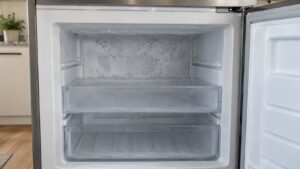
To clear a Liebherr fridge water drain, take out the lower drawers or shelf, find the small drain opening in the back wall of the fridge compartment, and flush it with a little warm water while clearing any film or food debris with something soft and flexible. Never use a sharp tool. The drain carries the water that forms on the cold back wall away from the food, and when it clogs, water collects at the bottom of the compartment, freezes into a patch of ice or runs onto the floor.
Why does a Liebherr fridge have a drain at all?
A refrigerator cools by chilling its back wall, and the humidity in the air condenses on that cold surface. In a fridge compartment the moisture runs down the wall as water. A drain channel at the bottom collects it and leads it out of the cabinet to a shallow tray near the compressor, where the heat of the sealed system evaporates it. The system needs no attention for years, which is why most owners never learn where the opening is until water appears. Our guide on condensation inside a Liebherr fridge explains what is normal on the walls and what is not.
A blocked drain looks like a leak from somewhere else. Water that pools at the bottom of the compartment, soaks the lowest drawer or appears on the shelf below the drain is often mistaken for a failed part, when the real cause is a channel clogged with food debris or a thin film of growth. That is why checking the drain is the first step in our guide to a Liebherr fridge leaking water.
How do you find the drain opening?
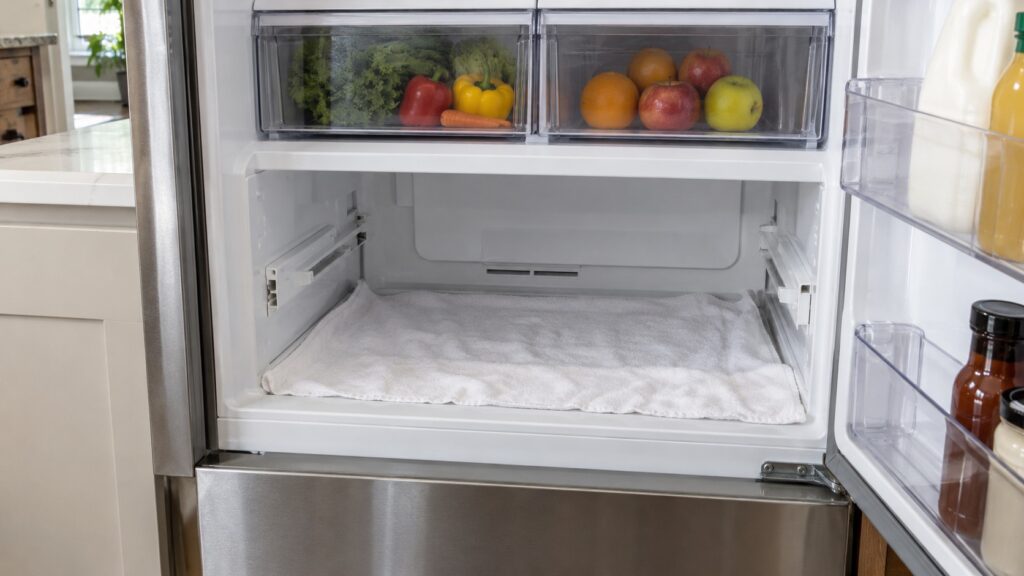
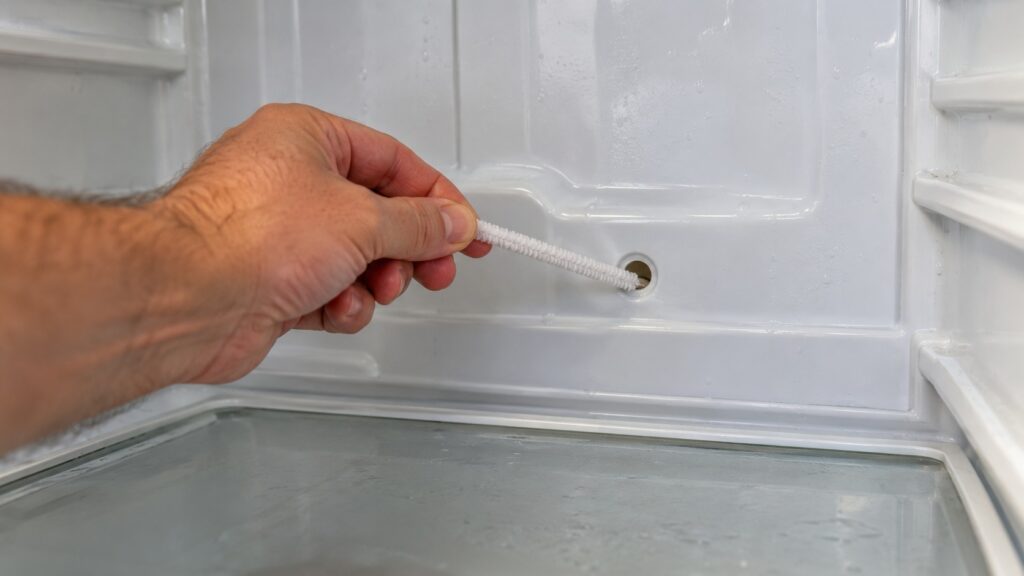
Switch off the cabinet or at least set it aside for a few minutes, and take the food out of the lowest section. Remove the bottom drawer or glass shelf according to the manual; in some cabinets the BioFresh drawers must come out as well. Look at the rear wall near the floor of the compartment. You are looking for a small hole or a short trough that runs to a hole, usually near the center. On some models a small plastic insert covers the opening and lifts out.
If you cannot see an opening, check the manual for the diagram. Do not pry at the rear wall, because the panel conceals the evaporator and its wiring. Cabinets differ, and a drain on a freezer works differently from the one on a fridge, so use the manual for your model rather than a generic photograph.
What is the safe way to clear it?
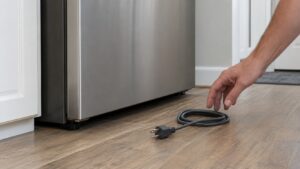
- Switch the cabinet off at the display or unplug it, and keep towels ready.
- Remove drawers and shelves so you can reach the rear wall, and wipe up any standing water.
- Use a soft pipe cleaner or a thin flexible plastic tube to loosen debris at the opening. Push gently and no more than an inch or two, because the channel bends behind the panel.
- Flush the opening with warm water from a small squeeze bottle or a turkey baster, a little at a time. Warm, not hot, water softens film without harming the plastic.
- Watch the water run away. If it drains steadily and you hear it reach the tray, the line is clear. If it backs up, repeat the clearing and flush again.
- Wash the drawers, dry the compartment and put everything back, then switch the cabinet on.
Stop if you meet firm resistance. Pushing a stiff tool into the drain can pierce the wall behind it or dislodge a hose, and that turns a thirty minute chore into a service call.
What if water comes back, or the line freezes?
If the channel clogs again within days, something is feeding it. The usual causes are food crumbs and spills falling behind the drawers, a door seal that lets in warm humid air so more water forms, or a food item pressed against the back wall. Check the door seal first; our guide on replacing a Liebherr door seal shows how to test it with a sheet of paper. Keep items an inch or so away from the back wall, and wipe spills at once.
If ice forms in the drain itself, the cause is usually a heat or airflow problem behind the panel rather than debris, and flushing will not cure it. A drain that freezes repeatedly, a thick sheet of ice on the rear wall, or water that returns right after you clear it are reasons to book a technician. Our annual maintenance guide shows what a thorough check covers.
What else belongs on the twice-a-year list?
The drain pairs well with other small jobs that take the same hour. Wash the drawers and glass shelves in warm soapy water, and our BioFresh drawer cleaning guide covers the drawers with humidity controls. Wipe the door seals with a damp cloth and check them for gaps. Vacuum the grille and the condenser area at the back or bottom, since a dusty condenser makes the compressor work harder and can cause its own condensation problems. Replace the water filter on a plumbed ice maker on schedule.
When you finish, run the cabinet for a day and watch for water at the bottom of the compartment. A dry compartment after a day of normal use means the drain is working.