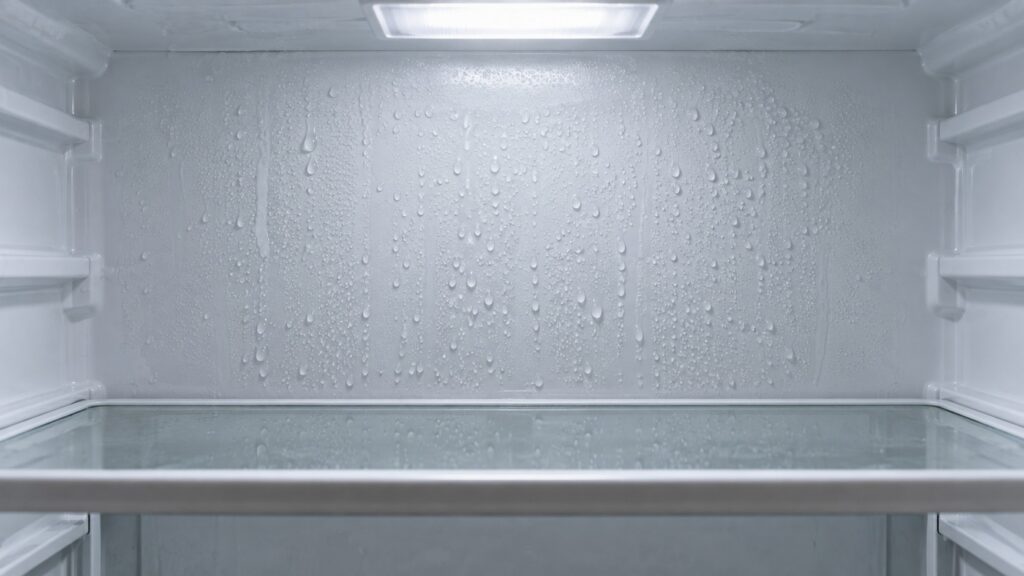
Liebherr fridge condensation — beads of water on the rear wall, droplets on the glass of a wine cabinet, or a film of moisture along a shelf — is one of the few refrigerator complaints that is usually not a fault at all. Cold surfaces attract moisture from warm air; the question is only how much warm air is getting in, and why. This guide sorts the normal from the not-normal, and shows what to check before anyone books a visit.
Why a cold cabinet collects water
Air holds moisture, and how much it can hold falls as it cools. Warm kitchen air entering a cold cabinet is cooled immediately, gives up the moisture it can no longer carry, and that moisture lands on the coldest surface it can find — typically the rear wall, where the cooling happens.
That is why condensation is worse in summer, worse in a humid kitchen, and worse in a household where the door is opened often. None of those is an appliance fault. The appliance is designed to deal with a certain amount of it: the rear wall frosts lightly, defrost clears it, and the meltwater runs to a drain channel and evaporates.
Start with the door
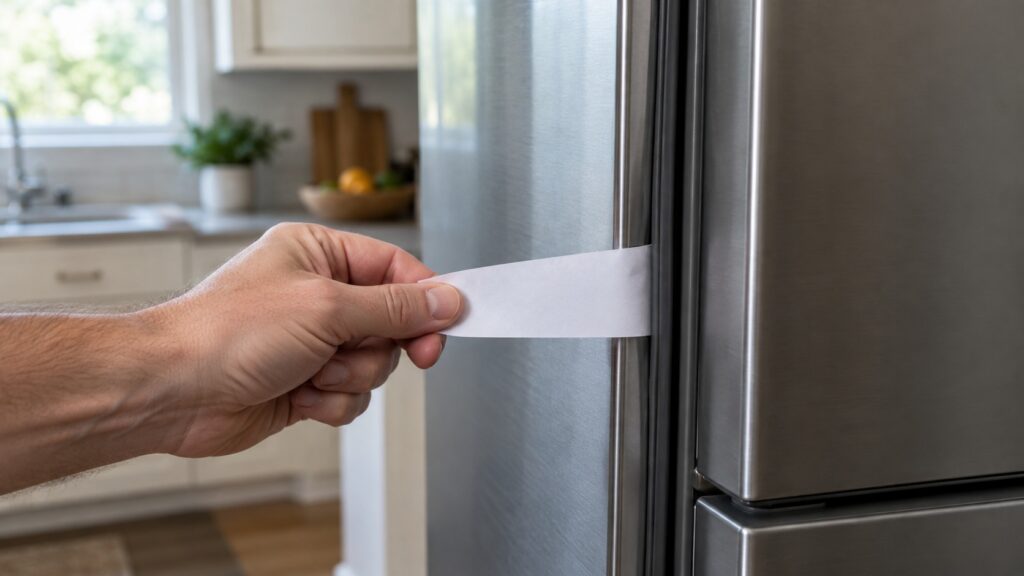
Close the door on a strip of paper and pull. It should grip. Do that at several points around the opening, especially at the corners, and repeat on both doors of a side-by-side. A point where the paper slides out freely is a point where humid air is walking in all day.
Check the gasket for splits, flattened sections and stiffness, and clean it with warm water — sticky residue holds the seal open as surely as damage does. A door that has dropped slightly, or a cabinet that is no longer level, produces the same symptom without any damage to the gasket at all. Our guide on door seals covers testing and replacement.
Then look at habits
Hot food placed in uncovered releases a great deal of steam into a small cold space. Uncovered liquids and wet produce do the same thing more slowly. A door standing open while shopping is unpacked lets in more humid air than a week of ordinary use.
Cover everything, let hot dishes cool on the counter first, dry produce before it goes in, and unpack the shopping with the door closed between items rather than propped open. If condensation eases within a few days of doing those things, the mystery is solved and nothing needs fixing.
When it is the drain
A blocked drain is the most common genuine cause of water standing inside a refrigerator, and it is also the one that most often gets misdiagnosed as a leak from somewhere else. Our guide on a fridge leaking water covers the difference between water inside the cabinet and water on the floor, which have very different causes.
Two more habits are worth naming because they are invisible until someone points them out. A fridge packed so full that air cannot circulate develops cold and warm pockets, and the warm pockets sweat. And a bottle or jar taken from the cabinet, used on the counter and put back warm brings its own load of humid air with it every time.
Condensation on the outside
Moisture on the outer surface of a door, or on the frame between two compartments, usually means very humid room air rather than an appliance problem — many cabinets have heaters in the frame precisely to prevent it, and in extreme humidity they can be outmatched. If the room is persistently humid, dealing with the room is the real fix.
On a wine cabinet with a glass door, condensation on the glass follows the same logic: humid room air, a cold pane, and a temperature difference. Keeping the cabinet out of direct sun and out of the most humid corner of the house does more than any setting on the control panel.
What is not normal
Ice building up thickly on the rear wall rather than a light frost that clears. Water that returns immediately after the drain is cleared. Condensation appearing along with a compartment that is not holding temperature. A gasket that cannot be made to grip paper anywhere along one side. Each of those points at defrost, drainage or door hardware, and each deserves a look rather than another wipe.
The same is true if a compartment is running warmer than it should while also showing moisture — that combination suggests the cabinet is fighting a losing battle, and our guide on a fridge that is not cooling is the right next step.
If the kitchen itself is humid, deal with the room as well as the appliance. A clothes dryer venting indoors, a kettle boiling under a cabinet, a bathroom door left open onto the kitchen — each adds moisture that the coldest surface in the house will collect. On the worst days, running the range hood while cooking does more for condensation inside the refrigerator than any setting on its control panel.
When to call
Call when the drain will not stay clear, when frost keeps rebuilding on the rear wall, when a door will not seal along a whole side, when water appears on the floor, or when condensation arrives with a temperature problem. Defrost systems and door hardware are straightforward for a technician and awkward for everyone else.
We are an independent repair company and not a factory service arm. Pricing starts from a diagnostic visit, and we confirm the estimate before any work begins. Liebherr refrigerator repair covers defrost systems, drains, seals, hinges and controls, and you can schedule a visit online.