
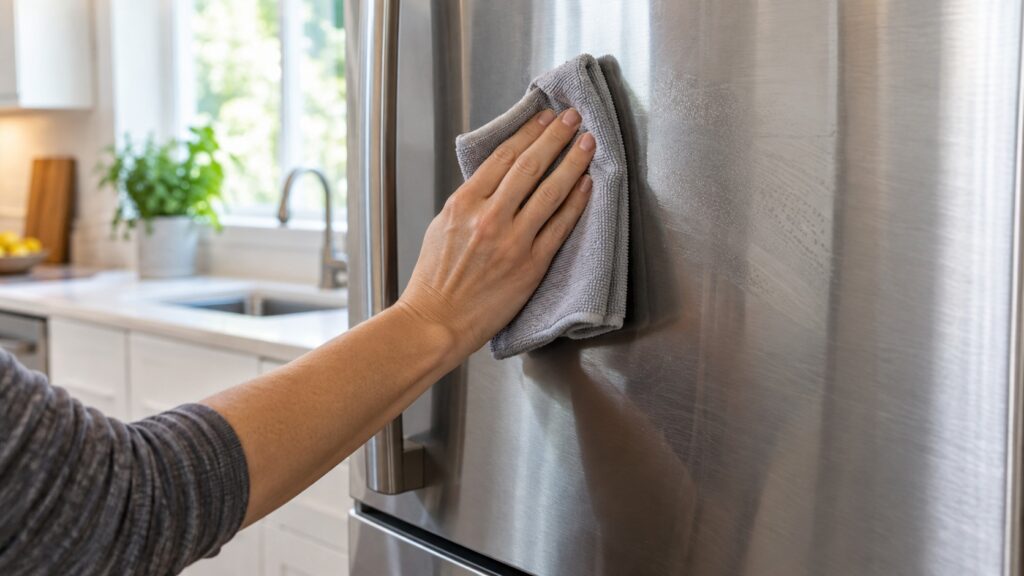
Liebherr SteelFinish cleaning is gentle by design: wipe with a soft microfiber cloth dampened in warm water and a drop of mild dish soap, follow the direction of the brushed grain, rinse with a cloth wet with clean water, and dry right away. That is enough for most days, and what you leave out matters as much as what you do, because abrasive pads, scouring powder and strong chemical cleaners can scratch or dull a finish that is meant to look uniform.
What is Liebherr SteelFinish, and why does it need special care?
SteelFinish is the name Liebherr uses for its stainless-look door and side finish on many refrigerators and freezers. The surface is treated so that it resists fingerprints better than a plain brushed panel, and it shows less of the smearing that makes ordinary stainless look dirty a few minutes after cleaning. The treatment is thin, though, and rough cleaning can wear it off in the spot where you rub hardest. Our comparison of SteelFinish and BlackSteel explains how the two finishes differ, and the cleaning rules below apply to both.
Because the manual for your model is the final word, read its care section before you try anything stronger than soap and water. If the manual lists a recommended cleaner, use that and nothing else.
How do you clean a SteelFinish door step by step?
- Clear the area and use a clean, soft microfiber cloth. A dirty cloth carries grit that scratches.
- Dampen the cloth in warm water with a drop of mild dish soap. It should be damp, not dripping.
- Wipe in long strokes along the grain from top to bottom, working one section at a time.
- Wipe again with a second cloth wetted in plain water to remove the soap film.
- Dry with a third, dry cloth, again following the grain, to avoid water spots.
Keep soap and water away from the control panel, the display and the door seals. Use a nearly dry cloth around those areas, and never spray cleaner directly onto the appliance, since the liquid can run into the display or the seal channel.
How do you deal with fingerprints, grease and stains?
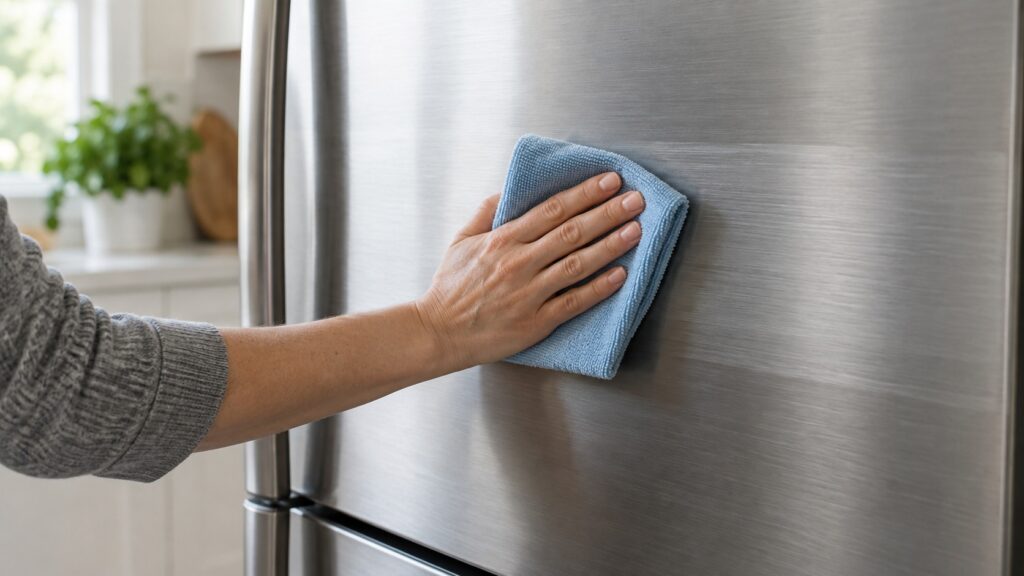
Fingerprints on SteelFinish usually wipe away with a damp cloth. If they return quickly, the finish may have a film of kitchen grease on it, and a second pass with soapy water will lift it. Cooking grease near a range is the most common culprit, so refrigerators close to a cooktop need more frequent wiping. For dried-on marks, soak a cloth in warm soapy water, lay it over the spot for a minute to soften the residue, and then wipe along the grain. Do not scrape with a fingernail or a plastic card, since a hard edge can mark the surface.
Avoid sprays that contain chlorine, ammonia or strong acids, and avoid anything labeled for ovens or grills. If you want a stainless cleaner, choose one that says it is safe for coated or fingerprint-resistant stainless, apply it to the cloth, and test it on a hidden corner first. When in doubt, leave it out.
What about the sides, the handles and the door seals?
The sides of a built-in or freestanding cabinet collect dust more than anything else, and a dry cloth or a soft brush removes it. Handles collect oils from hands, so wipe them with the same mild soap solution. The door seals are a different material and need separate care. Wipe the seal with mild soapy water, dry it and check it for cracks, since a dirty or brittle seal costs energy and can let humidity into the cabinet. If a seal is damaged, our door seal replacement guide describes what to expect.
How often should you clean the exterior?
A quick dry wipe every week or two keeps dust from building up, and a soap-and-water pass once a month keeps the finish fresh. Add a pass whenever you see grease or sticky spots. A cleaning habit is part of the broader routine in our annual maintenance guide for Liebherr fridges, which also covers the condenser area, the door seals and the interior. If your model is a Monolith column, remember that the hinge mechanism needs its own care, described in the SoftSystem hinge care guide.
What if the finish is already scratched or discolored?
Light scratches that do not catch a fingernail may fade with careful, repeated cleaning along the grain. Deep scratches, rust spots and peeling are different problems and they usually mean the coating is breached. Do not try to sand or polish the area. A technician or a parts supplier can advise whether a door panel can be replaced. If the damage is cosmetic and the refrigerator cools correctly, you can keep using it while you decide. If the damage is accompanied by a refrigeration problem, our refrigerator repair page explains how to arrange a visit.
Which cleaning habits protect the finish over the years?
Keep a dedicated cloth for the refrigerator and wash it often, since a cloth used on the counter carries crumbs and grease. Remove rings and bracelets before you wipe the door, because a hard edge can drag across the surface. Move magnets with care, and put a thin cloth under anything heavy that rests on top of the cabinet. These small habits cost nothing, and after a few years the difference between a finish that looks new and one that looks tired is almost always how it was cleaned, not how old it is.