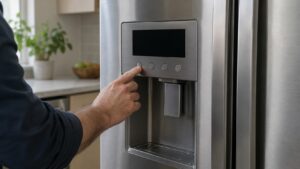
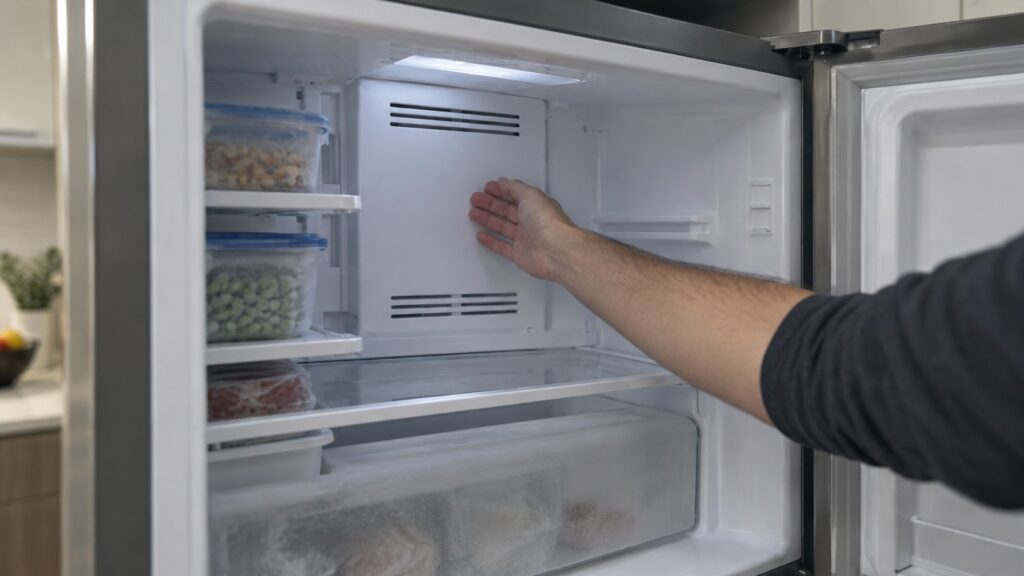
A Liebherr refrigerator fan not working usually shows up as a fridge that is warm while the freezer is cold, a freezer that frosts over, or a fan that rattles or squeals instead of running smoothly. The most common causes are ice around the blades, an obstruction from a food package, a door that is not registering as closed, and a fan motor that has worn out. Most of these are easy to check from the outside, and none of them involves opening the cooling system.
How do you know a Liebherr fan has stopped working?
A fan failure rarely announces itself directly. What you see is its effect on cooling. A fan that moves air from the freezer into the fridge compartment keeps the two sections at their set temperatures, so when it stops, the freezer may stay cold while the fridge warms. A fan that stops in the freezer can let frost build up on the evaporator, and in time the whole cabinet warms. Our guide to a Liebherr fridge that is not cooling covers the general checks, and a fan is one of the most frequent causes it points to.
You can also listen. With the cabinet running and the doors closed, you should hear a faint, steady airflow. Silence next to a warm compartment, a ticking or scraping noise, or a loud squeal that rises and falls are all signs of a fan trouble. Our guide to Liebherr fridge noises helps you tell a fan from the compressor.
Is the fan off because the door is open?
Check this first, because it is normal behavior. On many Liebherr models the fans stop when the door is open and restart when it closes, so you do not waste cold air blowing it into the room. If a door is slightly ajar, or a light switch or door sensor is stuck, the cabinet can believe the door is open and keep the fan off. Close the door firmly, listen, and push a package back from the door edge. If the door alarm sounds, our door alarm guide explains what to check.
The fans also pause during a defrost cycle on NoFrost models, and they may start a few minutes after the compressor, so give the cabinet five to ten minutes of closed-door running before you decide the fan is dead.
What causes a fan to stop or make noise?
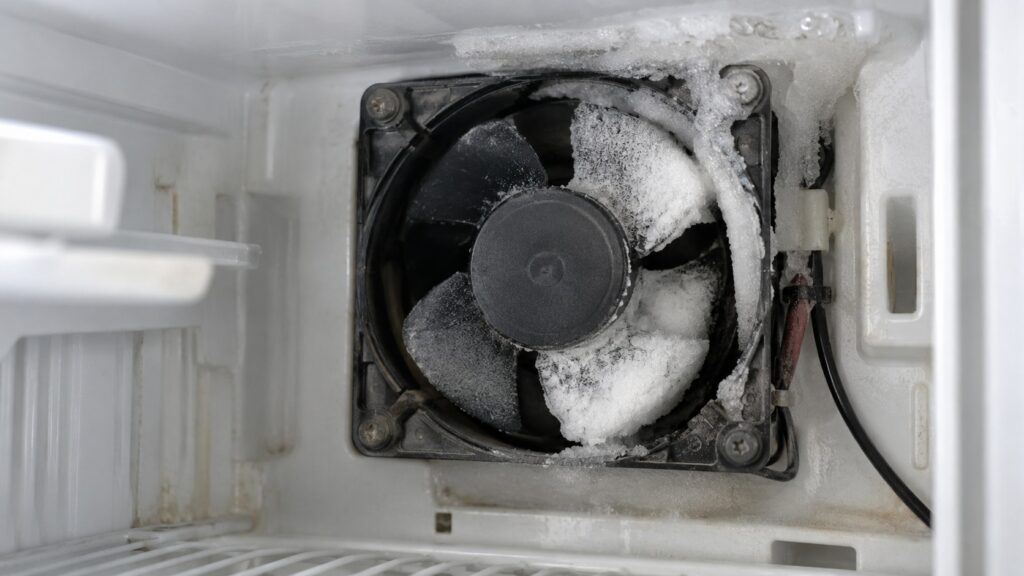
- Ice on the blades or around the housing. A frost build-up from a door that does not seal, a drain that is blocked or a defrost problem can lock the blades. Ice makes a scraping or ticking noise before the fan stops.
- A blocked vent. A bag of frozen food pushed against the air vent can stop airflow, and the fan may strain against it.
- A foreign object. A small item that fell behind a shelf can reach the blades and cause a rattle or a squeal.
- A worn motor. After years of running, the bearings in a fan wear out, and the fan runs slowly, squeals or stops.
- A power or control fault. A fan that is perfectly good will not run if it does not get power from the control board. In that case other symptoms usually appear too.
Our guide to defrosting a NoFrost freezer shows how to melt ice safely, and it is the first step if you suspect frost on the fan.
What can you safely do yourself?
- Close the door firmly and wait ten minutes, then listen for airflow.
- Remove items from the shelves nearest the air vents and check nothing blocks them. Keep items an inch or two clear of the back wall.
- Look for frost on the rear wall of the freezer or fridge. If it is thick, switch the cabinet off, empty it and let it defrost fully with the door open and towels on the floor.
- Run the cabinet again for several hours and listen. If the fan runs quietly and the temperature recovers, ice was the cause, and the next question is why it formed.
- Check the door seals, because a leak lets in humid air that freezes on the evaporator.
Do not remove the rear panel of the freezer to reach the fan while the cabinet is plugged in. The fan sits next to the evaporator, a sharp, cold, wet assembly, and the wiring there is easy to damage. Keep metal tools and hands away from the blades.
What if the fan fault keeps coming back?
A fan that stops, then runs after defrosting, then stops again is a symptom of something upstream. Repeated frost points at a door seal, a drain or a defrost heater, and a fan replacement alone would not hold. Our guide on how NoFrost avoids defrosting explains the cycle that keeps the evaporator clear, and a failure anywhere in it ends with iced blades. If the fan itself is worn, replacing the motor is a routine job for a technician and costs far less than a new cabinet.
A fan-shaped symbol on the display does not always mean a fan fault. On some models it relates to the FreshAir filter or to air circulation settings, so read our FreshAir filter guide and your manual before you assume a motor has failed.
When should you call a technician?
Call if the fan is silent next to a warm compartment after you have cleared ice and obstructions, if it squeals or scrapes in a way that returns, if frost rebuilds within days, or if the cabinet has lost temperature for more than a few hours. A food-safety risk starts if the fridge stays above 40 degrees F for more than a couple of hours. You can read about our refrigerator repair service, and our annual maintenance guide shows how to catch fan trouble early.