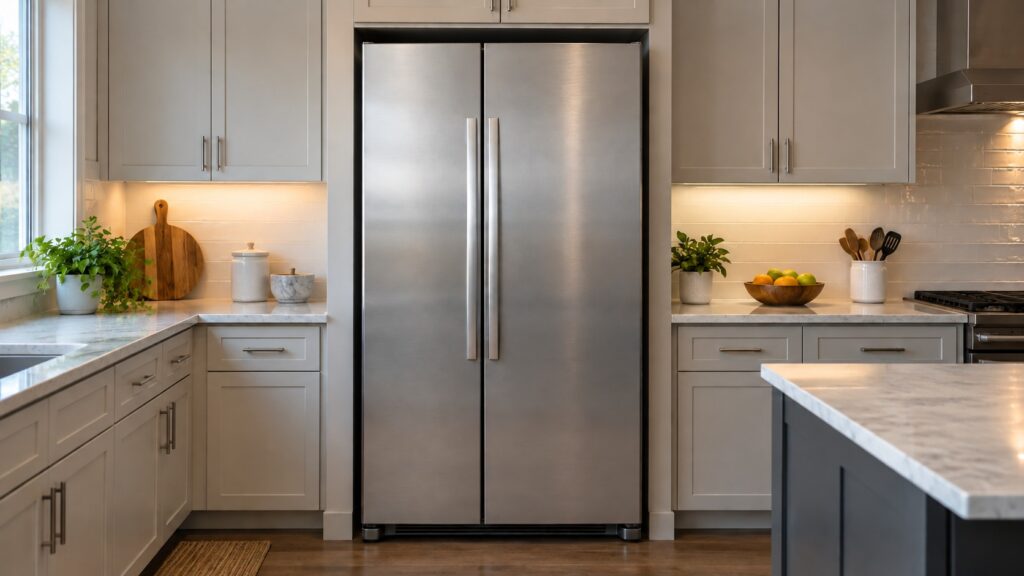
A Liebherr side-by-side refrigerator puts the fridge on one side and the freezer on the other, each controlled on its own, and it suits a household that wants tall, full-height storage for both at eye level instead of one compartment stacked above the other. If you are weighing a Liebherr side-by-side against a French door or a bottom-freezer fridge, the deciding factors are door width, how you use the freezer, and whether you want an ice and water feature on the front.
Is a Liebherr side-by-side the right layout for your kitchen?
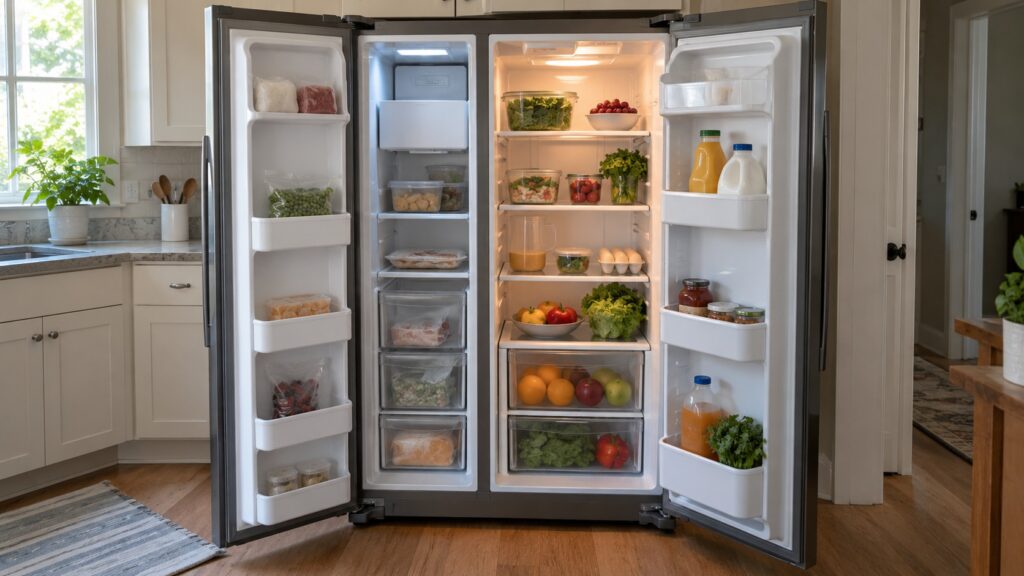
A side-by-side is the right layout when you value vertical space and quick access to frozen food more than the ability to fit a very wide item. Each door is narrower than a French door, so each swings in a smaller arc, which matters in galley kitchens and in a niche beside a wall. Both compartments reach from near the floor to eye level or above, so the freezer is as easy to reach as the fridge instead of hiding in a bottom drawer.
The trade-off is shelf width. Because each compartment is only about half the cabinet width, a large pizza box, a party tray or a full sheet pan may not lie flat. If you entertain with big platters, measure your most awkward item against the interior width on the data sheet before you commit. For a broader comparison with other layouts, our French door vs side-by-side guide lays out the general pros and cons across brands, and the rest of this guide narrows it to what is specific to Liebherr.
What do the Liebherr side-by-side model numbers tell you?
The models on our site that belong to this layout begin with SBS, and the letters after the prefix hint at the feature set. The SBSes 8496 and the SBSbS 8673 sit at the top of the family, while the SBNSDD 5650, 5660 and 5264 belong to the same side-by-side family with a more modest feature list. The exact meaning of each letter changes between production years, so treat the pattern as a hint and read the data sheet for the specific number you are considering. Our Liebherr model number decoder explains how to read the rest of the code.
Which features are worth paying attention to?
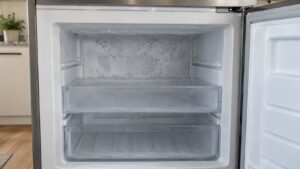
Three features matter more than the rest on a side-by-side. The first is the freezer side: on most Liebherr freezers the NoFrost system keeps the air dry so ice does not build up on the walls, which means no manual defrosting and less freezer burn. Our explanation of how NoFrost avoids defrosting shows how that works. The second is the fridge side: many models include BioFresh drawers that hold a lower temperature and a controlled humidity level for meat, fish and vegetables, which lengthens the useful life of fresh food. The third is connectivity, since some models can send temperature and door alerts to a phone.
If the model has an IceMaker with a water connection, plan for the plumbing at the same time. A side-by-side with an ice feature needs a cold water line within reach of the cabinet and a shutoff valve you can get to. Our water filter replacement guide shows what the owner has to maintain later, and the ice maker troubleshooting guide covers the usual faults, so you know what you are signing up for.
How does a side-by-side compare with an integrated or freestanding fridge?
A freestanding side-by-side sits in an opening or against a wall with ventilation space around it, and you see the whole cabinet. An integrated unit disappears behind cabinet panels but is usually narrower and offers less capacity for the same footprint. If you are still deciding whether to hide the refrigerator at all, read our integrated vs freestanding fridge guide first, because that choice narrows the model list long before you compare features. Most large side-by-side models are designed to stand free, so confirm that your design plan leaves room for the doors to open past ninety degrees.
What should you measure and plan before delivery?
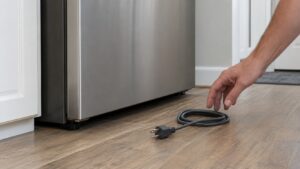
Measure the opening height, width and depth, then add the clearance the installation sheet asks for at the sides, back and top. Check the path the unit will travel: front door, hallway turns and stairs. A full-height cabinet can be tall and heavy, and many deliveries fail at a tight turn rather than at the kitchen opening. Plan a level floor, because a cabinet that rocks stresses the doors and the seals. Provide a dedicated grounded outlet within reach and a cold water supply if the model has ice or water features.
Leave the cabinet to rest upright for the period in the manual before you switch it on, and give it a full day to reach its set temperatures before loading it with food. Setting the temperatures once and then leaving them alone gives the control system a stable starting point, and our temperature settings guide lists sensible starting points for each compartment.
When does buying new beat repairing an older unit?
If you are shopping because an older fridge is failing, check whether the repair is a single part first. A sealed-system problem on an old cabinet is usually the point where replacement wins, while a sensor, a door seal or a fan can cost far less than a new unit. Our repair or replace guide for Liebherr fridges sets out the questions to ask, and a visit from a technician gives you a firm diagnosis rather than a guess. You can read about our refrigerator repair service before you decide.