

The Liebherr FreshAir filter is a small activated-charcoal cartridge sitting in the path of circulating air, and it is the part that decides whether your refrigerator smells of nothing or of last week’s leftovers. It costs little, it takes a minute to change, and it is the single most neglected consumable in a cold appliance. This guide explains what it does, how to tell when it has stopped doing it, and why it matters even more in a wine cabinet than in a refrigerator.
Why circulating air needs a filter at all
A fan-cooled refrigerator moves air continuously around the compartment so every shelf sits at a similar temperature. That even temperature is worth having — and the same circulation carries whatever smells strongest to everything else in the cabinet. Butter next to an open dish of curry is a well-known outcome of that.
Activated charcoal works by adsorption: its enormous internal surface area traps odor molecules as air passes through. It is the same principle as a water filter or a kitchen extractor’s recirculating filter, and it has the same limitation — the surface fills up, and after that the air simply passes by.
How to tell it has stopped working
There is no light and no alarm. The signs are all in your nose. Foods start tasting of each other. Opening the door produces a general “refrigerator smell” rather than nothing. Milk or butter picks up flavor within a day or two of being opened. A cabinet cleaned thoroughly a week ago smells again.
If the odor returns after a genuine clean — shelves out, drawers washed, spills removed, drip tray checked — the filter is the next thing to change rather than a stronger cleaner. Persistent smell with a fresh filter and a clean interior points somewhere else entirely, usually a spill that has run under a drawer or down into a drain channel.
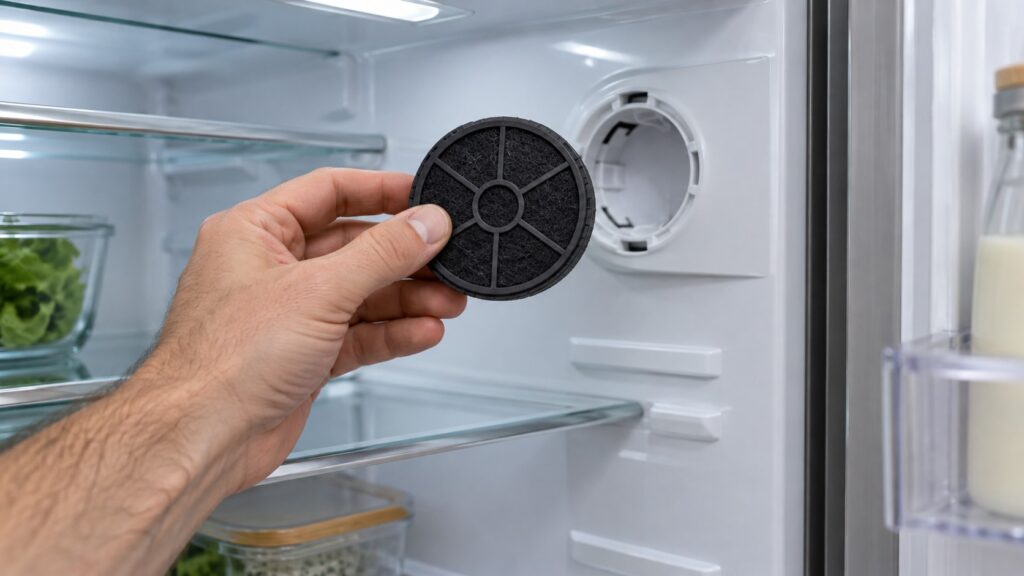
Changing it
Find the housing inside the cabinet — commonly on a rear or side wall, or in the ceiling of the compartment. Most designs twist or unclip; check the manual for yours rather than levering at a panel. Note the orientation before the old cartridge comes out, fit the new one the same way, and write the date on the calendar rather than on the filter, where you will never look.
Replace it on the interval in the manual, more often in a busy household or one that stores strong cheese, fish or cut onion regularly. If the appliance has been switched off for a long period with the door closed, replace the filter when you restart it — a saturated filter in a warm, closed cabinet is a source of smell rather than a cure for it.
In a wine cabinet it matters more
That last row is a real rule rather than a fussy one. A cardboard case left inside a cabinet, a damp cloth, or a bottle that has leaked all become part of the air the wine lives in. Our guide on the wine cabinet charcoal filter covers the schedule for cellar units.
One more thing worth knowing: a brand-new appliance, or one that has just had a filter fitted, can take a day or two to settle. Charcoal works as air passes through it, so it needs the fan to have circulated the whole compartment’s air several times before a lingering smell disappears. Judge the change after two days rather than after two hours.
What a filter cannot fix
A charcoal filter handles odor in the air. It does nothing about a spill under a drawer, a drain channel that has blocked and grown a biofilm, a door seal that is letting warm humid air in, or food stored uncovered. If the smell is strong, sour or musty rather than merely mingled, look for a source before changing anything.
It also does nothing about cooling. If a compartment is not holding temperature, the filter is irrelevant and the fan, the sensors and the defrost system are the subject — our guide on a fridge that is not cooling covers that path.
Small habits that make the filter’s job easier
Cover everything, especially anything with a strong smell. Keep the drip channel at the back of the compartment clear with a cotton swab. Wipe spills the day they happen. Store onion, garlic and cut fruit in sealed containers, and give ripe cheese its own box. Each of those reduces the load the charcoal has to carry, and together they double how long a filter stays useful — habits that fit alongside the routine in our guide on annual maintenance.
Keep a spare filter in the house. It costs little, it does not expire on a shelf, and the moment you notice the smell is exactly the moment you do not want to wait three days for a delivery. Write the date on the calendar when you fit one and put the spare where the paperwork lives — the habit takes a minute and removes the most common reason this job gets postponed indefinitely.
When to call
Call when odor persists with a new filter and a clean interior, when you suspect a spill has run somewhere you cannot reach, when the drain channel will not clear, or when a compartment smells musty and is also showing condensation. Smell plus moisture usually means a seal or a drain rather than a filter.
We are an independent repair company and not a factory service arm. Pricing starts from a diagnostic visit, and we confirm the estimate before any work begins. Liebherr refrigerator repair covers fans, drains, seals, sensors and controls, and you can schedule a visit online.