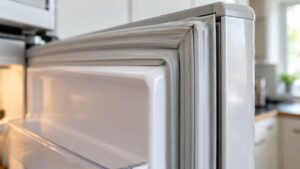

To put hot food in a Liebherr fridge without upsetting the cabinet, do not load a large hot pot straight onto a shelf. Divide it into smaller, shallow, covered containers, let the steam die down, and put them in with space around them so air can move. Warm food adds heat and moisture to a cabinet built to hold a steady temperature, and it warms the food stored next to it. This guide covers how to cool food before it goes in, where to put it, what SuperCool can and cannot do, and what to watch for on the display afterward. It gives food-safety principles, not exact cooling times for a particular dish. If you searched “put hot food in liebherr fridge”, that is the short answer.
Can you put hot food in a Liebherr fridge?
The honest answer is that it is better not to, and that the amount matters. A small, covered portion that has stopped steaming is fine in any refrigerator. A full stockpot of soup is a different matter: it carries a lot of heat, it releases steam that turns to condensation on the walls, and it can warm everything around it. Our Liebherr energy saving tips list avoiding warm food as one of the habits that keep the compressor from working harder than it needs to. Your owner’s manual may add model-specific advice, so check it.
The other side of the question is food safety. Cooked food should not stand at room temperature for long, so the goal is not to wait until it is cold on the counter but to cool it quickly. General food-safety guidance from the USDA is to refrigerate cooked food within two hours. That figure is a general rule, not something specific to Liebherr.
How do you cool hot food quickly before it goes in?
Spread the food out. Divide a large batch into several shallow containers so heat can leave through the larger surface instead of being trapped in the middle of a deep pot. Stir soups and stews from time to time, and let the steam settle. A pot set on a wooden board or a rack cools faster than one sitting in a closed cupboard. You do not need special equipment, only a bit of surface area and a few minutes of attention.
Cover the containers once the worst of the steam has gone. An uncovered container releases moisture into the cabinet, which shows up as condensation on the walls and shelves. Our guide on condensation inside a Liebherr fridge explains why moisture collects and how habits affect it.
Where in the fridge should warm food go?
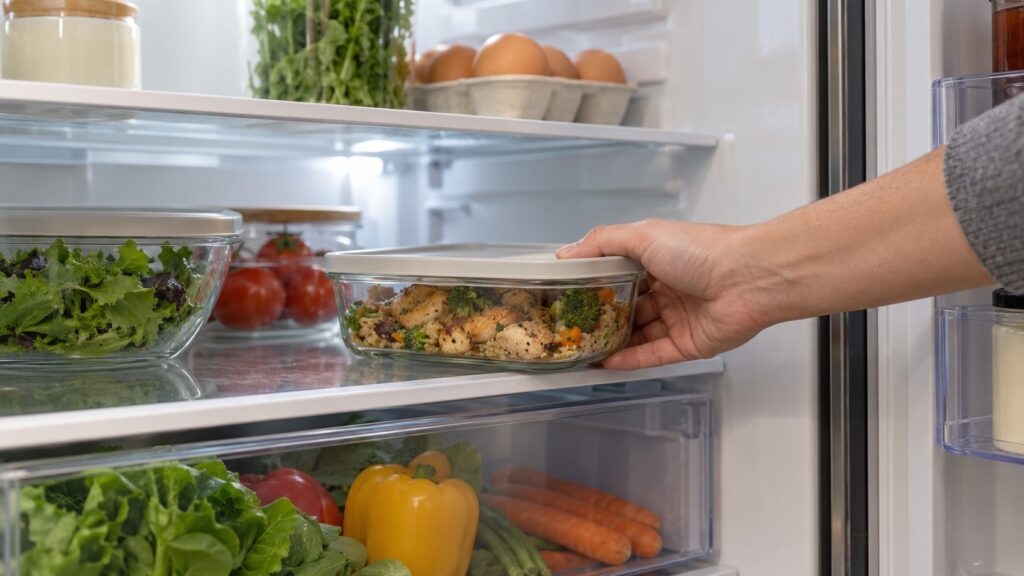
Choose a spot with space around it. A shelf with air on all sides lets the cabinet carry the heat away, while a container packed between others keeps the heat in. Keep food away from the rear wall vents, because a blocked vent creates warm pockets and uneven cooling. Keep warm food away from dairy, raw meat and other items you do not want to warm. Our guide on how BioFresh works describes the separate fresh food zone; as a precaution, do not use it as a place to park a warm container, and check your manual for what that zone is meant to hold.
Keep door openings short. Each time the door opens, warm moist air flows in, so decide what you are going to do before you open it. If you are loading a lot of food at once, a door left ajar can set off the door alarm; our Liebherr door alarm guide explains what it means.
Does SuperCool help after you add warm food?
SuperCool is the fridge boost that runs the cooling harder for a set period, then switches off automatically and returns to the normal setting. Our SuperCool explained page describes it as useful before or after a big load so the cabinet recovers quickly. It is a recovery tool, not a way to make a pot of hot soup safe to store, so cool the food first and use SuperCool if your manual recommends it for the load. You do not need to switch it off yourself.
After loading, give the cabinet time. The display shows the target, and the interior takes time to follow it. Our temperature settings guide says to let new settings stabilize before judging them. Do not turn the thermostat colder to compensate; extra cold wastes energy without making the food any safer.
When should you call a technician?
If the fridge stays warm after you have changed your loading habits, the display shows a temperature alarm that does not clear, or you find a puddle of water or heavy frost, something other than your food is probably the cause. Do not open panels. If water reaches an outlet or you smell burning, switch off the breaker at the panel while standing on a dry floor, and do not pull a plug from a wet outlet. We are an independent repair company, not the manufacturer. Our Liebherr refrigerator repair page explains how a visit works, and you can schedule a visit online.