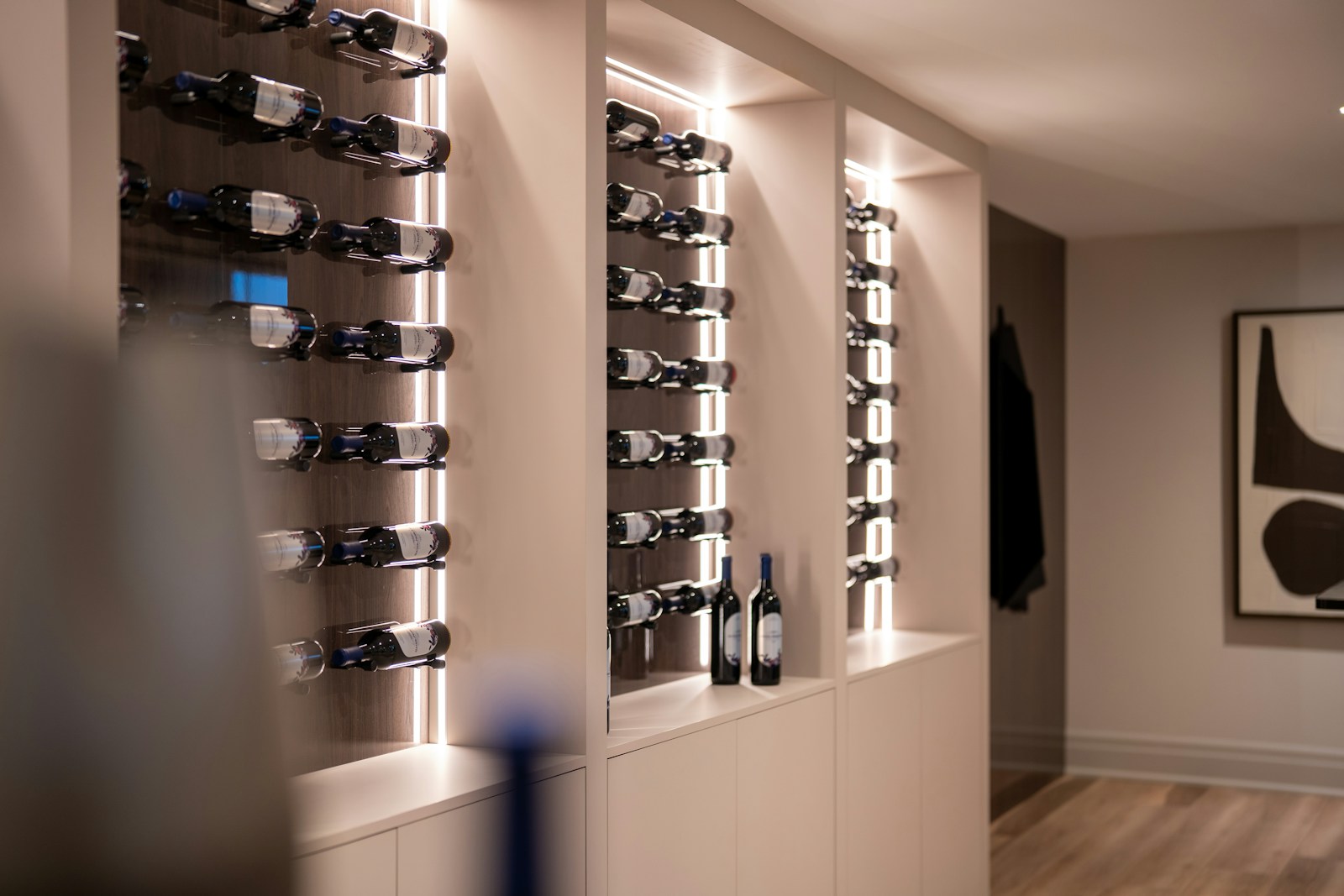
Here is how to clean Liebherr wine cabinet interiors and doors without harming the wine: wipe the shelves and walls with plain warm water or a very small amount of neutral cleaner, avoid anything scented, clean the glass with a soft cloth and a mild glass cleaner, check the door gasket and replace the charcoal filter on schedule. Wine absorbs odors through the cork, so the cleaner you choose matters as much as the cleaning itself.
Why is cleaning a wine cabinet different from cleaning a refrigerator?
A wine cabinet is built to hold a steady climate and clean air for a long time, and the wine inside is sensitive to three things: odor, vibration and temperature swings. Our wine storage maintenance guide says the care is gentle and specific, with no harsh chemicals near the bottles. A cleaner that leaves a smell in a refrigerator is a nuisance; in a wine cabinet it can reach the wine through the cork over months. So the choice of products is the first decision.
The cleaning itself is quick. The care lies in working in a way that does not disturb the bottles, does not leave odor behind and does not let the cabinet warm up for long.
How do you clean the interior?
If you are removing bottles, keep them out of the light and at a steady temperature, and handle them gently so sediment stays put; our guide to laying down wine bottles explains why bottles should not be disturbed unnecessarily. For a light clean you may not need to remove bottles at all, only the shelf or section you are cleaning. Work one shelf at a time to keep door-open time short.
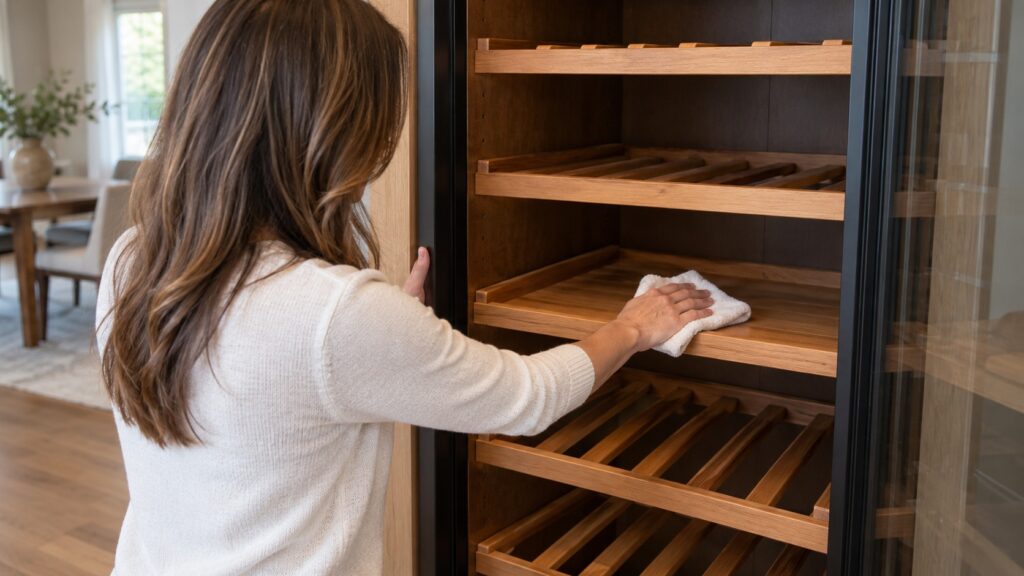
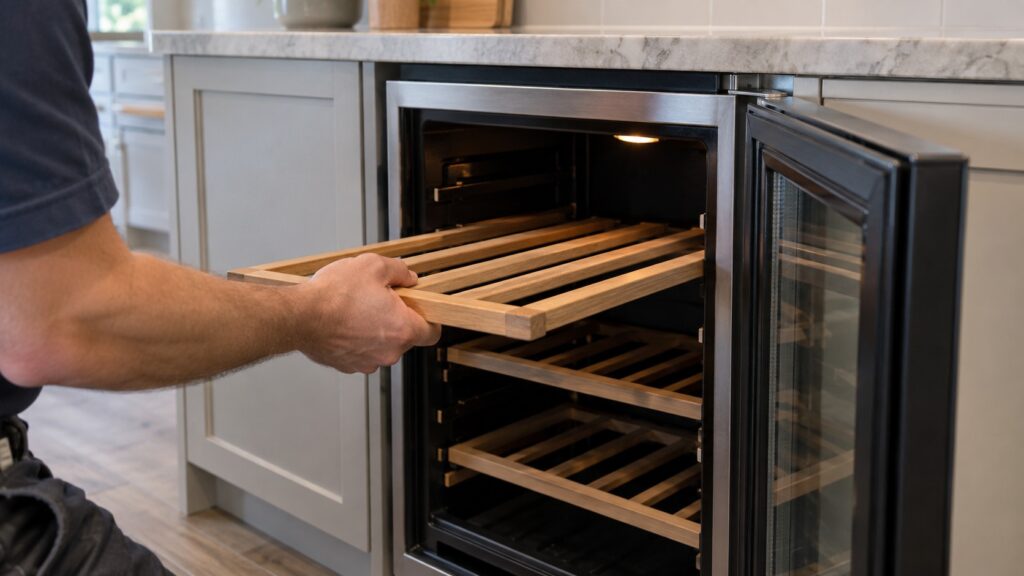
Wipe shelves and walls with plain warm water or a tiny amount of neutral cleaner on a soft cloth, never a scented product. Wring the cloth until it is damp and dry the surface afterward. Do not use abrasive pads, chlorine cleaners or strong solvents. Wooden shelves, where your model has them, should not be soaked; a damp cloth and a dry one are enough. If you take a shelf out, hold it level over the cabinet and put it back the same way, since shelves are made for their positions.
How do you clean the glass door and the gasket?
The glass on a wine unit is UV-protected and tinted to shield the wine from light. Our glass door care guide says to use a soft microfiber cloth and a mild glass cleaner, wipe both faces and dry to avoid streaks. Do not use abrasive pads that scratch the tint, and avoid harsh solvents that could damage the UV coating or the seal. Spray the cleaner on the cloth rather than on the glass, so none runs into the frame or the gasket.
Wipe the door gasket with warm water to remove residue so it grips evenly, and check that the door closes square. A wine cabinet depends on a tight seal to hold its zones, and a sticky or damaged gasket lets warm air in. Do the paper test: close the door on a strip of paper and pull it, at several points. If the seal is torn, our door seal replacement guide explains how a new gasket is fitted, though a glass door is heavy and a technician is the safer choice.
What about the charcoal filter?
The activated-charcoal FreshAir filter keeps the air fresh, so the wine does not absorb odors over long storage. Our wine cabinet charcoal filter guide says to replace it on Liebherr’s recommended interval, sooner if you notice a stale smell, and after storing anything strongly scented nearby. Twist or unclip the old cartridge as your manual shows, fit a genuine replacement and do not try to wash and reuse a charcoal filter. A saturated filter does nothing and gives no warning, so mark the date.
What about the ventilation grille and the condenser?
Cleaning the interior is half the routine. The other half is keeping the cabinet’s heat path clear. Dust on the ventilation grille makes the unit work harder, so vacuum the grille gently from the outside with a soft brush, as our maintenance guide advises. Do not remove panels or reach into the compressor area. For built-in units, make sure nothing has been stacked against the grille or the niche since installation. See our guide to built-in ventilation if you are unsure where your unit breathes.
How do you protect the wine while you clean?
Keep the work short and the doors closed between steps. Do not move bottles unnecessarily, because vibration disturbs sediment. Avoid storing strong-smelling items nearby, such as cleaning products in the same cupboard. After cleaning, let the cabinet settle for a while before you judge the temperature; a short door opening can make the display swing for a moment and then recover. If the unit holds temperature poorly afterward, see our wine cabinet temperature guide.
When should you call a technician?
Call if the glass is cracked, the gasket is torn, the cabinet will not hold its temperature after cleaning, a light or control stops working or you notice water inside. If water reaches a socket, switch off the breaker at the panel while standing on a dry floor, and do not pull a plug from a wet outlet. Our wine cabinet repair page explains how a visit works.