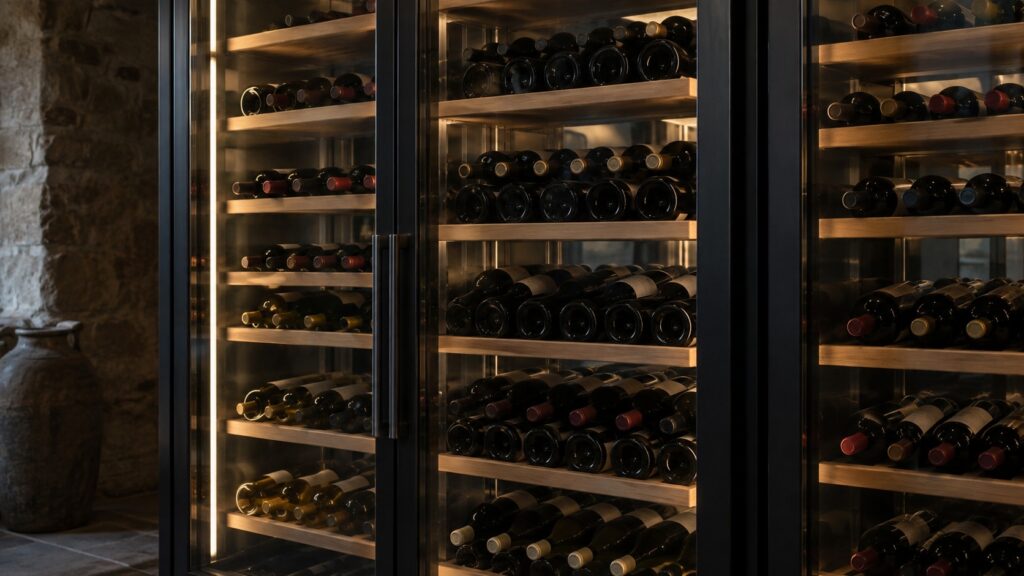
A Liebherr GrandCru repair or replace decision carries higher stakes than the same call on an ordinary wine fridge, because a GrandCru cabinet is built for long-term aging rather than short-term serving — the bottles inside can represent years of cellaring and a collection value far beyond the appliance itself. That changes the math: a repair that would be an easy call on a serving fridge can be worth pursuing on a GrandCru cabinet even at a higher cost, simply because the alternative risks the collection during a stressful replacement window, and a failure that would be a minor inconvenience elsewhere can justify urgent same-day attention here.
Why does a GrandCru cabinet deserve a different standard than a serving fridge?
A wine fridge meant for serving temperature holds bottles for weeks or months at most, and a brief temperature swing rarely does lasting damage to wine that will be opened soon anyway. A GrandCru aging cabinet is designed around the opposite assumption: bottles may sit inside for years, developing slowly at a stable temperature and humidity that the cabinet is specifically engineered to hold steady. A fault that causes even a moderate, sustained temperature swing in an aging cabinet has more time to affect the wine than the same fault would in a serving unit, because aging wine is simply exposed to the problem for longer before anyone necessarily notices.
This is why a GrandCru fault is worth treating with more urgency than a similar symptom on a standard wine fridge — not because the appliance itself is more fragile, but because what is inside has more to lose from a slow response.
What faults are usually worth repairing on a GrandCru cabinet?
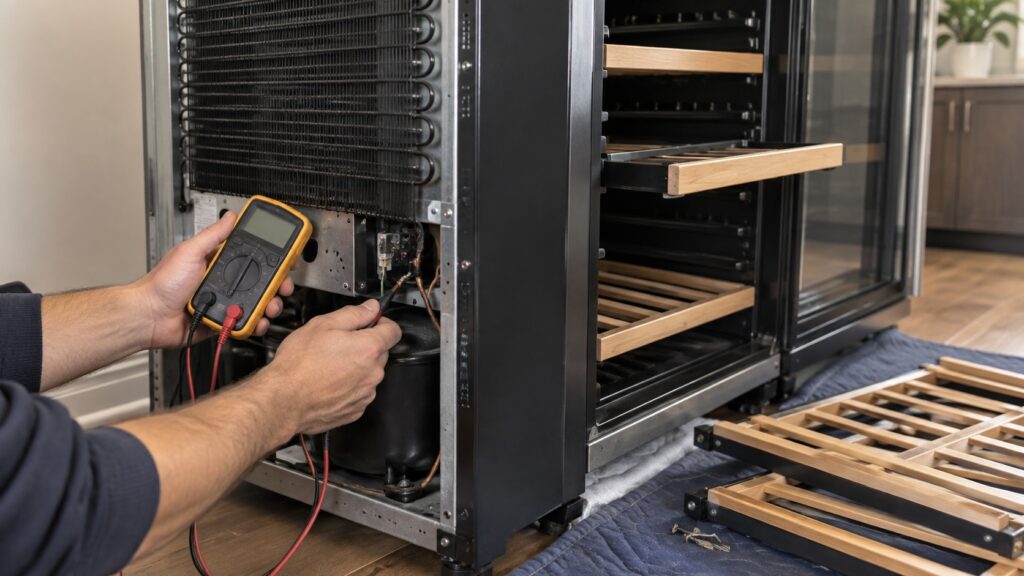
Most single-component failures are worth repairing quickly rather than replacing the whole cabinet, especially if the unit is otherwise in good condition. A failed temperature sensor, a compressor that has stopped cycling correctly, or a worn door seal are all faults where the aging environment can usually be restored to normal once the part is replaced, and the collection inside is rarely affected if the repair happens promptly. These are also faults where a technician can typically confirm the specific part at fault from the cabinet’s error code or symptom, rather than guessing, which keeps the repair itself fast once it is booked.
The urgency matters more than it would elsewhere: if a GrandCru cabinet is showing a temperature or door alarm, treat it as time-sensitive rather than something to schedule around a convenient week, because every day the fault continues is a day the aging environment is out of the range the wine was meant to develop in.
How can you tell whether temperature exposure has actually harmed the wine?
Not every temperature excursion damages a collection, and it is worth having realistic expectations before deciding a whole batch is ruined. A brief swing of a few degrees, caught quickly, rarely does lasting harm to wine built to age for years — it is sustained exposure well outside the target range, over days rather than hours, that raises real concern. If a fault went unnoticed for an extended period, tasting a lower-value bottle from the affected batch before deciding what to do with the rest of the collection gives you a practical read on whether real damage occurred, rather than guessing from the length of the outage alone.
When does replacement become the more sensible choice?
Replacement becomes worth considering seriously when a cabinet has already had a major repair and is failing again within a short window, when the unit is old enough that parts availability is becoming uncertain, or when a fault has caused a temperature swing severe enough that the aging environment was compromised for an extended stretch regardless of what gets fixed. In that last case, the decision is really about the cabinet’s future reliability rather than the collection already affected — a cabinet that has proven unreliable is a risk to whatever you store in it next, aged wine included.
Cost alone should not be the only factor. A GrandCru cabinet is a specialized appliance, and a straight price comparison against a generic wine fridge misses the point of why you bought one — if you still need genuine long-term aging capability, the replacement to compare against is another aging-capable cabinet, not a cheaper serving unit that will not do the same job.
It is also worth separating the appliance’s condition from the cellar plan behind it. Some owners bought a GrandCru cabinet years ago for a collection that has since grown, and a failing cabinet is sometimes the moment that prompts a real question about whether its current capacity and zone layout still fit that collection — in which case replacing with a larger or differently configured cabinet may be worth considering even if the original unit could technically still be repaired.
Can you keep aging wine safe while you decide?
If a GrandCru cabinet has failed and a decision on repair versus replacement will take more than a day or two, moving the most valuable or longest-aging bottles to a stable, cool, dark location — even a basement or an interior closet away from temperature swings — is better than leaving them in a cabinet that is actively malfunctioning. This is a temporary measure, not a storage solution, but it buys time to make the repair-or-replace decision properly rather than under pressure. Our GrandCru aging care guide covers the target conditions to aim for during that interim period, and our general wine cabinet repair-or-replace guide is useful background if you are weighing the decision on a non-aging unit at the same time.
What should guide the final decision?
- Confirm the specific fault first. A sensor or seal issue and a compressor failure have very different repair costs and timelines.
- Weigh the cabinet’s age and repair history — a first fault on a younger unit favors repair; a second major fault on an older one favors replacement.
- Consider the collection’s value and how long it needs to age — a collection with years left to develop justifies a faster, more thorough repair decision than one close to being opened anyway.
- Get a same-day diagnosis rather than guessing from symptoms alone, since the correct decision depends on which specific part has failed.
If your GrandCru cabinet is showing a temperature or door alarm right now, treat it as urgent. You can schedule wine cabinet repair for a same-day diagnosis, or book a visit directly and describe the symptom so a technician can advise on repair versus replacement before your collection is at risk.