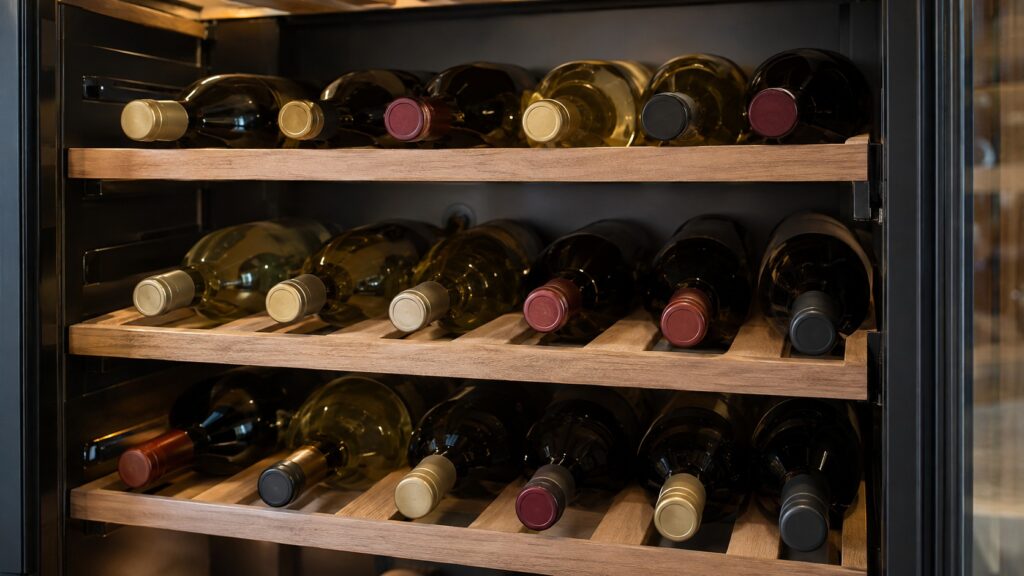
How Liebherr wine cabinets control humidity comes down to one idea: the cabinet does not add or remove moisture with a dedicated humidifier, it holds a steady, moderately humid air mass by keeping the cooling surface gentle, the door sealed and the airflow slow. Where a wine cabinet is placed and how often the door opens therefore matter as much as any internal part, and the cabinet is built to make the stable result easy to reach.
How do Liebherr wine cabinets keep humidity steady?
A wine cabinet is a closed box, and the humidity inside it follows from a few physical facts. Air inside cools as it passes the cold surface, and cooler air holds less moisture, so some water condenses on the cooling surface and drains away. If the cooling surface were very cold and the air moved fast, the cabinet would dry out. Liebherr designs its wine cabinets with a gentle cooling approach, so the air stays cool without being stripped of moisture. That is why a cabinet in good condition settles at a humidity level that is comfortable for corks and labels, without any humidifier or tray of water.
The manual for your model gives the humidity range the manufacturer expects. Treat that range as a guide rather than a guarantee, because conditions in the room, the number of bottles and the number of door openings all shift the result.
What role does the door seal play?
The door gasket is the most important humidity part of the cabinet. A good gasket keeps room air out, which keeps the cabinet’s moisture in. When the gasket is worn, folded or dirty, room air leaks in, the cooling system has to work harder, and the air inside swings from damp to dry. If you ever see a line of condensation along the door edge or find the door does not close on a sheet of paper with slight resistance, the gasket is a likely cause. Our guide to wine fridge glass door care shows how to clean the glass and the seal without damaging either.
It is also worth checking that the cabinet stands level and that the door closes by itself from a short distance. A cabinet that leans slightly can hold its door open by a small gap, and a small gap is enough to disturb the humidity over a few days.
How does the charcoal filter help?
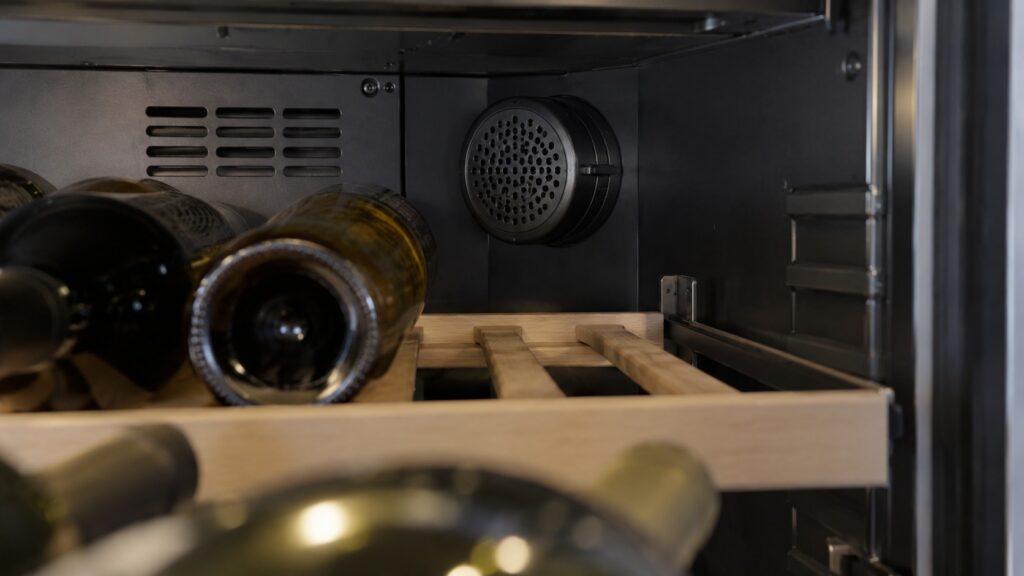
Many Liebherr wine cabinets include an activated charcoal filter that cleans the air entering the cabinet. The filter removes odors and other airborne contaminants that could taint the cork and, over years, the wine. It does not change the humidity level on its own, but a cabinet that smells musty or has visible mold on the shelves is telling you that the air is both damp and unfiltered. Replace the filter on the schedule in the manual and do not wait for a smell to appear. Our charcoal filter guide covers when and how to do it.
What does too much or too little humidity look like?
Low humidity is quiet. Labels curl at the edges, corks may feel hard, and the cabinet feels dry to the touch. A single label curling is not a cause for alarm, but if many bottles show the same signs, the cabinet may be drying out because the door is not sealing, the cabinet runs too cold or the room is very dry. High humidity is more visible. Droplets form on the glass, shelves feel damp, labels peel and a musty smell appears. If you see this pattern, check that the cabinet is not packed so tightly that air cannot circulate, then check the seal and the filter. Our site also has pages for the specific symptoms, including the wine cabinet humidity high page.
How do temperature and vibration fit in?
Humidity is only one of the conditions that keep a bottle in good shape. Temperature swings and vibration matter just as much. A steady temperature slows the air movement that would otherwise carry moisture in and out. Our guide to ideal wine storage temperature gives sensible targets, and the guide to wine vibration damping explains why the compressor in a wine cabinet is mounted to keep movement away from the bottles. If the cabinet has several temperature zones, the humidity can differ slightly from one zone to the next, since each zone has its own airflow, as described in our guide to how multi-temperature wine storage works.
What can you do to help the cabinet?
- Leave a few inches of space around the cabinet so the vents can breathe.
- Keep the cabinet out of direct sun and away from ovens and dishwashers.
- Open the door briefly and close it fully each time.
- Do not pack bottles against the back wall, since airflow has to pass behind them.
- Clean the gasket occasionally with mild soap and water and dry it.
If the cabinet stays damp or dry even after these steps, a technician can check the seal, the fan and the sensor. See our wine cabinet repair page for how a visit works.