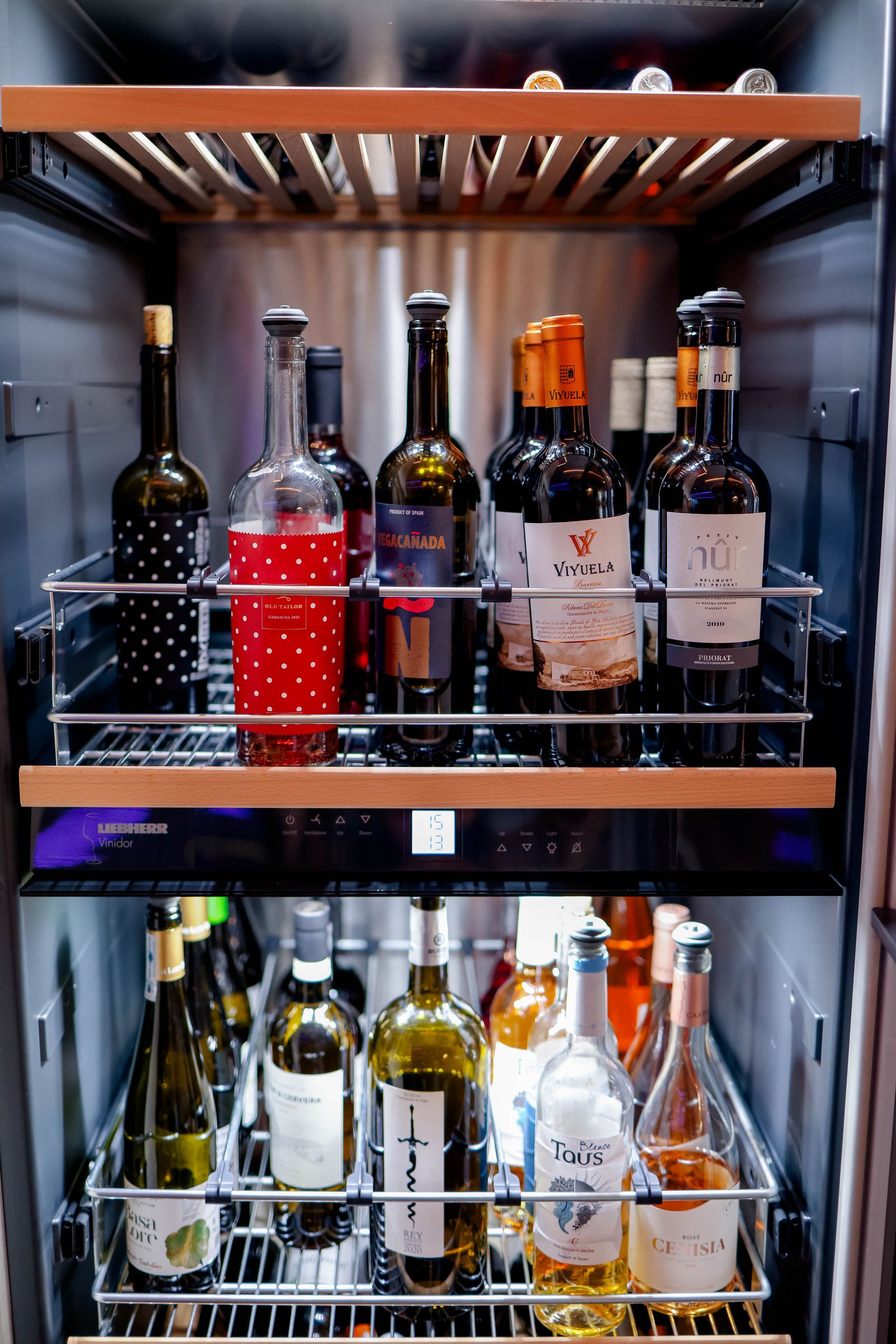
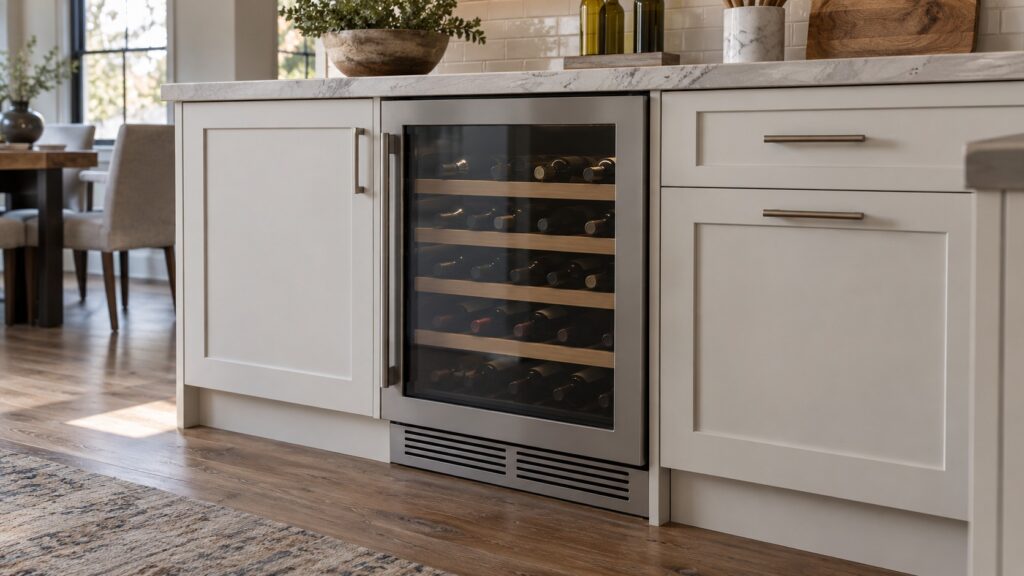
How Liebherr built-in wine fridge ventilation works depends on the type. An undercounter built-in wine fridge is designed to vent from the front, through a grille at the base, so it can sit flush under a counter with no gap at the back. A taller built-in wine column is rear-vented, like a built-in refrigerator column, and needs air space behind and above it. Either way, the cooling system pushes heat out of the cabinet, and the ventilation path is how that heat leaves.
Why does a wine fridge need ventilation?
A wine fridge does not make cold; it moves heat. The cooling system draws heat from the inside of the cabinet and releases it into the room through a condenser. To carry that heat away, air has to flow over the condenser. If the air cannot flow, the heat stays where it is, the compressor runs longer and the unit may not hold the temperature you set. A freestanding unit with space around it gets this air from the room. A built-in unit sits inside cabinetry, so the design must provide an air path that the cabinetry does not block.
This matters more for wine than for many foods because wine storage depends on a steady temperature. A unit that is working hard to shed heat can swing more, and our ideal wine storage temperature guide explains why stability is the goal.
How does an undercounter built-in model vent?
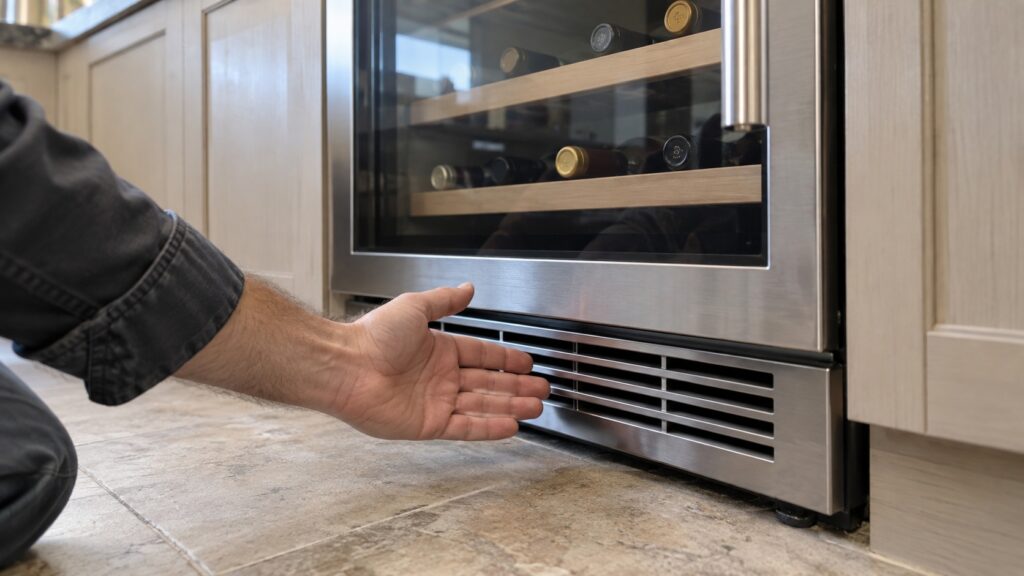
Our undercounter wine fridge installation guide states the design: built-in Liebherr wine fridges are made to vent from the front, so they sit flush under a counter with no gap at the back. They exhaust heat through a front grille at the base. That grille is the unit’s way of breathing, so never block it, cover it or recess it behind a panel. A cabinet toe-kick must leave the grille open, or the cabinetry must provide an opening in line with it. Covering it traps heat and makes the unit run warm.
The side and top clearances are also set by the manual. Leave what Liebherr specifies for your model, and make sure the cabinet opening matches the unit’s dimensions. A freestanding-only model must not be enclosed; check that yours is rated for built-in use before it goes into a cabinet.
How does a built-in wine column vent?
A column is a different design. Our guide to installing a built-in wine refrigeration column says it is rear-vented, like a Monolith refrigerator column, and needs airflow space behind and above it, not just at the front. The exact clearances vary by model and are printed in the installation manual, but the pattern is consistent: room behind the cabinet for the condenser to breathe, a path for the heat to leave upward or through a rear grille and a cabinetry opening cut to the model’s dimensions.
The cabinetmaker should build the niche around those requirements before the unit arrives, because corrections afterward are disruptive. Do not seal the top or the back of the niche with a panel that blocks the air path.
How can you tell the ventilation is not working?
The first sign is a unit that runs warm or runs constantly. The cabinet may not reach the temperature you set, or it may drift. You may feel warm air or a hot surface where the heat should be leaving, or hear the compressor running for long periods. Our freestanding versus built-in comparison notes that a built-in installation is where a ventilation mistake is most likely. A newly installed unit that runs warm should have its front grille checked first, because a blocked grille is the first suspect.
Other causes can look similar, so check the door seal and the level, and see our wine fridge uneven cooling guide and wine unit not cooling guide for the next steps.
What can you do yourself?
Look at the grille. Make sure nothing is in front of it, that the toe-kick or trim does not cover it and that dust has not built up in its slots. Vacuum it gently from the outside with a soft brush if it is dusty. Check that nothing has been stacked on or against the unit that blocks air. If the unit is in a niche, check that no panel has been added behind or above it since the install. Do not remove panels or reach into the compressor area; that is a technician’s job. If the unit is enclosed but meant to be freestanding, take it out of the enclosure.
When should you call a technician?
Call if the grille is clear and the unit still runs warm, if the niche needs changing, if you hear unusual noises or if you smell burning. If you smell burning, switch off the breaker at the panel while standing on a dry floor. Our wine fridge repair page explains how a visit works, and an installer can check the niche and the clearances.
If you are planning a new kitchen, raise ventilation with the cabinetmaker at the very start. A grille that is hidden by a decorative toe-kick, or a niche closed off at the top for a neat appearance, are the usual mistakes, and both are easy to avoid on paper and expensive to correct once the cabinets are in. Bring the installation manual to the first meeting and mark the air path on the drawings.