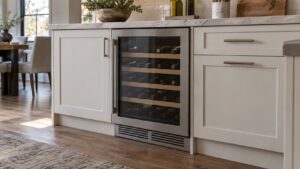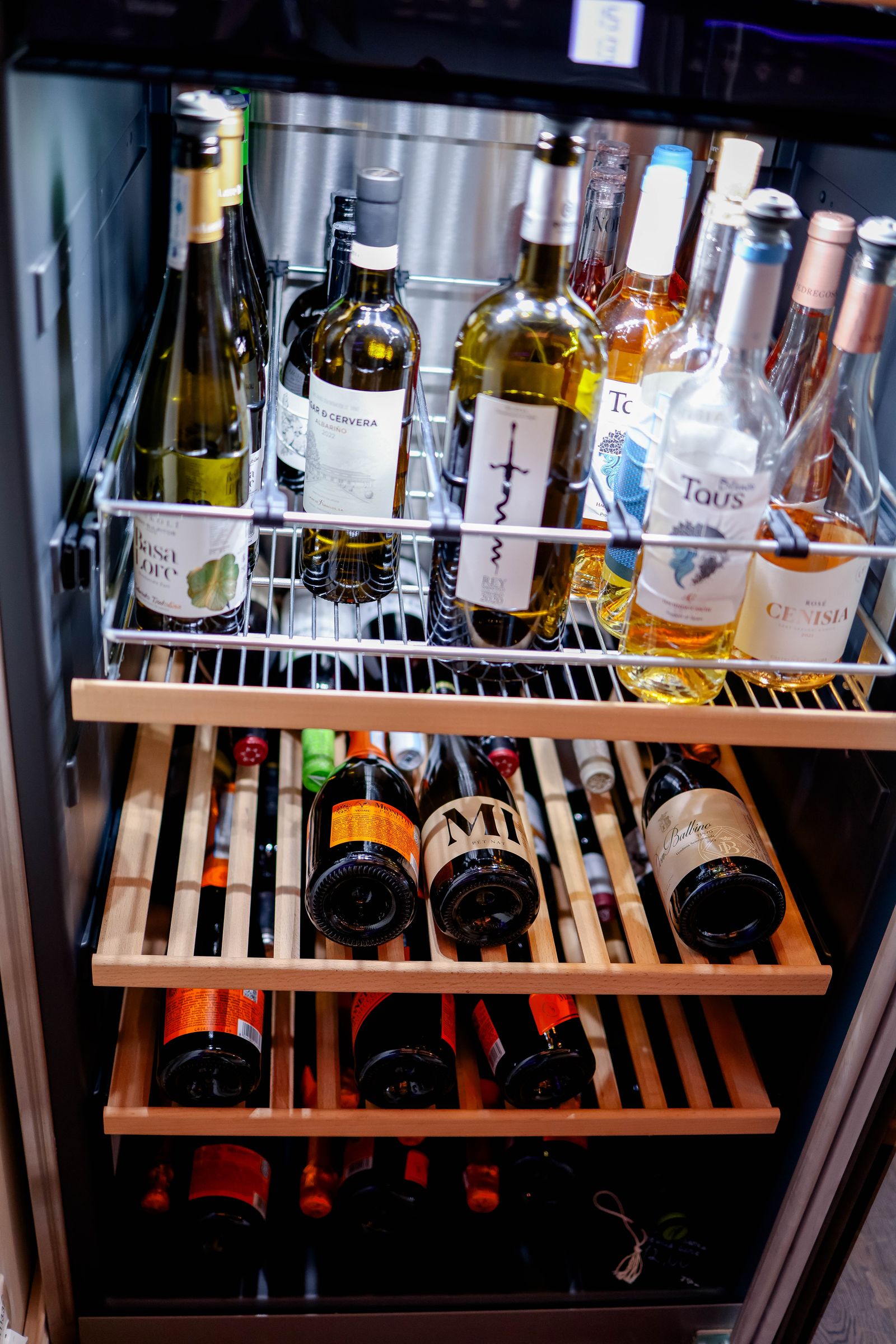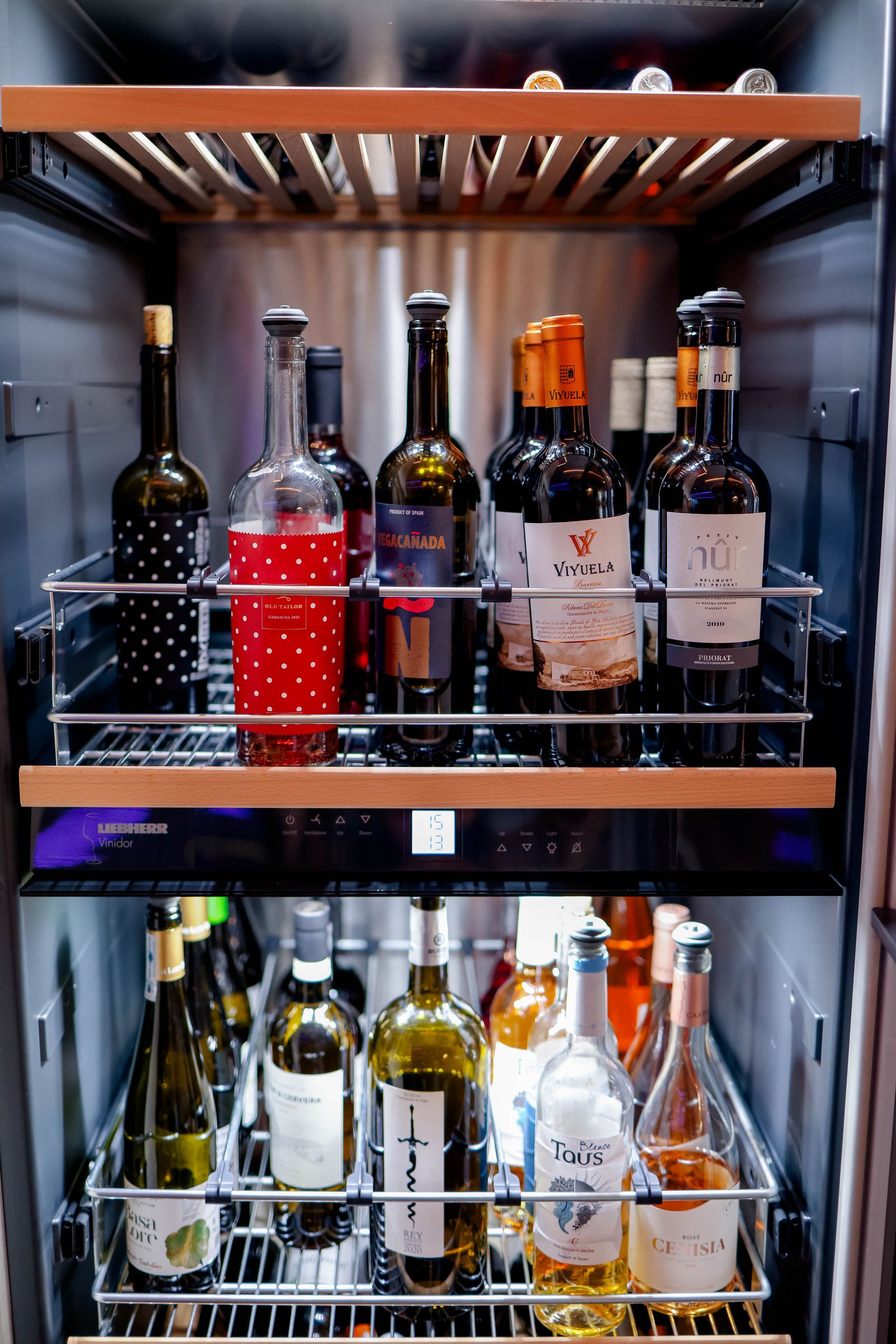
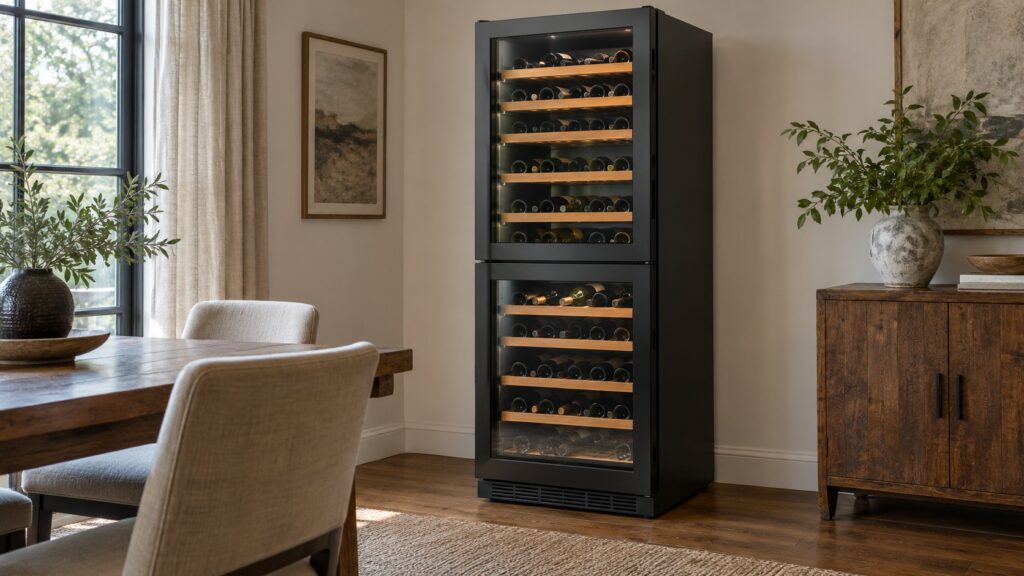
The Liebherr WTes 5972 Vinidor is the largest of four WTes wine fridges listed on our site. According to our model pages it holds about 211 bottles in three independent zones, stands 29.9 inches wide and 74.0 inches high, and is freestanding. The smaller siblings are the WTes 1672 (about 34 bottles, two zones), the WTes 4677 (about 165 bottles, three zones) and the WTes 5872 (about 178 bottles, three zones). This guide compares the four so you can match the unit to the bottles you actually serve.
What is a Liebherr Vinidor, and what do WTes models have in common?
Vinidor is Liebherr’s multi-temperature wine series, built for serving rather than long-term aging. Our Vinidor glossary describes a unit with two or three independent zones, each freely settable, so reds, whites and sparkling wine can each sit at their own serving temperature behind one or two doors. Adjusting one zone does not affect the others.
According to our model pages, the four WTes models share the same feature list: controlled humidity to protect corks, an activated-charcoal FreshAir filter, UV-protected tinted insulating glass, a low-vibration compressor, dimmable LED interior lighting, SmartDevice Wi-Fi readiness and a stainless finish. Treat the figures on this page as approximate, and confirm the exact specification of your unit on its rating plate and in its manual.
How do the WTes 1672, 4677, 5872 and 5972 differ?
The answer is mostly size and bottle count. The WTes 1672 is the compact model, 23.6 inches wide and 34.0 inches high, with two zones and about 34 bottles; our model pages list it as under-counter or freestanding, though one page shows only freestanding, so check the manual before you build it into cabinetry. The other three are full-height at 74.0 inches. The WTes 4677 is 27.8 inches wide, and the WTes 5872 and WTes 5972 are both 29.9 inches wide. Between the 5872 and 5972, the extra width does not change; the capacity does, from about 178 to about 211 bottles.
The model names also carry the usual Liebherr pattern: the family letter, the lowercase cluster and the four digits, which indicate size class and generation. Our model number decoder explains how to read them, and that the W family covers wine in every form. Quote the full name, including Vinidor, when you ask for parts or service.
Other WTes numbers turn up in searches too, such as names with an extra letter in front of the model, or numbers that are not on our site. We only publish specifications for the four models above, so for any other name rely on the rating plate and the manual. Your manual shows where the plate is; photograph the whole plate, serial number included, because two units from the same family can need different parts.
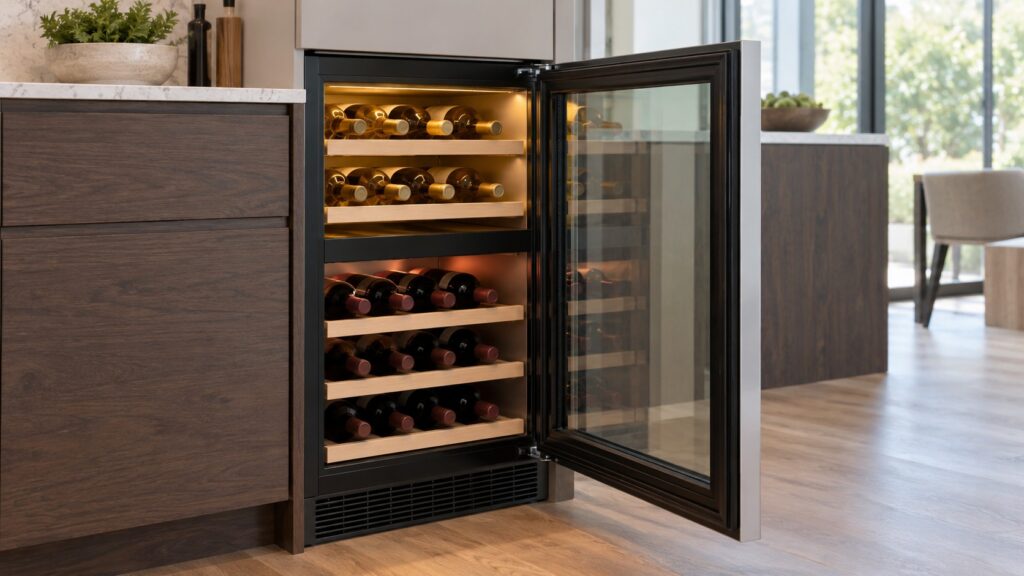
Which WTes size suits how you serve wine?
Think about the bottles you reach for in a month, not the number you could fit. The compact WTes 1672 suits a household that wants a handful of reds and whites ready to pour. The larger models suit someone who entertains and wants a working selection across several styles, including a zone for sparkling wine or a short-term reserve. Our Vinidor zone setup guide gives starting points: reds in a warmer zone around 59°F to 63°F (15°C to 17°C), whites in a cooler zone around 46°F to 50°F (8°C to 10°C), and the coolest zone for sparkling wine. Allow several hours for each zone to stabilize before loading, and see setting dual-zone serving temperatures for the basics.
If your main goal is long-term aging of a growing collection at one steady temperature, a wine cabinet is a different product. Wine cabinet versus wine fridge explains the split between GrandCru and Vinothek cabinets and Vinidor fridges.
What should you check before installing a WTes?
Ventilation first. Our guide on freestanding versus built-in wine fridges warns that a freestanding-only unit vents from the back or sides and must not be enclosed in a tight cabinet, or it will overheat. Three of the four WTes models are listed as freestanding, so leave the clearance the manual specifies. Measure the floor space, the door swing and the route to the room; the full-height units are heavy and tall.
Plan for a level floor and a grounded outlet you can reach. A unit that is not level can hum or vibrate, and a low-vibration compressor is only part of the answer; see our notes on wine vibration damping.
How do you look after a WTes once it is running?
Three habits matter. Wipe the glass and gasket and check the seal, because a poor seal makes a unit work harder. Replace the activated-charcoal FreshAir filter on the manufacturer’s schedule, which our charcoal filter guide covers for Liebherr wine units in general; the interval and the way to change it for your WTes are in your manual. And keep zones set within their approximate 41°F to 68°F range. If a zone will not hold its target after it has stabilized, rule out the seal and ventilation first, then book a technician. Our wine fridge uneven cooling guide covers the checks, and Liebherr wine fridge repair explains a visit.