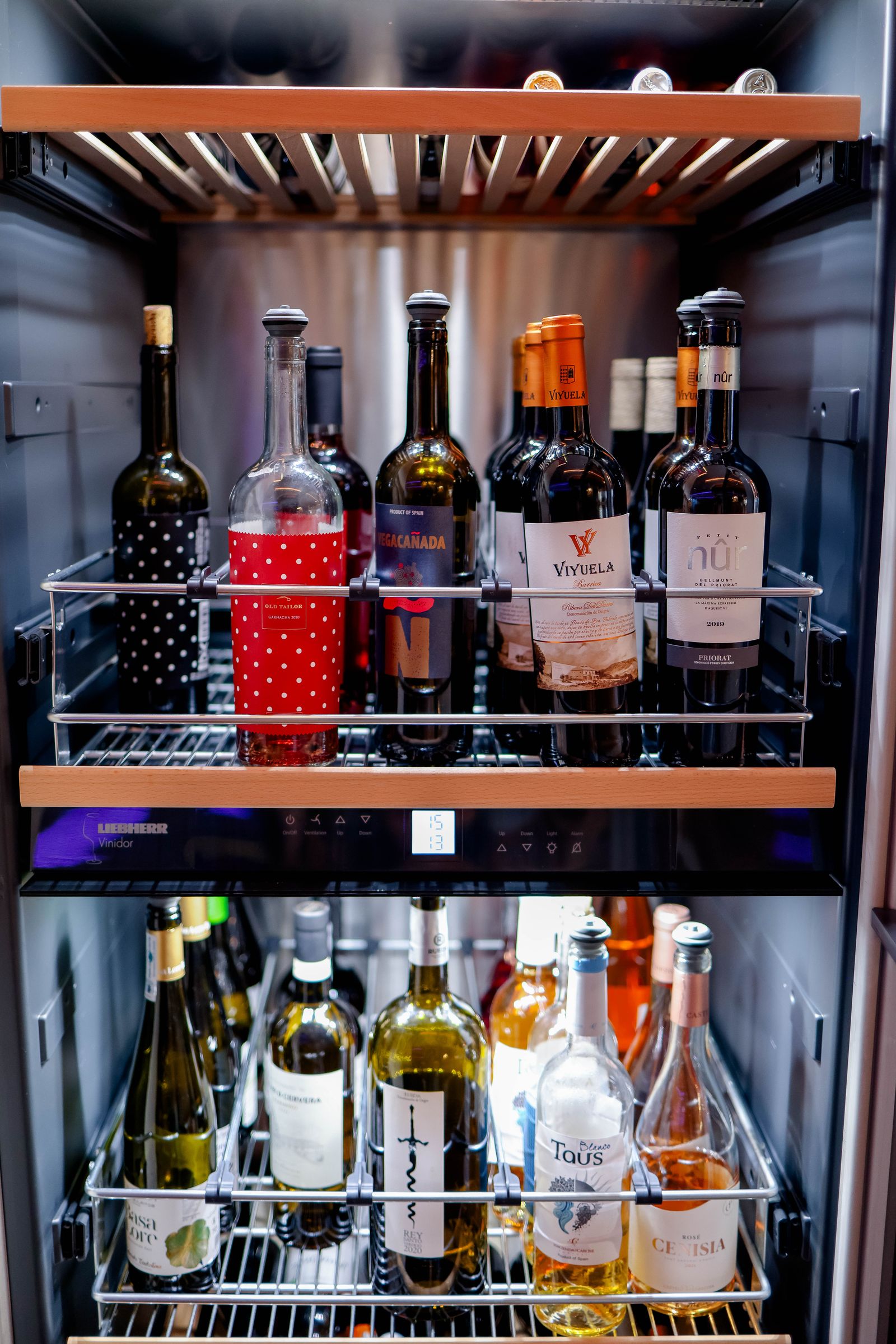
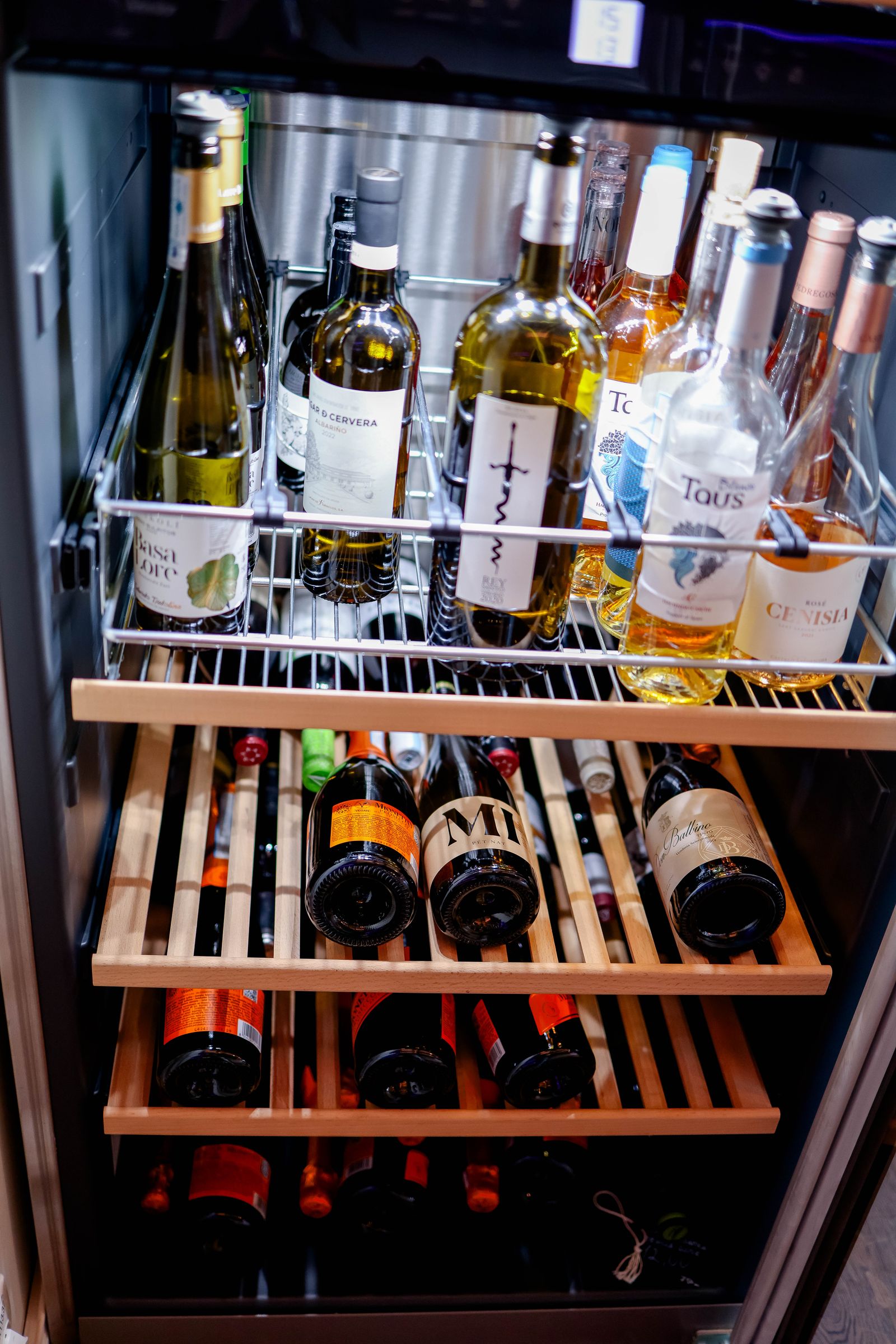
The freestanding vs built-in wine fridge decision is mainly about where the unit will live and how it sheds heat. Liebherr makes both, and choosing wrong – especially enclosing a freestanding-only unit – causes overheating, so it pays to understand the difference.
Built-in (integrable)
- Vents through a front grille, so it fits flush under a counter or in a cabinet run.
- Seamless, fitted-kitchen look.
- Must keep the front grille completely clear.
Freestanding
- Vents from the back or sides, so it needs air clearance around it.
- Movable and flexible – it comes with you if you move home.
- Must not be enclosed in a tight cabinet, which would trap heat.
How to choose
- Decide if you want a flush built-in look or a movable standalone unit.
- Check the model is rated for the use you intend – integrable or freestanding-only.
- Measure the opening or floor space, including ventilation clearance.
If you choose built-in, follow our undercounter installation guide for ventilation and clearances. To match it to your serving needs, see dual-zone serving temperatures.
Buy for the long term
Both formats deliver the same precise multi-zone cooling. Compare built-in and freestanding wine fridges on the manufacturer’s site at home.liebherr.com. When yours needs service, our certified technicians can help – book a visit.
Freestanding Vs Built-in Wine Fridge: Key Takeaways
To recap on freestanding vs built-in wine fridge: work through the simple checks first, keep the appliance clean and correctly set up, and address small symptoms before they grow. The guidance above on freestanding vs built-in wine fridge reflects how our certified technicians approach the same situations in the field, and following it keeps your Liebherr appliance performing the way it was engineered to.
- Start with the easiest, lowest-cost checks and confirm settings, seals, and airflow before replacing any part.
- Use only genuine Liebherr parts and filters so performance and food safety are not compromised.
- Keep up a simple maintenance routine, which prevents most problems and protects long-term value.
- Know when a job needs a professional, especially anything involving the sealed refrigeration system, sensors, or built-in cabinetry.
If the steps here do not resolve your situation, the next move is a proper diagnosis rather than guesswork. Our team services Liebherr refrigeration and wine-storage appliances across all 50 states and 120+ metro areas, and the booking form accepts requests 24/7. You can schedule a service appointment at any time, review full specifications on the manufacturer’s site at home.liebherr.com, or browse comparable units on our model pages. Acting early on freestanding vs built-in wine fridge almost always means a smaller, simpler, and less costly repair down the line.
When to call a Liebherr technician
It is worth being clear about the line between sensible owner maintenance and work that belongs with a professional. Routine cleaning, simple resets, filter changes, and basic setup are well within reach for most owners and are exactly where this guide focuses. Anything involving the sealed refrigeration system, a temperature or evaporator sensor, the control board, or removing a built-in column from its niche is different: those repairs carry real performance and warranty implications and should be handled by a certified technician with the correct tools and genuine Liebherr parts. A Liebherr appliance is a long-term, premium investment built to run for many years, so it is almost always worth maintaining and repairing properly rather than letting a small problem compound. When in doubt, a quick diagnostic visit removes the guesswork, protects the appliance, and gives you a clear, written quote before any work begins so there are never surprises.