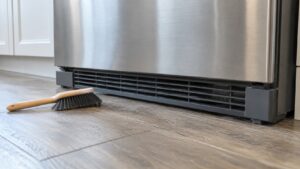
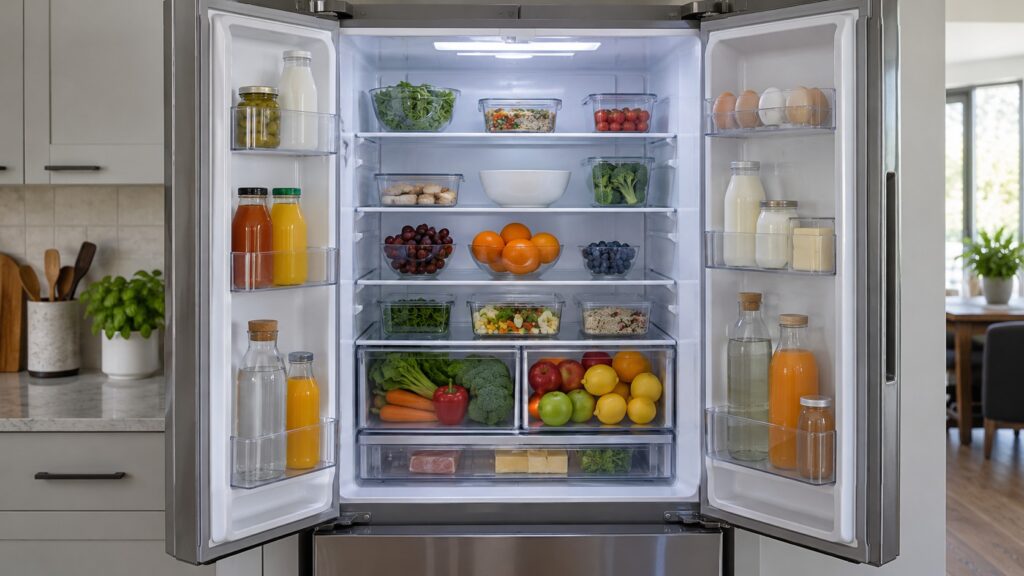
How to organize a Liebherr refrigerator comes down to zones: put each kind of food where the cabinet suits it, keep raw items low and ready-to-eat items high, use the humidity drawers for what they are made for, keep the door for the sturdier items and leave air room around the vents. Move the shelves to fit what you buy, and keep a short routine so the cabinet does not turn into a pile.
Why does organization matter in a refrigerator?
A refrigerator is not the same temperature everywhere. The door is the warmest part, the lowest shelf and drawers can be colder and a fan-cooled cabinet moves air from the back. Putting the right food in the right place keeps it fresher and safer, and it cuts the time the door is open while you search. Our temperature settings guide explains what the set temperature means for the cabinet as a whole. A tidy layout also stops food being forgotten at the back, which is where most waste starts.
It also protects performance. A cabinet packed against its rear wall cannot circulate air, and one stuffed with loose packaging works harder. Organization and airflow are the same problem.
How should you divide the shelves?
Think in layers. Keep ready-to-eat food, such as leftovers, cooked dishes, cheese and deli items, on the upper and middle shelves, where you see it. Put raw meat and fish on the lowest shelf, in sealed containers or on a tray, so that nothing drips onto food below; this is a standard food-safety habit. Keep eggs and milk inside the cabinet rather than in the door, since the door is the warmest spot. Group similar items together, so you can find them and so you do not open the door repeatedly.
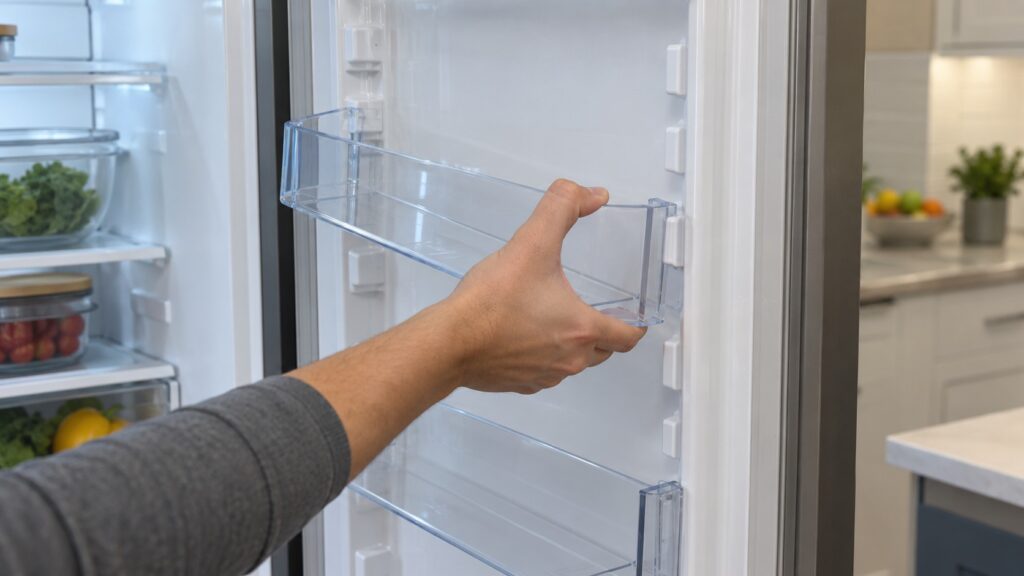
Shelves are adjustable. Our guide to Liebherr refrigerator shelves shows how to lift out a shelf and reposition it: empty it first, lift the front, tilt and draw it out. Split or half-depth shelves let you leave a tall gap on one side. Heavier items belong low and toward the middle of the shelf.
How do you use the drawers and special zones?
Our glossary of interior features explains the two humidity drawers: a high-humidity drawer for fruit and vegetables that wilt in dry air, and a low-humidity drawer for meat and fish that spoil in damp air, each with a slider that sets how much. Put produce in the first and proteins in the second, and avoid the mix-up that causes most complaints. Do not overload a drawer, because one that does not close fully loses its climate.
If your model has a BioFresh zone, our guide to how BioFresh works describes the dedicated cold zone and what it is for, and our EasyFresh versus BioFresh comparison helps you choose what to put where. On models with a freezer section that uses VarioSpace, our VarioSpace glossary entry explains how drawers and shelves lift out to make one tall space. What your exact model offers is listed in the manual.
What belongs in the door?
The door is for items that cope with the warmest conditions: jars, sauces, condiments, juice and drinks. A bin loaded with full bottles carries more weight than it looks, and a door slammed on an overloaded bin cracks the bin. Distribute weight low and near the hinge side, and treat a cracked bin as a part to order. Keep the door bins from bulging so the door closes fully; our door alarm guide explains what a door that is not shut looks like to the cabinet.
How do you keep air moving?
Leave room around the vents at the back and do not push containers hard against the rear wall. Our PowerCooling explanation describes the fan that circulates chilled air so every shelf stays within the same narrow range, and clear vents matter for it. Leave small gaps between packages. Avoid covering shelves with trays or liners that block the spaces between shelf and wall. If one shelf runs warm, think about airflow before you think about a fault.
How do you stop it turning into a mess?
Use a short routine. Before you shop, look at what is in the cabinet and throw out what has gone. When you put the shopping away, move older items to the front and new ones to the back. Use clear containers and label leftovers with the date. Do a quick wipe of any spill as it happens; a spill that runs behind a drawer causes smells later. A fuller clean belongs in the yearly routine in our annual maintenance checklist. If one area stays warm even when the layout is sensible, see our not-cooling guide.
How do you adapt the layout to your household?
A layout that suits a single person will not suit a family that cooks in bulk. If you meal-prep, give the middle shelf to labeled containers at eye level, so the week’s food is the first thing you see. If you have children, a low shelf for snacks keeps them out of the raw items and the door open for less time. If you entertain, clear a full shelf by moving a split shelf or removing one, so a tray or a tall bottle fits without being wedged against the vents. Revisit the arrangement when your habits change, because the best layout is the one you actually keep.
Seasonal shifts matter too. In summer you may keep more drinks and salad, in winter more cooked dishes and dairy. Reposition the shelves to match, as our shelf guide describes, and use the same routine of wiping and checking dates whenever you do. A cabinet that is reorganized a few times a year tends to stay clean and cool, and you notice sooner when something is not right.