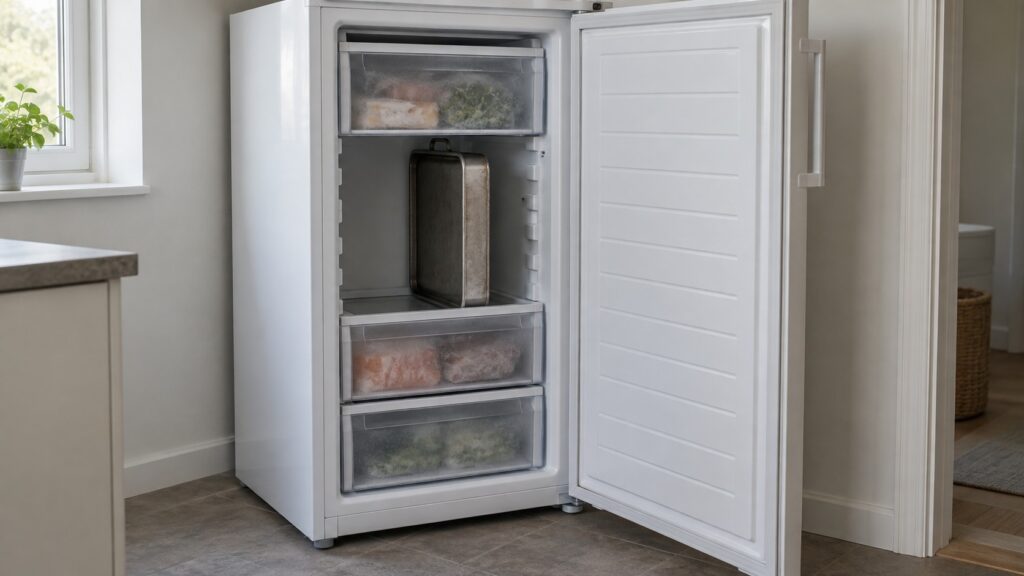
What is VarioSpace? It is Liebherr’s name for a freezer interior designed to be taken apart: the drawers and the glass shelves above them lift out, so a compartment divided into neat levels becomes one tall open space for a turkey, a sheet cake or a case of something that does not fit anywhere else. Nothing is unscrewed and nothing is modified. The name describes an interior that expects to be rearranged, and the useful part of the definition is knowing what comes out, what stays behind and what changes about the way the freezer behaves once you have done it.
What does VarioSpace actually do?
It solves an ordinary problem: a freezer full of sensible drawers has no single space taller than one drawer. Once a year that becomes the thing standing between you and Thanksgiving.
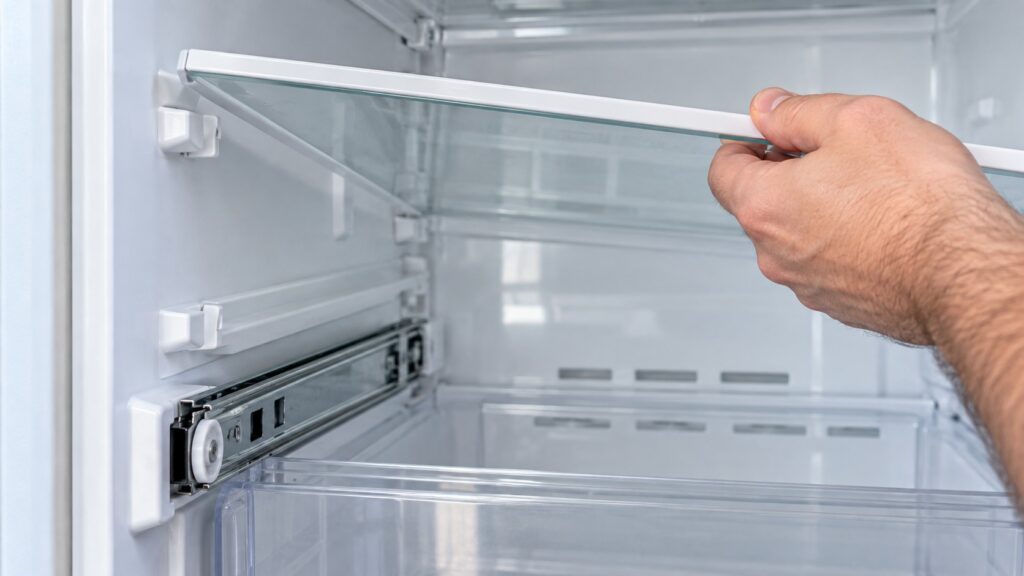
Lift out a drawer and the glass shelf above it, and the two levels become one. Take out two and you have most of the cabinet’s height in one column. The glass shelves are not structural to the cabinet — they close the top of each compartment and carry whatever you put on them — so removing one loses you nothing except the level it made.
Put the drawer and shelf somewhere clean and dry rather than back in the garage, because they are matched to the cabinet: a shelf from another size or generation will not sit on the same supports, and a drawer front from a different model will not line up with the others.
How do I take a drawer and shelf out?
Empty the drawer first, into a cooler or into another compartment. A full drawer is heavy, cold and slippery, and a dropped one cracks at the corner.
Pull the drawer fully forward to the stop, then lift the front slightly and draw it clear of the runners. Most Liebherr drawers come out that way; if yours resists, do not force it, because some carry a small clip at the back of the runner that releases with a gentle lift rather than a pull.
The glass shelf then lifts from its supports, usually front edge first. Handle it with both hands and let it come to room temperature before washing it — glass taken from a freezer straight into warm water is the most common way a good shelf is lost. Refitting is the reverse, and the one thing worth checking is that the shelf is seated on both supports rather than resting on one and leaning on a runner.
Does removing a drawer affect how the freezer works?
Not in principle, but it changes the airflow, and that is worth knowing before you load the new space.
On a cabinet with automatic defrost, cold air is moved around the compartment by a fan behind the rear wall and returns through vents in the same wall. The drawers never sealed those vents — they were designed around them. A large flat item pushed hard against the back wall can, which is why an oversized box loaded into a freshly opened space is a frequent cause of “one shelf is warmer than the rest” a week later.
Leave a hand’s width at the back, keep the vents you can see uncovered, and let a warm load settle before judging the temperature. If you want the cabinet to work harder while a big load comes down to temperature, that is exactly what the rapid-freeze function is for, and how the rapid-freeze function works covers how long to leave it on. The background on the defrost system itself is in our glossary entry on NoFrost.
How much can a glass shelf hold?
More than it looks and less than a pile of frozen roasts. Treat the shelves as strong in the middle and vulnerable at the edges, and load heavy items low and near the sides where the supports are, not overhanging the front lip.
Two habits break them. One is levering a stuck item off the shelf, which concentrates the whole force on one corner. The other is thermal shock during cleaning. If a shelf does crack, order the replacement by the full model name and serial from the rating plate rather than by measurement — the sizes look interchangeable and are not.
Our guide on organizing an upright freezer covers how to arrange the levels you keep so that the one you removed is the only one you ever need to move.
How is VarioSpace different from the other Liebherr names?
Most of the names on these appliances describe cooling: circulation, defrost, rapid chill, the close-to-freezing fresh food drawer. VarioSpace describes furniture. That distinction matters when something goes wrong, because it decides who can help you.
A drawer that will not slide, a shelf that sits crooked, a bin that has cracked — those are interior parts, and you can inspect and order them yourself this evening. Frost forming where it should not, a compartment drifting warm, a fan becoming noisy — those are the cooling system, and no amount of rearranging will change them. If you have taken a drawer out and the compartment has since started frosting, look at the loading first, then read a Liebherr freezer that is not freezing, which separates the loading causes from the mechanical ones.
When is it a repair rather than a rearrangement?
Call when frost keeps returning after the compartment has been cleared and loaded sensibly, when the fan behind the rear wall has become loud, when a compartment will not hold its setting, or when a door has stopped sealing against its gasket — a freezer with a tall open space and a poor seal frosts faster than one with its drawers in. Our guide on defrosting a NoFrost freezer covers the one-time clear-out that tells you which of those you have.
We are an independent repair company, not a factory service arm. Pricing starts from a diagnostic visit and we confirm the estimate before any work begins. Liebherr freezer repair covers fans, defrost systems, door hardware and controls, and you can schedule a visit online or call 1-844-731-4681.