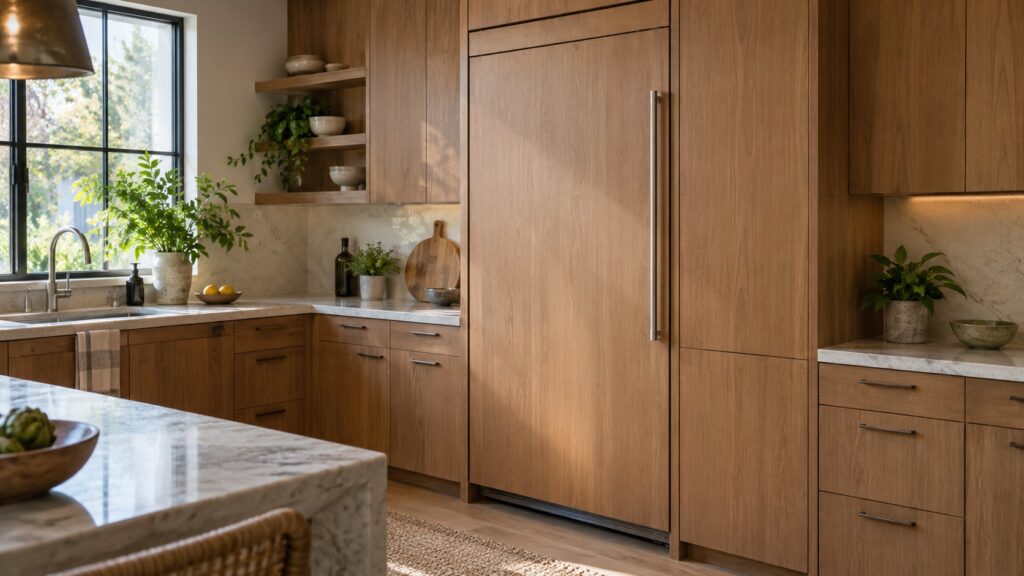
A Liebherr refrigerator panel ready model has a door made to carry a custom front, usually a panel that matches your kitchen cabinets, so the refrigerator disappears into the run of cabinetry. The panel is made by a cabinetmaker to the size and weight limits in the model’s installation manual, then fitted to the appliance door with the mounting parts the manual describes. The planning is as important as the fitting, and the fitting is a job for an installer.
What does panel ready mean on a Liebherr refrigerator?
Panel ready means the appliance is sold without a finished front and with a door built to hold one you supply. Our guide to integrated versus freestanding refrigerators compares the styles: a freestanding refrigerator shows its own door, while an integrated or panel-ready one takes its look from your cabinetry. Our Monolith column guide notes that a column can take a custom cabinetry panel or a stainless front, depending on the model. Whether a particular model offers it, and how the panel attaches, is shown on the model page and in the manual.
The reason people choose this is appearance. The refrigerator matches the cabinets around it, and the kitchen looks continuous. The price of that look is planning: the panel, the niche and the appliance must all be right before anything is installed, because corrections are far more disruptive afterward.
What do you need to plan before the panel is made?
Get the installation manual for the exact model first, and give it to the cabinetmaker. It specifies the panel’s height, width and thickness, the weight the door can carry, the gap needed around the panel and the position of the handle. Do not take these figures from a sketch or from another model, because they differ between models and the sizes here are not ones we state. Also decide the door swing and the hinge side, and check that the swing clears neighboring cabinets and appliances.
Ask the cabinetmaker how the panel will be built. A solid wood panel can be much heavier than a veneered one, and weight is the limit that matters most. If the panel includes a handle or a decorative detail, add its weight to the total. A panel that is too heavy will make the door sag, break the seal and wear the hinges, which is the kind of fault our guide to door seal replacement says needs a door or hinge adjustment rather than a new gasket.
How is the panel fitted?
The general sequence is the same on most panel-ready appliances. The appliance is installed and leveled in its niche first. The panel is then offered up to the door, aligned and fixed with the brackets or mounting hardware the manual provides, with a helper holding the weight. The installer adjusts the position until the gaps around the panel are even and the door closes by itself. The exact parts, positions and order for your model are in the manual, and we do not reproduce them here.
Do not fit a panel to a door that is full of food. Empty the door shelves, because the added weight of the panel and the contents together is what the hinges must carry. Leave the final adjustment until the cabinet is level, since a cabinet that is out of true makes every gap look wrong. Our guide to installation and clearances covers the level and the ventilation gaps the appliance needs whatever front it wears.
How do column and built-in niches affect the fitting?
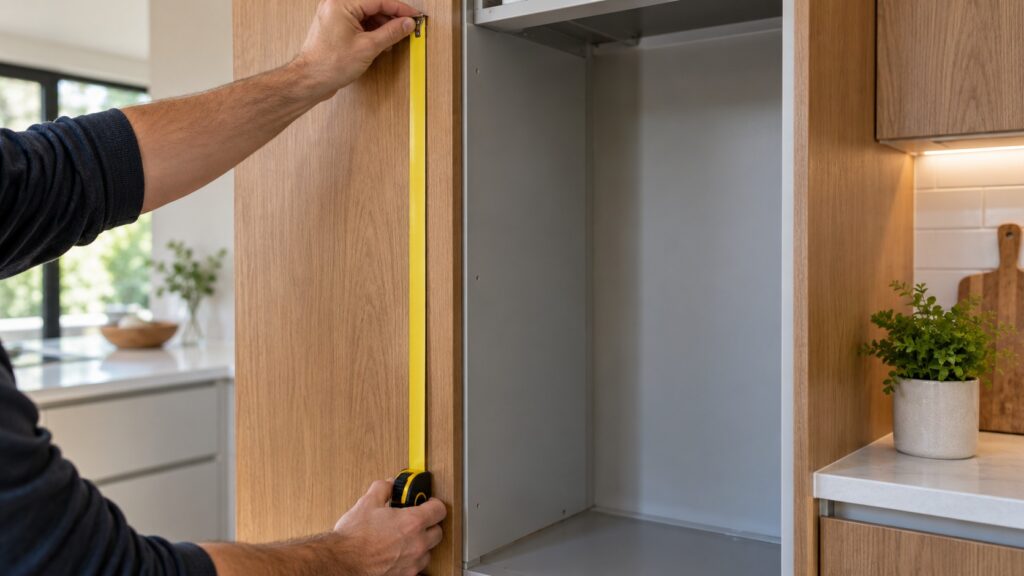
A column or built-in unit sits in a niche cut to the model’s opening, and the panel must clear the niche on every side. Our Monolith column installation guide describes the niche requirements for columns, and our guide to combining Monolith columns covers what changes when two units sit side by side. Several panels in a row need matching gaps, so the installer sets the first and works from it. The model’s installation manual gives the clearances the niche needs.
What goes wrong with panels?
The common problems are weight, alignment and ventilation. A heavy panel makes the door drop; a panel that is not square rubs on the cabinet next to it; and a panel that covers a ventilation opening or a grille traps heat. Check the manual for any opening that must stay clear, and never cover it with trim. Another problem is the door that no longer closes by itself after fitting, which usually points to the level or the load. If the door will not close properly, see our guide to condensation inside a Liebherr fridge, because a door that sits ajar shows up as moisture before anything else.
Do not drill into the appliance door or adjust the hinge hardware to correct alignment. Those are the parts that carry the load, and a wrong adjustment can damage the seal or the door. Call the installer or a technician.
When should you call a technician?
Call if the door sags after fitting, if the gaps cannot be made even, if the door does not close by itself or if you see frost or moisture around the door. Tell them the model number and the weight of the panel. Our refrigerator repair page explains how a visit works.