
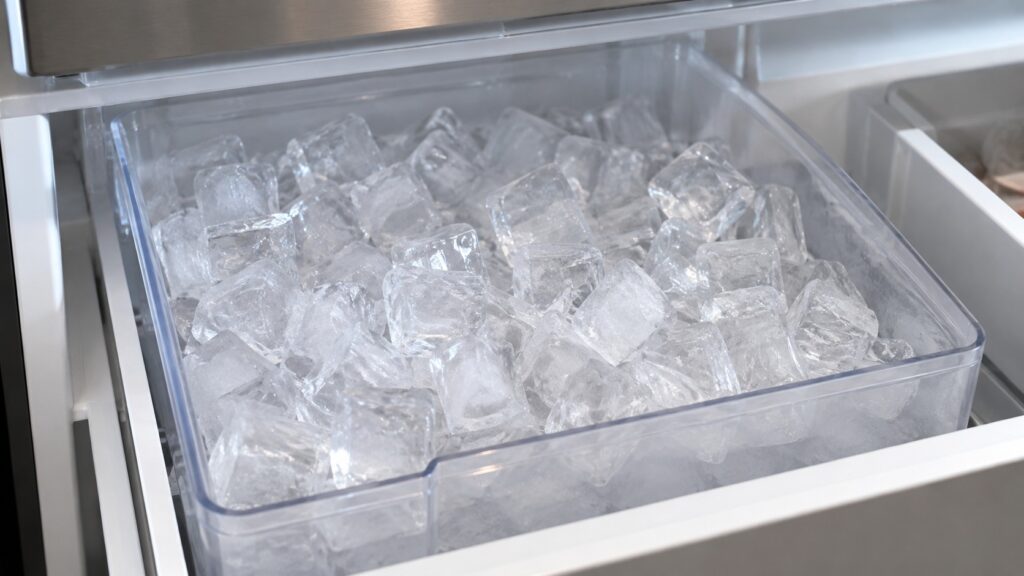
These Liebherr IceMaker clear ice tips are mostly a matter of habits rather than deep cleaning — the cleaning routine itself is a separate, occasional task, but small daily and weekly habits do more to keep every batch of ice clear than any single cleaning session. Cloudy, small, or off-tasting cubes are usually the result of water sitting too long, a filter running past its service life, or ice piling up faster than it is used, and all three are easy to prevent once you know what to watch for.
Why does ice go cloudy even when the machine seems fine?
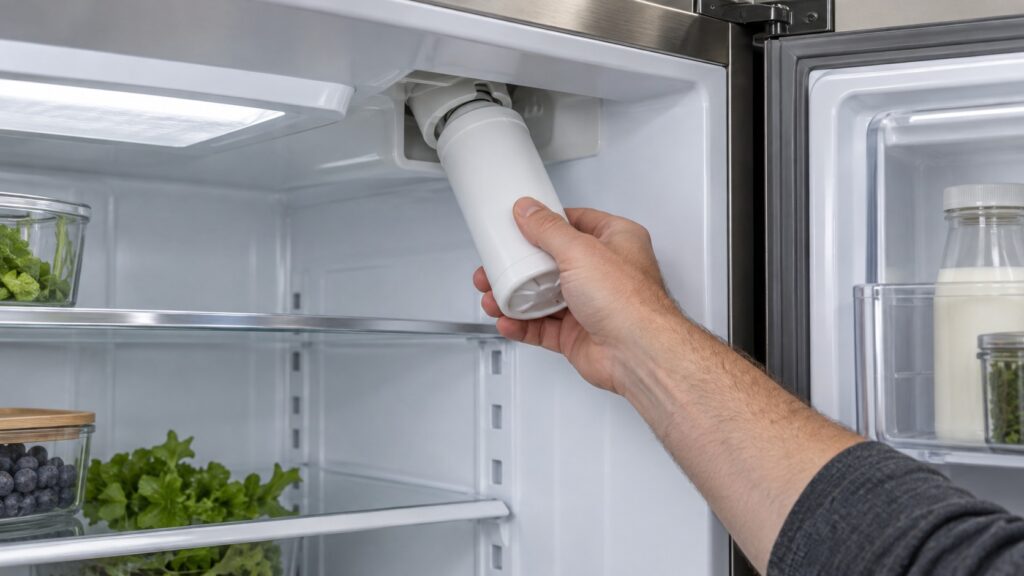
Cloudy ice almost never means the IceMaker mechanism is broken. It is a water-quality effect: minerals and trapped air in tap water get concentrated as water freezes from the outside in, and they end up clouding the center of the cube. A fresh water filter reduces the minerals that cause this, which is why replacing an overdue filter is the first and most effective habit for clearer ice — far more effective than anything you can do to the ice-making mechanism itself. If your water supply is naturally high in minerals, expect some cloudiness even with a fresh filter; that is a water-hardness limit, not a machine fault.
It helps to separate two things people often lump together: cloudiness and safety. Cloudy ice from trapped minerals is a cosmetic and taste issue, not a health concern, and plenty of perfectly safe tap water produces slightly cloudy ice simply because of its natural mineral content. If you want consistently clear cubes regardless of your local water hardness, a filter rated for the specific minerals in your area — rather than a generic replacement — makes a bigger difference than switching brands of filter at random.
How often should you actually use the ice, not just make it?
An IceMaker that produces ice faster than your household uses it is setting up its own quality problem: ice sitting in the bin for days slowly loses moisture to the surrounding freezer air, shrinks slightly, and can pick up odors from other frozen food nearby. The simple habit that prevents this is cycling the bin — using ice regularly enough that it does not sit for more than a week or two, and if you know you will not need much ice for a while, dumping the existing batch rather than letting it age indefinitely. Fresh ice always tastes and looks better than ice that has been sitting, even from the same machine on the same day. If your household only uses ice occasionally — entertaining a few times a month rather than daily — it is worth dumping and remaking a full bin before an event rather than trusting ice that has been sitting untouched since the last time you used it.
What role does the freezer’s own smell play in ice quality?
Ice is porous enough to absorb odors from strongly scented food stored nearby — leftover takeout, certain vegetables, or anything left unwrapped. This is one of the most common causes of “off” tasting ice that has nothing to do with the IceMaker or the water filter at all. Keeping strongly scented food wrapped or contained, and keeping the ice bin itself covered when the IceMaker’s design allows it, prevents this without any change to the machine’s maintenance schedule.
Does water pressure affect cube size and shape?
Yes, more than people expect. A weak or restricted water supply line gives the IceMaker less water per cycle than it is designed for, which tends to produce smaller, sometimes hollow or thin cubes rather than stopping ice production altogether. If cube size has changed gradually rather than suddenly, check whether anything changed on the water supply side — a partially closed shutoff valve, a kinked line behind the cabinet, or a filter clogging up as it nears the end of its service life are all more likely explanations than a fault in the ice-making mechanism.
Does the season change how ice behaves?
Household water use tends to shift with the seasons, and a home with a private well or older plumbing can see genuine pressure changes between summer and winter that show up first in ice cube size before anyone notices anywhere else. If cube size or output has changed at the same time of year in the past, that pattern is worth noting — it points toward the household’s own water supply rather than the IceMaker itself, and it usually resolves on its own as household water use settles back to normal. Keeping a rough mental note of when ice quality changes, rather than treating every change as a new problem, saves a lot of unnecessary troubleshooting.
Should you throw out the first batch after a filter change?
Yes, and this habit is easy to forget in the excitement of fixing a filter problem. A new filter cartridge, even a genuine one straight from its sealed packaging, releases a small amount of carbon dust into the first water that passes through it, and that first batch of ice can look faintly gray or taste slightly off as a result. This is normal and temporary, not a sign the new filter is faulty. Running the machine through one or two discard cycles — letting it make and dump a batch before keeping the next one — clears this out completely and gets you to the clear, clean-tasting ice a fresh filter is supposed to deliver, rather than judging the filter on that first, unrepresentative batch.
What habits actually make a difference?
- Replace the water filter on schedule — this is the single biggest lever for clear, good-tasting ice.
- Use ice regularly rather than letting a full bin sit for weeks between uses.
- Keep strongly scented food wrapped in the same freezer compartment as the ice bin.
- Dump and restart a batch if ice has visibly clumped or shrunk, rather than adding fresh cubes on top of old ones.
- Watch cube size for gradual changes as an early sign of a water-supply issue, before it becomes a bigger problem.
If you have kept up with these habits and ice quality still has not improved, or production has slowed noticeably, the issue is more likely mechanical than habitual — our IceMaker cleaning guide covers the deeper seasonal clean, and our IceMaker troubleshooting guide walks through diagnosing a genuine fault. If a repair looks likely, our IceMaker repair-or-replace guide can help frame that decision, and you can schedule a visit for a hands-on diagnosis.