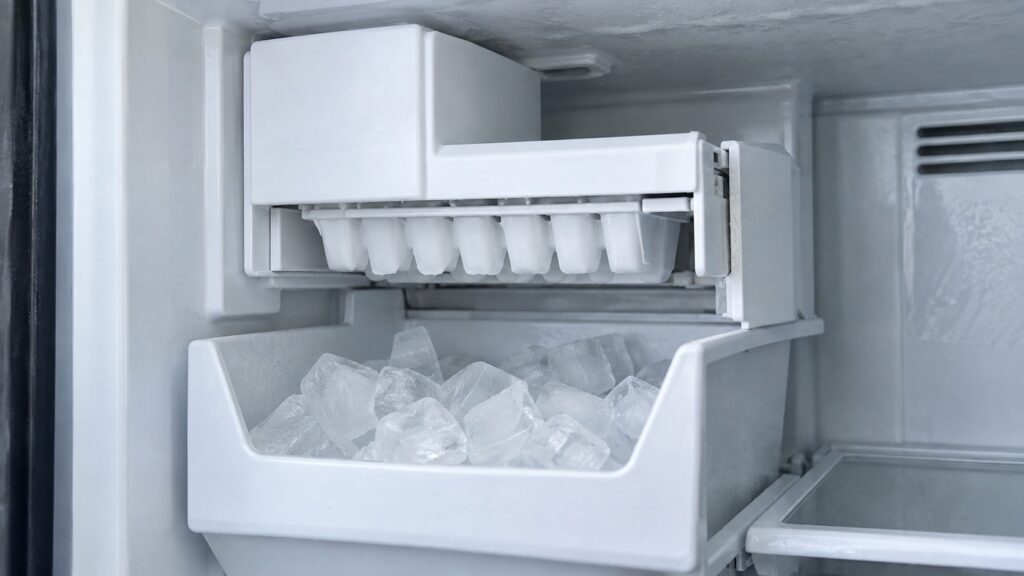
A Liebherr ice maker repair or replace question rarely means replacing the refrigerator. In most cabinets the ice maker is a module — a fill valve, a mold, a heater, a motor and an arm — sitting inside a compartment that is otherwise healthy, and almost all of it is serviceable. The decision is really about whether the failure is in that module, in the water that feeds it, or in the cooling around it. This guide separates the three.
First: is it the ice maker at all?
An ice maker needs three things — water, cold and a working mechanism — and it stops for a fault in any of them. Before deciding anything, establish which is missing.
No water arriving points at the supply: a closed shutoff, a kinked line, a spent filter, a failed fill valve, or a line frozen where it enters the cabinet. Water arriving but no ice forming points at the compartment temperature. Ice forming but not ejecting points at the motor, the arm or the mold heater. Our guide on ice maker troubleshooting walks each of those in order.
The cheap causes, in the order they occur
The filter. A filter past its life restricts flow enough to starve the mold. It is the most common cause of small, hollow or missing cubes, and the cheapest thing on the list — our guide on filter replacement covers it.
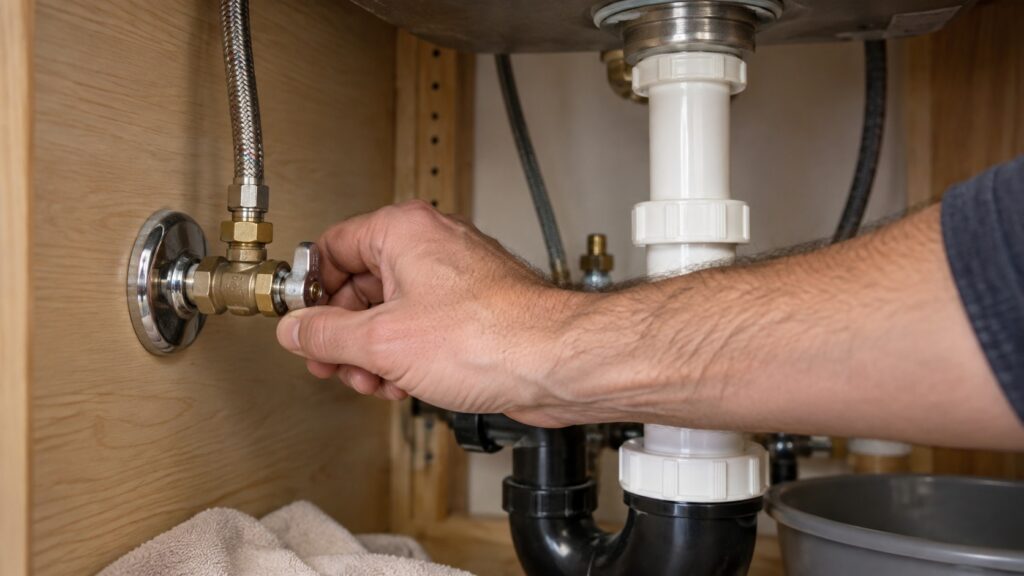
The shutoff and the line. Valves get knocked closed when something is stored under the sink; lines get kinked when the appliance is pushed back after cleaning.
A frozen fill tube. Water left in the tube can freeze and block the next fill, and the fault returns until the reason — usually a slow fill or a compartment running too cold — is addressed.
The arm or sensor. The mechanism that stops production when the bin is full can stick, and an ice maker that thinks the bin is full makes nothing at all.
When the module itself has failed
If the supply is good and the compartment is cold, the fault is in the module, and the honest comparison is module cost plus labor against the value of having ice at all. On most cabinets that is a straightforward repair with a part that comes out as one assembly, and it is worth doing on any appliance that is otherwise sound.
Two situations change the arithmetic. If the module for a discontinued model is no longer supplied, the decision is made for you — either live without ice or replace the appliance when its time comes anyway. And if the module has already been replaced once and failed again quickly, something upstream is causing it: water quality, pressure, or a compartment temperature problem that nobody has addressed.
When the real problem is the cabinet
Each of those is a refrigeration question wearing an ice maker costume, and fitting a new module to a warm compartment produces a new module that makes no ice. Our guide on a fridge that is not cooling is the right place to start when the freezer is part of the complaint.
Age matters less on an ice maker than on almost any other part of a refrigerator, because the module is a self-contained assembly that gets replaced rather than worn in place. A twelve-year-old cabinet with a fresh module makes ice exactly as well as a new one, provided the compartment holds temperature and the water is clean. What ages badly is the plumbing around it — a supply line that has been kinked and straightened a dozen times, or a valve that no longer closes fully — and those are worth replacing at the same visit rather than waiting for each in turn.
Living without it, honestly
There is a third option that rarely gets said out loud: switch the ice maker off, shut its water, and use trays. On an older appliance where the module is expensive or unavailable, that is a reasonable decision rather than a defeat — and it is much better than leaving a half-working ice maker plumbed in, because the failures that leak do so slowly and into cabinetry.
If you do that, shut the supply properly at the valve rather than just switching the ice maker off at the panel, and empty and dry the bin so it does not become a source of odor.
Getting a decision you can trust
Ask for four things from the diagnosis: which of the three systems failed, what the part costs, what the labor costs, and whether anything upstream — water pressure, filter history, compartment temperature — caused it. A technician who answers all four leaves you with a decision rather than a quote.
One habit prevents a repeat of whatever failed: change the water filter on schedule afterwards. Most ice maker failures that arrive twice are a water problem that was never addressed — a spent filter, a restricted line, or hard water that scales a valve. Fixing the mechanism without fixing the supply is how an owner pays for the same part twice, and a filter costs a fraction of the second visit.
When to call
Call when there is no ice with a fresh filter and an open valve, when cubes are small or hollow, when ice forms but will not eject, when the same module has failed twice, or when water appears where it should not. Fill valves, mold heaters and frozen fill tubes are quick for a technician and awkward for an owner with a hairdryer.
We are an independent repair company and not a factory service arm. Pricing starts from a diagnostic visit, and we confirm the estimate before any work begins. Liebherr refrigerator repair covers ice makers, fill valves, defrost systems, sensors and controls, and you can schedule a visit online.