Liebherr ice maker cleaning is the maintenance job that decides whether the ice tastes of water or of the refrigerator it came from. An ice maker is a small water appliance living inside a cold cabinet: it has a supply, a valve, a mold and a bin, and every one of those collects something over time — minerals from the water, odors from the air, dust from the room. This guide covers the routine, the water side, and the symptoms that mean something more than cleaning is needed.
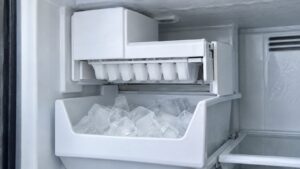
Start with the bin, because that is where taste goes wrong
Ice sitting in a bin for weeks slowly sublimates, shrinks, fuses into a block and takes up whatever the cabinet smells of. None of that is a fault, and all of it is fixed by turning the ice over regularly.
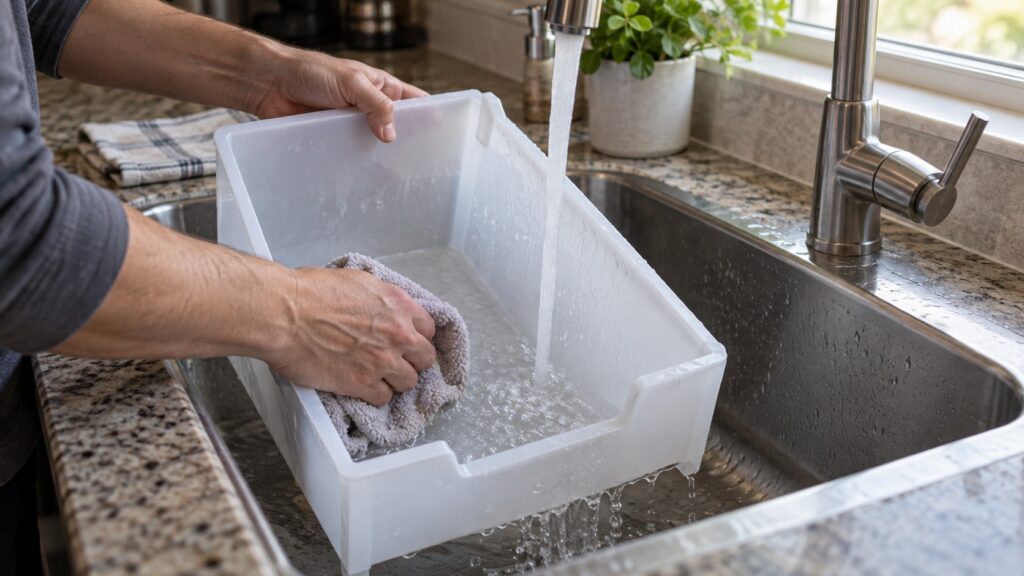
Once a month, empty the bin completely, wash it with warm water and a little baking soda, rinse it, dry it fully and put it back. Do not use dish detergent with a fragrance and never use bleach — both leave a residue that the next batch of ice will carry into every glass. If the bin has a removable arm or scoop, wash them at the same time and keep the scoop outside the bin afterwards.
The water side
Everything the ice tastes of that is not the cabinet comes from the supply. A filter improves taste and reduces the mineral load that scales up a mold and a valve — and a filter left in past its life stops filtering while everyone assumes it is working. Change it on schedule and write the date somewhere you will see it. Our guide on water filter replacement covers the procedure.
After a filter change, discard the first two or three harvests. The line has air in it and the new filter sheds a little carbon at first, and neither belongs in a drink. The same applies after any plumbing work in the house.
Reading the ice
The third row surprises people. Ice absorbs odor from the air around it, so an ice maker in a cabinet with a saturated charcoal filter produces ice that tastes of dinner — and changing the water filter will not help. Our guide on the FreshAir filter covers the air side.
One more reading worth knowing: ice that comes out with a white powdery film, or that leaves sediment in the bottom of a glass as it melts, is carrying minerals rather than dirt. That is water hardness, and the answer is filtration rather than cleaning. In a house with genuinely hard water, a whole-house softener or a dedicated filter on the refrigerator supply does more for the ice than anything you can do inside the cabinet.
When to stop cleaning and start diagnosing
Cleaning fixes taste and appearance. It does not fix production. If the machine makes no ice at all, makes far less than it used to, or leaves water where ice should be, the checks move to the supply valve, the fill level and the mold heater — our guide on ice maker troubleshooting walks them.
Two symptoms deserve urgency rather than a schedule: water on the floor, and ice fusing into a solid mass repeatedly right after being cleared. The first is a supply or drain problem that will find its way into cabinetry; the second usually means the compartment is warming and refreezing, which is a cooling question rather than an ice one.
Shutting one down properly
If the appliance will stand unused — a vacation home, a long trip, a kitchen renovation — do not simply switch it off. Turn off the water at the shutoff, empty and dry the bin, and leave it clean and open if the appliance itself is being switched off. Standing water in a warm, closed ice maker is how a machine develops a smell that takes weeks to get rid of.
On return, discard the first few harvests as you would after a filter change, and run the ice for a day before trusting it in a drink.
Small habits, big difference
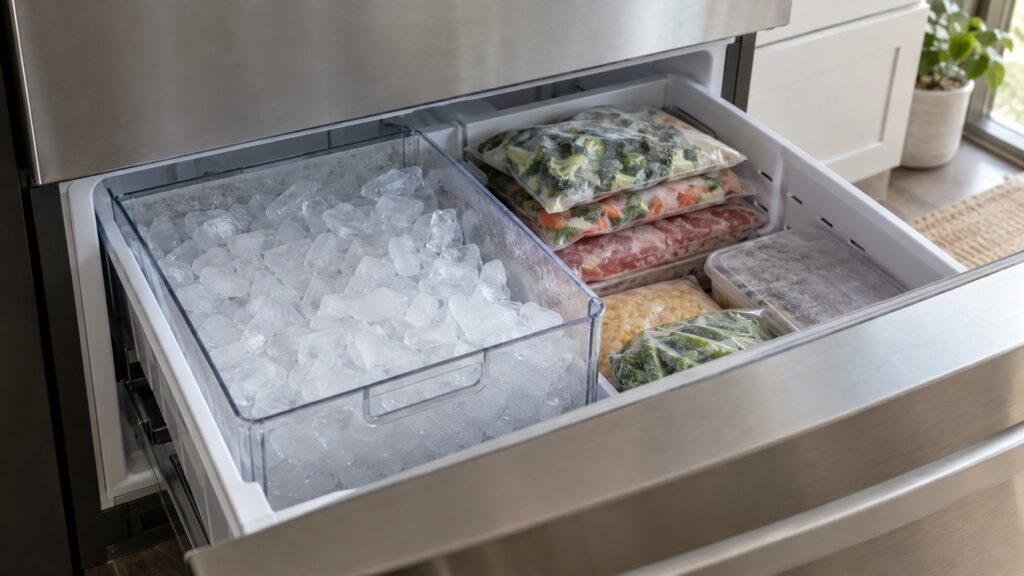
Do not store food in the ice bin, however convenient it looks in a hurry. Do not tip store-bought ice into it, because that ice arrives wet and fuses the whole bin into a block. Close the door properly — a door left ajar warms the bin and starts the fusing cycle. And keep an eye on how quickly ice is used: a household that makes more than it uses is the household that gets complaints about taste, because the ice at the bottom of the bin has been there since spring. The wider refrigeration routine is in our guide on annual maintenance.
Finally, keep the bin’s own routine separate from the appliance’s. It is tempting to clean the ice bin during a big kitchen clean and then forget it for six months; a short monthly turnover works better than a thorough annual one. Ice is a food, it sits in an open container, and the only thing standing between it and every smell in the kitchen is how often it gets replaced.
When to call
Call when production has fallen with a fresh filter and good supply, when cubes are consistently small or hollow, when water appears under or behind the appliance, or when ice keeps fusing after the bin has been cleaned. Fill valves, mold heaters and supply lines are quick work for a technician and awkward for an owner.
We are an independent repair company and not a factory service arm. Pricing starts from a diagnostic visit, and we confirm the estimate before any work begins. Liebherr refrigerator repair covers ice makers, fill valves, filters, sensors and controls, and you can schedule a visit online.