The Liebherr climate class SN N ST T is a rating that says what room temperature a refrigerator or freezer is designed to work in. The letters name four standard classes: SN for extended temperate, N for temperate, ST for subtropical and T for tropical. Each class covers a range of surrounding air temperatures, and a refrigerator placed in a room outside its class can run constantly, struggle to hold temperature or, in a cold room, let a freezer warm up.
What is a climate class on a refrigerator?
A refrigerator does not cool in a vacuum. It pulls heat out of the cabinet and releases it into the room, and how hard it has to work depends on how warm that room is. The climate class is the manufacturer’s statement of the room conditions the appliance was designed and tested for. A model rated for a given class is meant to hold its set temperature anywhere inside that class’s range of room temperatures.
The class is a property of the appliance, shown on the rating plate along with the model number. Our model number decoder explains where the plate sits and how to read the model, and the class is printed nearby. The specific temperatures each class covers are in the owner’s manual, so we do not repeat them here.
What do SN, N, ST and T stand for?
These four letters are the standard classes used on refrigeration appliances in general, not a Liebherr invention. SN is extended temperate, N is temperate, ST is subtropical and T is tropical. The classes run from a cooler room to a hotter one, so a tropical-class appliance is built for a warmer room than a temperate one. Some appliances carry more than one class on the plate, which means they cover the combined range. Read the plate rather than guessing from the model name.
The letters are climate-class labels only. Do not read them as part of a model number: letters in a model name do mean something to the manufacturer, but we only decode what the manufacturer’s own pages state. A climate class is the one set of letters that is meant to be read the same way on every refrigerator.
Why does the room temperature matter so much?
Two things happen as the room warms. The heat has to leave the cabinet through the coil at the back or underneath, and it leaves more slowly into warm air. The compressor therefore runs longer to deliver the same cold. Past the limit the design allows, the appliance can no longer keep up, and the inside warms slowly even though nothing is broken. Our Liebherr fridge not cooling guide lists the checks to make before assuming a fault, and room temperature belongs on that list for any appliance in a hot space.
The reverse problem exists in a cold room. The control sees a cold room, and a cabinet designed for a warm kitchen may cycle less, so the freezer compartment can warm up. This is not a fault; it is an appliance being asked to work outside its range. Our installation and clearances guide makes the same point about garages and unheated basements.
How do you find the class on your own refrigerator?
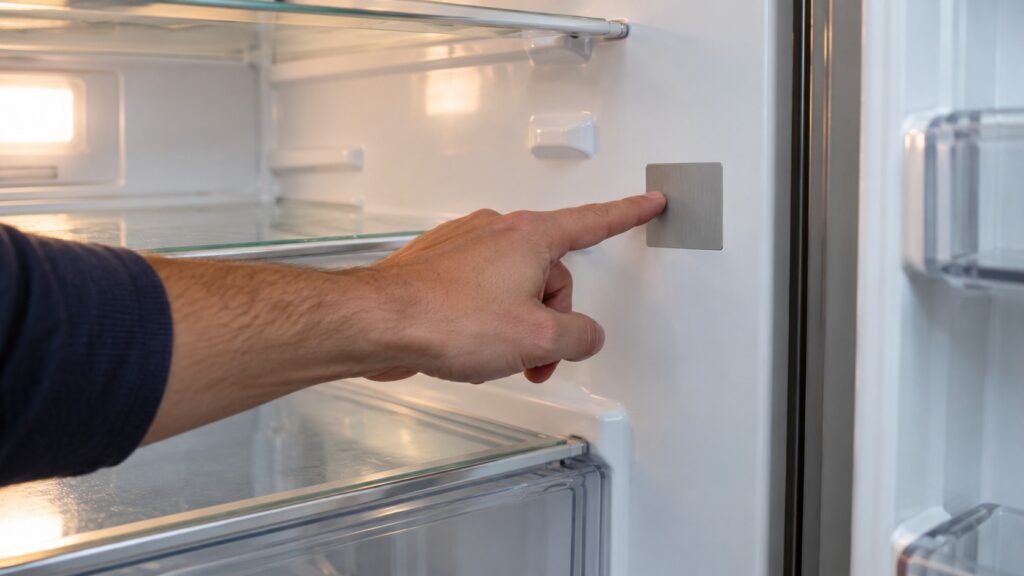
Look for the rating plate. On many refrigerators it is inside the cabinet on a side wall or near the top, and on others it is on the back or at the base of the door opening. It lists the model, electrical data and the climate class. Take a photo of it with your phone so you have the details when you order a part or talk to a technician. The owner’s manual also lists the class and the room range it covers.
If you cannot find the plate, or the print is too small to read, a technician can read it on a visit. Do not move a heavy cabinet to look at its back. The class is not the only thing on the plate that matters, and the same photo helps with ordering shelves and seals, which are matched by model.
What if your room does not match the class?
Match the appliance to the room where you can. If a refrigerator is going into a garage, a porch or a very warm utility room, check that its class covers the room before it goes in, because an appliance not designed for that range will run long and may not keep its set temperature. In an unheated space the problem is cold, not heat. If the room is outside the class, the solutions are to move the appliance, to change the room, or to choose an appliance whose class fits.
Do not try to fix a class mismatch by adjusting the temperature setting alone. The setting tells the control what to aim for; it cannot make a design work outside its range. For help with settings, our guide to Liebherr temperature settings explains what the numbers mean.
Does the climate class change how you buy or install?
It should be part of the decision. Place a built-in or integrated appliance in a niche that traps heat and the room around the cabinet is effectively warmer than the kitchen, which is another reason to follow the clearances in the manual. A wine cabinet in a hot sunroom, a second refrigerator in a hot garage and a freezer in a basement all deserve a look at the class first. For a first look at what fits a given room, see our integrated versus freestanding comparison.