How long does a Liebherr fridge last? Our own repair-or-replace guide for refrigerators uses a planning range of about 13 to 17 years. That is a rule of thumb from our page, not a warranty or a promise for your cabinet, and it comes with an important caveat: what decides the real number is not the calendar but which part wears out first, how the unit is installed and how well it is looked after. This guide lists what tends to wear first and how to tell a repair from the end of the line.
What does a Liebherr fridge lifespan really depend on?
Three things: the design, the installation and the care. The design includes the components fitted to your model; a Monolith column with SoftSystem hinges and a SmartDeviceBox has more parts that can age than a plain freestanding unit. The installation includes clearance for air, a level cabinet and the room temperature. The care is the routine that keeps dust off the condenser and the gasket sealing.
The same repair-or-replace page makes the point from the other side: for any repair that is not the compressor, on a unit under about 12 years old, repair almost always makes sense. Age matters, but it is the failed part that decides whether an old refrigerator deserves another few years. The decision path for Liebherr specifically is in repair or replace your Liebherr fridge.
What wears out first on a Liebherr refrigerator?
These are parts that commonly need attention before the cabinet itself does.
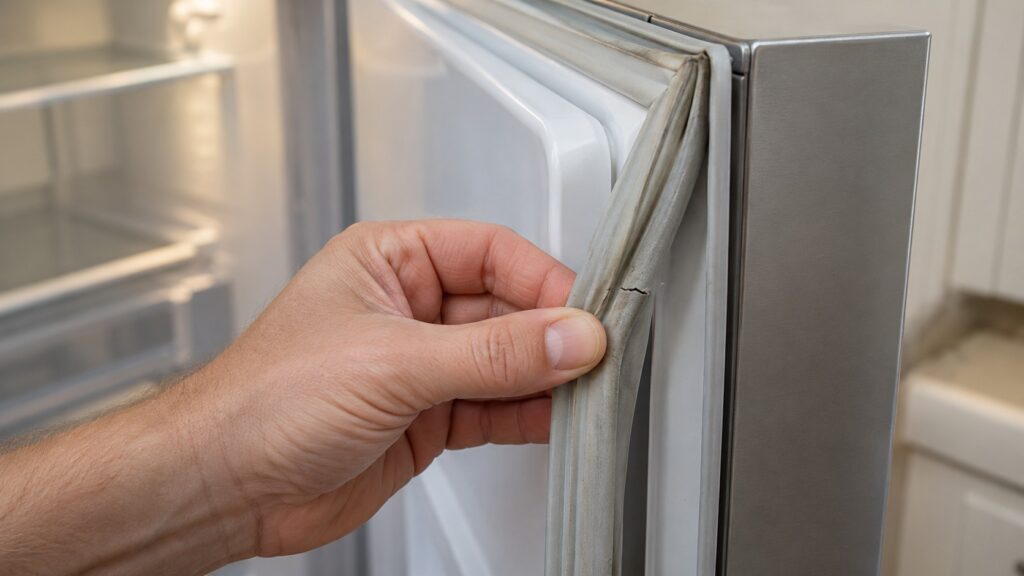
- Door seals. The rubber gasket hardens, tears or deforms with age. A failed seal forces the appliance to run continuously and still struggle to hold temperature. Our door seal replacement guide describes the paper test and the signs: condensation or frost near the door edge, a door that does not stay shut and a fridge that runs constantly.
- Water filter and ice maker parts. On models with an ice and water system, the cartridge needs replacing roughly every six months per our water filter replacement guide. Ice maker problems are usually a module, a valve or a supply issue, and almost all of it is serviceable.
- SoftSystem hinges on Monolith columns. The soft-close damper can pick up dust and grease over years; our SoftSystem hinge care guide says a slamming or uneven close is wear worth checking, not normal aging.
- Sensors and electronics. Temperature and evaporator sensors, fans and control boards fail on units of any age and are typically repairs; see the refrigerator error codes guide.
- The sealed system. The compressor and refrigerant circuit are the last major component; problems here are never do-it-yourself.
What shortens or extends the life of a Liebherr?
Dust on the condenser is, in our annual-maintenance guide’s words, the single biggest cause of poor efficiency and avoidable wear. A clean coil and good seals mean the compressor cycles less, which saves energy and extends the life of the appliance. Our annual maintenance checklist takes about twenty minutes: vacuum the condenser, wipe the gaskets, clean the interior and BioFresh drawers, clear the defrost drain and confirm the set temperatures of about 39°F (4°C) for the fridge and 0°F (-18°C) for the freezer.
Installation matters just as much. An appliance boxed into a tight alcove recirculates its own warm air and works harder for the same result, which wears it faster without ever showing a fault. Built-in units depend on a clear ventilation grille, and an unlevel cabinet can stop doors from closing on their own. A refrigerator in a very hot or very cold room is working outside the range it was designed for.
At what age does replacing become the better choice?
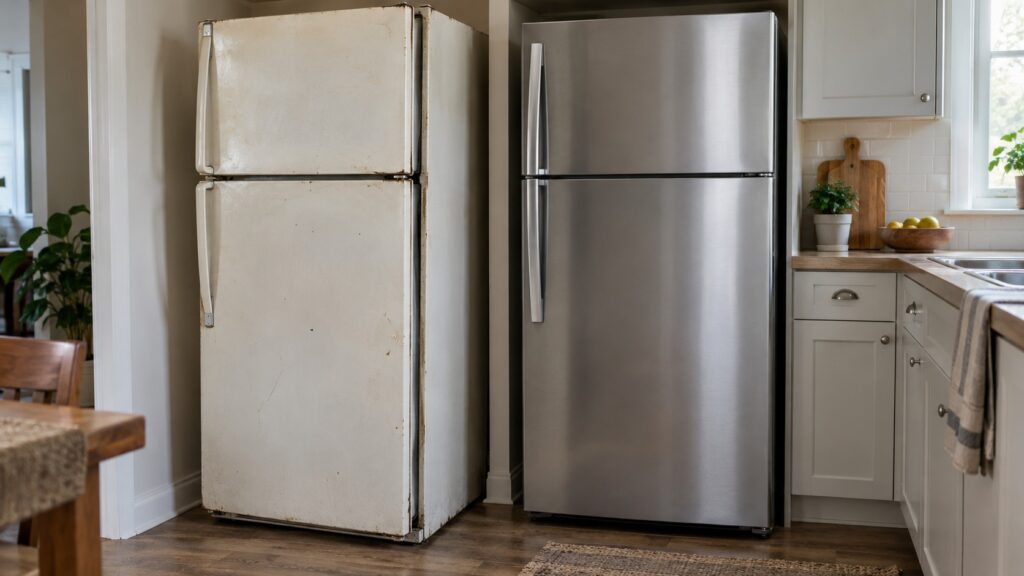
That repair-or-replace page describes a sliding scale for the most expensive repair, a compressor. At 0 to 7 years, repair; at 8 to 12 years, case by case, depending on the seals, the electronics and any sign of corrosion on the evaporator or condenser; at 13 years or more, the page leans toward replacement because a unit that old may need other work within about two years. These are guidelines, not rules. A built-in unit changes the math, because replacing it can mean cabinetry work and a costly matched unit.
Signs that replacement is overdue, per the same page, include rust on interior walls or around the hinges, a compressor that runs continuously even after the coils are cleaned, a refrigerant leak that recurs and interior condensation that will not resolve. For a Monolith or integrated unit, repair or replace a Monolith explains why repair usually wins.
How do you find out where your own unit stands?
Start with the rating plate. The full model name and serial number tell you the family, the size class and the generation, and they are what get the right part ordered; our model number decoder shows how to read them. Then get a written diagnosis rather than a guess. A diagnostic visit tells you what has failed and whether the rest of the cabinet is sound, and you can compare a repair quote with a realistic replacement figure, including cabinetry for a built-in. You can read how this works on Liebherr refrigerator repair.