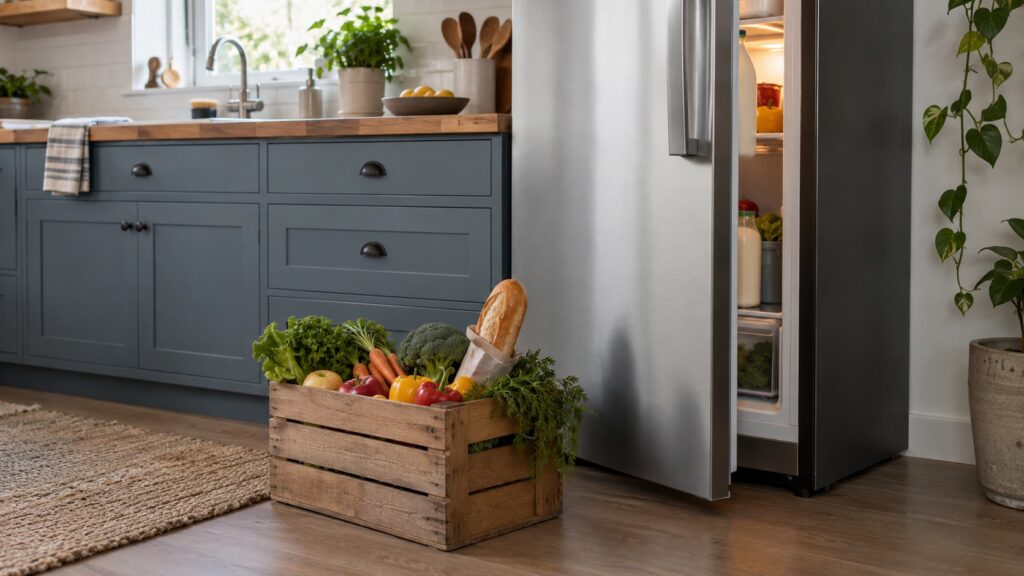
When a Liebherr fridge door won’t close properly, the cause is usually something simple: a bin, shelf or package sticking out and holding the door, a drawer that is not pushed fully home, a cabinet that is out of level, or a gasket that is dirty or damaged. Check what is physically in the way first, then the level, then the seal. If the door still stands ajar after that, the door or hinge may need adjustment, which is a technician’s job.
Why will a Liebherr fridge door not close?
A refrigerator door is meant to swing shut and seal, helped by a cabinet that leans very slightly back and by a gasket that grips the frame. Anything that interrupts that stops the seal. The causes fall into a short list: an obstruction, a drawer that is out of position, a level problem, a seal problem and a door or hinge problem. Work through them in that order, because the first ones take seconds and the last needs a visit.
Do not ignore a door that stays slightly open. Warm, humid air flows in, and the cabinet works harder and may sound an alarm. Our guide to the Liebherr fridge door alarm explains what the beeping means and how to stop it by fixing the cause, not silencing it.
Is something blocking the door?
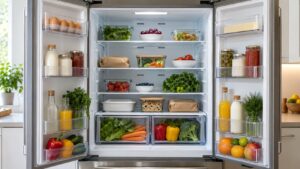
Look at the edges. A door bin loaded with heavy bottles can bulge outward. A tall bottle or a box on a shelf can stick out past the front and touch the door. A shelf that has not been seated properly after cleaning can sit forward and catch. A drawer that is not pushed fully in can hold the door off the frame. Remove the item and try again; if the door now closes, rearrange so nothing protrudes. Our shelf guide shows how a shelf should seat on its supports.
A cracked or broken bin can also be the problem, because a fragment that has fallen behind a drawer can stop it closing. Do not tape a cracked bin. Order a replacement by your exact model, and if a fragment has fallen behind a drawer, take the drawer out and remove it. A drawer that does not close is a temperature problem in addition to a door problem.
Is the refrigerator level?
A cabinet that leans forward lets the door drift open. Put a spirit level on top and check it side to side and front to back, then adjust the feet. Many designs want a very slight backward tilt so the doors close on their own. Our installation and clearances guide covers leveling and the self-closing test: open a door a few inches and let go, and it should swing shut. Also check the floor. A floor that has moved or a loose foot can undo a good level over time.
Is the gasket dirty, torn or hard?
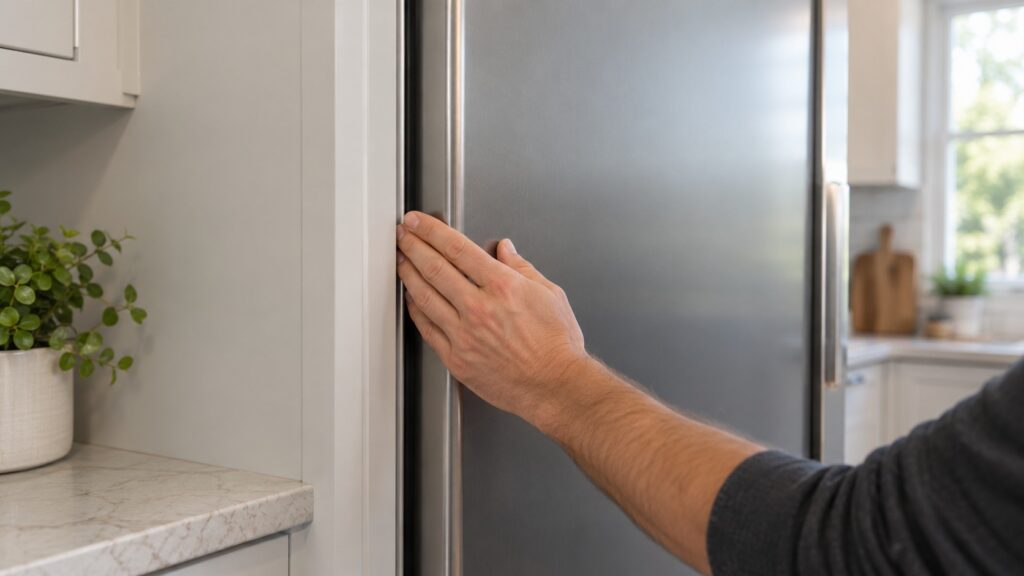
The door seal is the rubber gasket that presses against the cabinet. When it is sticky, a thin film of dried spills can hold the door a hair open. Clean it with warm water and a soft cloth, working into the folds, and dry it. Then run the paper test: close the door on a strip of paper and pull it, at several points. If it slides out easily in one place, the seal is not gripping there. Look for tears, flattened sections or a hardened, misshapen length.
A damaged gasket needs replacing. Our door seal replacement guide describes ordering the genuine gasket for your model, warming the new one so it seats and repeating the paper test. On a heavy, glass or integrated door, have a technician fit it.
Is the door itself out of line?
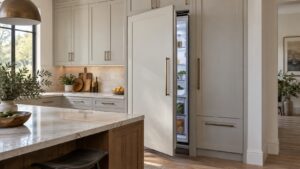
If nothing is in the way, the cabinet is level and the seal is clean, the door may have dropped or the hinge may have worn. Signs are a door that rubs, a gap at the top or bottom corner that differs from the other side, a door that swings on its own or a handle that sits at a different height than before. A heavy load in the door shelves can contribute, and so can a heavy panel on an integrated model. On an integrated model, see our guide to how the two door methods work for why panel weight matters.
Do not try to adjust hinge hardware on a loaded door yourself. A heavy door can drop, and an uneven adjustment can leave the seal worse than before. Empty the door and call for a visit.
What should you do while it is open?
Keep the door pushed to as close to shut as you can while you sort it, and check the temperature of the food. If the cabinet has been open for a while, it may be warmer than it should be. Follow ordinary food-safety guidance on perishables, and see our not-cooling guide if it does not return to normal after the door closes. If water has collected or you see frost, our refrigerator repair page explains how a visit works.
Remember that a door left ajar even briefly adds up. Warm air carries moisture, and moisture becomes frost and wet shelves, so the sooner the cause is found, the less cleaning and food waste follow. If the problem appeared right after a move, a cleaning or a rearrangement, retrace those steps first; the cause is usually the last thing that changed.