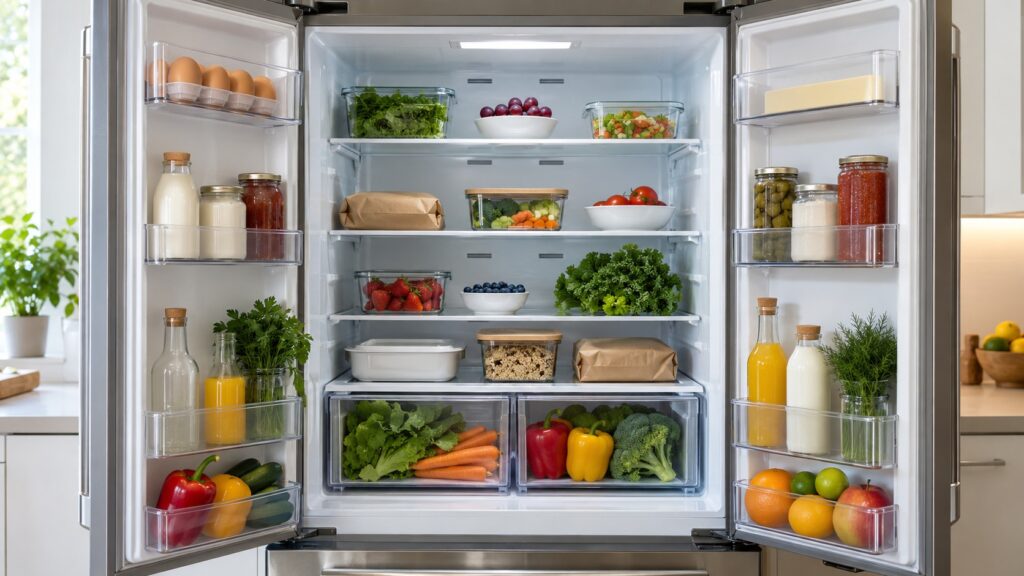
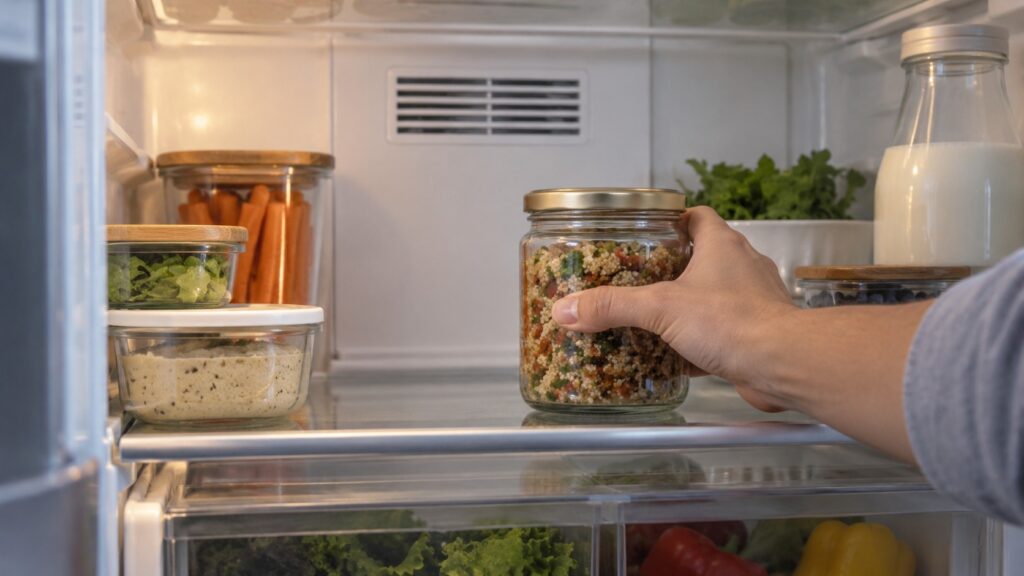
How to load a Liebherr refrigerator comes down to one habit: leave the air room to move. Keep food away from the vents at the back, do not push containers hard against the rear wall, put heavy items low, leave small gaps between packages and let hot food cool before it goes in. A cabinet that can circulate its cold air holds an even temperature from top to bottom, and a cabinet packed tight does not.
Why does loading affect how a Liebherr refrigerator cools?
Many Liebherr refrigerators use a fan to move chilled air around the cabinet so every shelf stays in the same narrow range. Our PowerCooling explanation describes how the fan spreads cold air and helps the cabinet recover after the door opens. The system only works if the air has somewhere to go. A tray pressed against the rear wall, a tall bottle in front of a vent or a stack of boxes filling a shelf from side to side can stop the air before it reaches the next shelf, and the shelf behind the blockage runs warmer.
The temperature sensor reports the temperature where it sits, not everywhere. If a shelf is blocked, the sensor can read fine while the food on that shelf is warmer than you want. This is why the same refrigerator can keep milk well in one position and spoil it faster in another. Before you suspect a fault, look at what is covering the vents.
Where should the heavy and delicate items go?
Place heavier items on the lower shelves for stability. Our guide to Liebherr refrigerator shelves suggests the same and points out that glass shelves carry more safely when the weight is low and toward the middle. Put raw meat and fish on the lowest shelf in a sealed container so that nothing drips onto food below, a standard food-safety habit. Keep ready-to-eat items, such as leftovers, cooked dishes and deli food, above raw items.
Keep the door shelves for items that tolerate more temperature swing, such as condiments, jars and drinks. The door is the warmest part of the cabinet because it meets warm air every time it opens. Milk and eggs do better inside the cabinet than in the door, even though many compartments are designed to tempt you to put them there.
How should you use the drawers?
Many Liebherr refrigerators have humidity drawers. Our glossary of interior features explains the idea: one drawer holds moisture for fruit and vegetables, the other lets it out for meat and fish, and each has a slider that sets how much. Put leafy vegetables and salad in the high-humidity drawer, and meat and fish in the low-humidity one. Putting them the wrong way round produces exactly the complaints owners blame on the appliance.
Do not overfill a drawer, because one that does not close fully lets in warm air and loses its climate. If your model has a BioFresh zone, our guide to how BioFresh works describes the cold, humidity-controlled zone and why it is sensitive to a drifting temperature. What to put in which drawer on your exact model is listed in the manual.
What about hot food, packaging and shopping day?
Let hot dishes cool on the counter before they go in, and cover them. Steam from hot or uncovered food puts moisture into the cabinet, which shows up as condensation on the rear wall. Our guide to condensation inside a Liebherr fridge lists habits like these as the first suspects. Do not leave warm food out for a long time to cool, though; follow ordinary food-safety guidance on how long cooked food may sit out.
On shopping day, unpack with the door closed between trips instead of propping it open. Group items by zone before you open the door so you can load quickly. Take cold items out of bulky outer packaging, since boxes take space and block air. If you are about to put in a very large load, such as party food, give the cabinet a little time afterward to recover before judging the temperature.
How full should the refrigerator be?
A cabinet that is too empty is not a problem, but a cabinet packed to the back wall is. Fill it so air can still pass: leave a gap at the back, keep shelves from being stacked solid and avoid covering shelves with trays or liners that block the openings between shelf and wall. Do not line glass shelves with paper or foil that covers the airflow gaps. If food is piling up, use a second storage place for items that do not need to be cold, such as unopened drinks.
When does a warm shelf mean something else?
If a shelf runs warm even though the vents are clear and the loading is sensible, there may be a different cause: a door that is not sealing, a vent that is iced up or a fan problem. Our Liebherr fridge not cooling guide lists the checks. Do not open panels to look at the fan; that is a technician’s job. If one area keeps running warm or the cabinet is noisy as well, a visit is the next step.
Finally, rethink the load now and then. Habits drift: a shelf that began tidy fills with leftovers, and a vent that began clear ends up behind a milk carton. A quick look at the rear wall when you put the shopping away takes seconds and keeps the airflow working as designed, which is cheaper than any repair and kinder to the food.