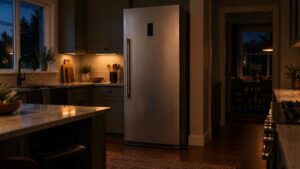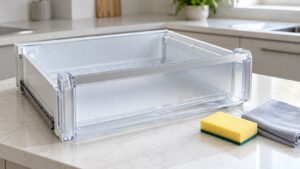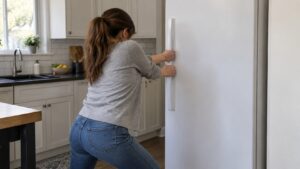
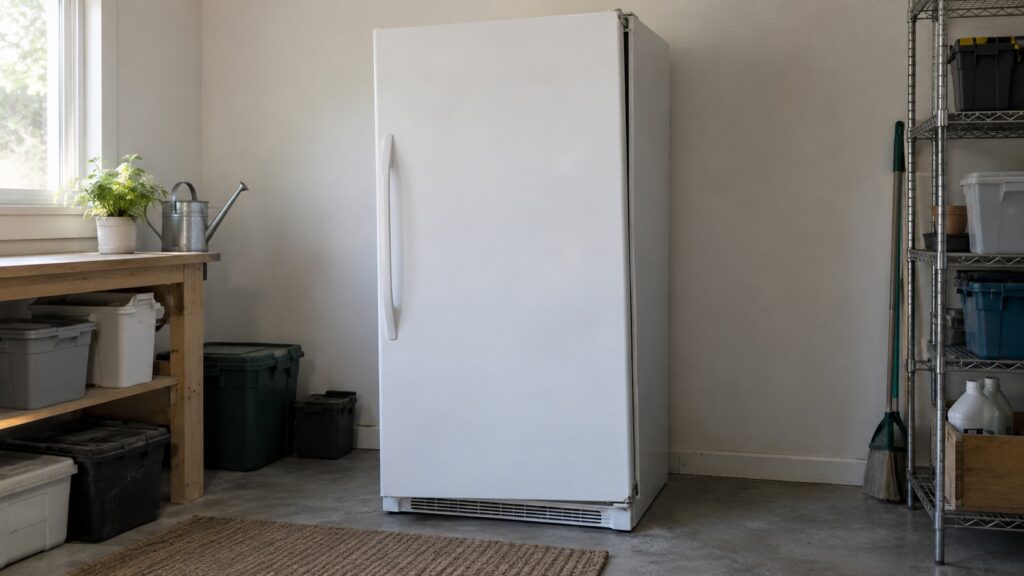
A Liebherr freezer door hinge sagging problem is usually worth repairing, not replacing the freezer. A door that droops, rubs or no longer closes evenly points to a worn hinge, a damaged seal, an overloaded door or a cabinet that has shifted. These are repairable parts on a sound cabinet. Replacement deserves a look only when the cabinet itself is badly damaged or the freezer is very old and has other serious faults. Do not adjust or remove a loaded door yourself.
What does a failing freezer door or hinge look like?
The signs are mechanical and easy to see. The door hangs lower on the handle side and the gap at the bottom corner is wider than at the top. It rubs on the cabinet as it swings. It will not stay shut or swings open on its own. The gasket pulls away at one corner and frost builds in the same place. You may hear a creak or feel a catch as the door moves. A freezer that has a door in this state lets warm, humid air in, and the freezer works harder while frost and ice appear around the opening.
The effect on the food is slower than it looks. The cabinet may seem fine for days, and then frost and warm spots show up. Our guide to the Liebherr freezer door seal describes the same pattern from the seal side, and the two problems often go together, since a sagging door stops the seal gripping.
What causes a freezer door to sag?
The first cause is weight. A freezer door carries bins loaded with food, and a door that is regularly overloaded puts constant stress on the hinge. The second is wear: hinges carry a heavy door through thousands of openings, and over many years the hardware can loosen. The third is a cabinet that is no longer level, which changes how the door hangs; our installation and clearances guide covers leveling and the self-closing test. The fourth is damage, for example a door that has been pushed open too far or leaned on. The fifth, on an integrated model, is the weight of a furniture panel.
Because several causes look alike, a quick check is worth doing before you call. Empty the door shelves, check the level and look at the gasket. If the door improves, the cause was the load or the level. If it does not, the hinge or the door itself is the suspect.
What can you check yourself?
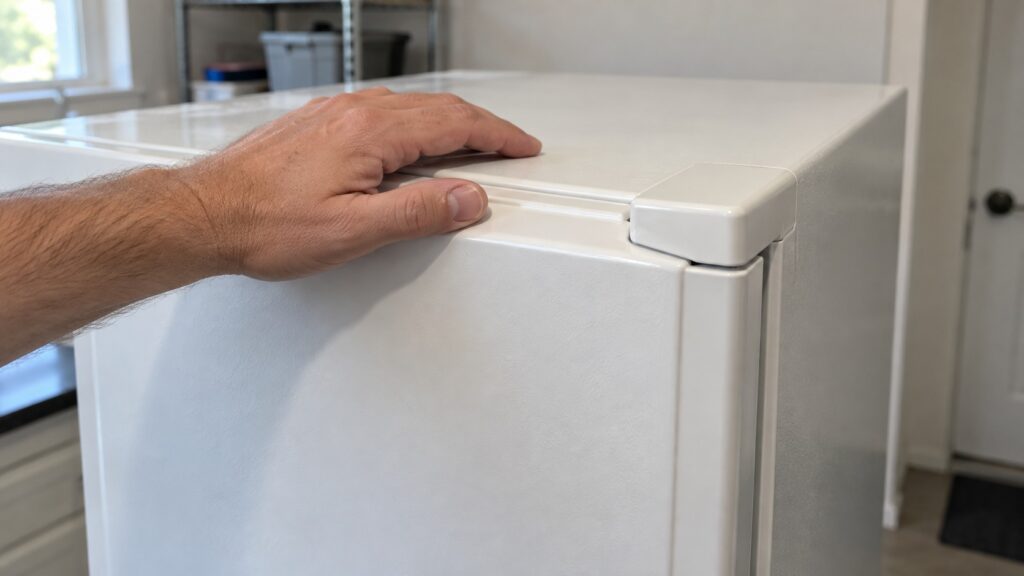
Empty the door bins, because a lighter door tells you something. Check the cabinet is level with a spirit level and adjust the feet if it is not. Clean the gasket with warm water and run the paper test: close the door on a strip of paper and pull it, at several points. See whether the door swings shut on its own when left a few inches open. Take a photo of the gap and the frost so a technician can see the pattern. Do not loosen hinge screws, take the door off its hinges or lift a door that is out of line; it is heavy and can drop or injure you.
If you find frost building around the opening, our guide to defrosting a NoFrost freezer shows how to clear it safely and what else to check, including the seal.
When is repairing the better decision?
Repair usually wins. A hinge, a gasket or an adjustment on a sound cabinet is small compared with a new freezer, and a sound cabinet is worth keeping. Our guide on whether to repair or replace a freezer lists a seal, a fan and a defrost part among the cases where repair is clearly the answer, and the same reasoning covers a hinge. For an integrated or built-in unit, replacement adds cabinetry work, which makes repair more attractive. A technician can tell you whether the part is available for your model and what the job involves.
Ask for a written estimate before any work begins, and ask whether the seal or the door needs attention at the same time, since the parts work together.
When does replacing deserve a look?
Consider replacing if the cabinet itself is damaged, for example a cracked frame that the hinge mounts to, if the freezer is very old and has other serious faults or if the repair approaches the cost of a comparable new unit. Our guide to repairing or replacing a Liebherr fridge shows how to weigh age, condition and the value of the contents. A diagnostic visit gives you the facts for that decision. Do not decide from the symptom alone; a droopy door can have a cheap cause or an expensive one.
What should you tell the technician?
Give the model number from the rating plate, describe when the sag started, whether the door was overloaded, whether anything hit it, and whether frost has formed. Mention if the freezer is built in or has a furniture panel. Our freezer repair page explains how a visit works. Keep the food safe while you wait: if the door will not close, move food to another freezer or a cooler, and follow food-safety guidance on anything that has warmed.