Understanding Liebherr wine refrigeration
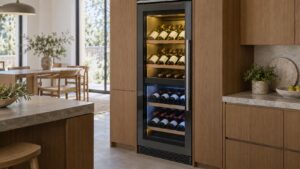
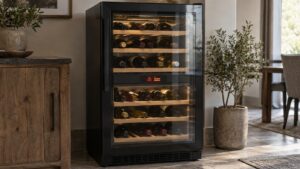
Liebherr wine refrigeration is the brand’s complete family of dedicated wine-storage appliances, engineered to protect wine from the four things that damage it: temperature swings, vibration, light and dry air. Across every series the shared principles are the same — gentle, precise cooling held within a degree, low-vibration compressors that let sediment rest undisturbed, UV-protected insulating glass doors, activated-charcoal filters that keep the air fresh, and controlled humidity so corks stay supple. Where the models differ is in purpose: some are built for decades of single-temperature maturation, others for serving reds and whites at the same time, and others simply for economical bulk storage. You can explore the full wine portfolio on the manufacturer’s site at home.liebherr.com. This overview is the starting point; for the long-term aging units see our Liebherr wine cabinets, and for compact serving coolers see our Liebherr wine fridges.
Single-temperature versus multi-temperature
The central choice in wine refrigeration is how many temperature zones you need. A single-temperature unit holds one steady cellar temperature throughout, which is ideal for laying bottles down to mature over years — this is the GrandCru and Vinothek philosophy. A multi-temperature unit such as the Vinidor line splits the cabinet into two or three independently controlled zones, so you can keep robust reds, delicate whites and sparkling wines each at their correct serving temperature in one appliance. If you collect to age, choose single-temperature; if you collect to serve and entertain, choose multi-zone. Many households end up owning one of each.
The technology that protects your wine
Liebherr wine refrigeration relies on several quiet engineering details. Low-vibration compressors and damped shelving keep bottles still so sediment settles naturally. Tinted, UV-filtering glass blocks the light that breaks wine down, while presentation lighting uses cool LEDs that add no heat. Activated-charcoal FreshAir filters scrub odors from the incoming air, and controlled humidity around 50–80% keeps corks from drying and admitting air. Telescopic beech-wood or wire shelves let you slide heavy bottles out without disturbing neighbors. Because each series implements these features differently, identifying your exact model is the first step in sourcing the right genuine part.
Common wine unit problems
Wine units report trouble mainly through temperature and door alarms plus sensor codes:
- HI / LO — high- or low-temperature alarm; the zone has drifted out of range.
- E0 / E1 / E2 — temperature alarm, often a sensor or fan issue.
- DOR — door-open alarm, usually a misaligned glass door or tired gasket.
- F-series — compartment or evaporator sensor failures.
- Condensation or humidity drift — a gasket, filter or door-seal problem.
For meanings and next steps, see our error code library.
Maintenance essentials
- Replace the activated-charcoal FreshAir filter on the manufacturer’s schedule.
- Keep the unit level and away from heat sources and direct sun.
- Inspect and clean the glass-door gasket so it seals and clears DOR alarms.
- Avoid overloading shelves so air circulates around every bottle.
- Brush dust off the condenser for efficient, quiet cooling.
When to call a professional
Sealed-system problems, compressor noise, control boards and zone-sensor replacements are best handled by certified technicians who can read the alarms and fit genuine parts. Note the exact code and your model number when you book. Diagnostic visits start from $129; final cost depends on parts and configuration. Schedule Liebherr wine refrigeration repair or book online.