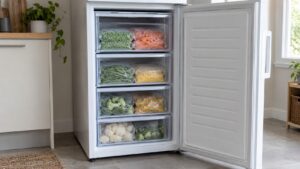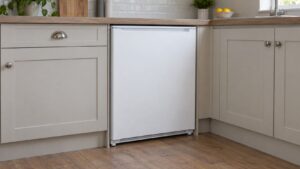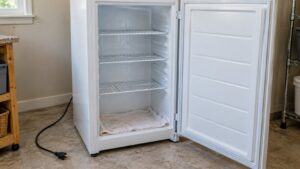
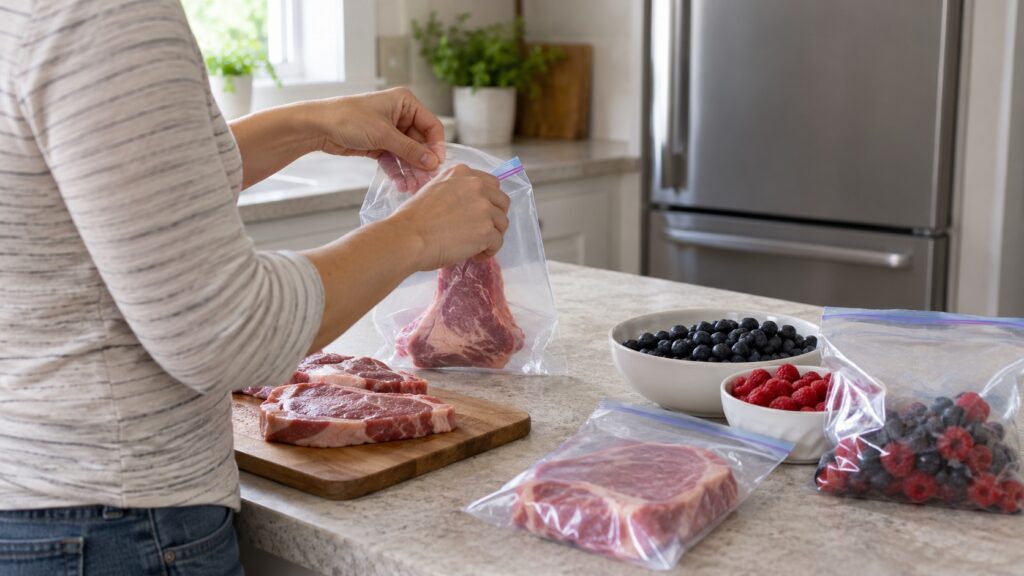
Here is how to freeze food in Liebherr freezer drawers so it keeps its quality: chill or cool it first, portion it into flat, tightly wrapped packages, label each with the date, spread the fresh items out so they freeze quickly, and use SuperFrost before a large fresh load. Keep the doors closed, leave room for air to circulate and move the food together once it is frozen hard.
Why does the way you freeze food matter?
Fast freezing makes small ice crystals, and small crystals do less damage to the structure of meat, fish and vegetables. Slow freezing makes larger crystals, and food thaws with more drip and a softer texture. Our SuperFrost explanation says the same: pulling heat out quickly protects the texture and the food already frozen. So the goal when you freeze fresh food is to get the heat out fast, with packaging and loading that help rather than hinder.
The second reason is safety and waste. Food that is not wrapped properly dries out on the surface, which is freezer burn; food that is not labeled gets forgotten and thrown out. A few simple habits at the counter prevent both.
How do you prepare and portion food for the freezer?
Start with food that is fresh and cooled. Let cooked dishes cool, covered, before they go in, since warm food in the freezer raises the temperature around everything else. Portion into the amounts you will use, so you thaw only what you need; refreezing food that has thawed lowers its quality and, if it sat warm, is unsafe, so avoid it. Trim and pat dry anything that is wet. Wrap it tightly in freezer bags, wrap or containers made for freezing and press out as much air as you can.
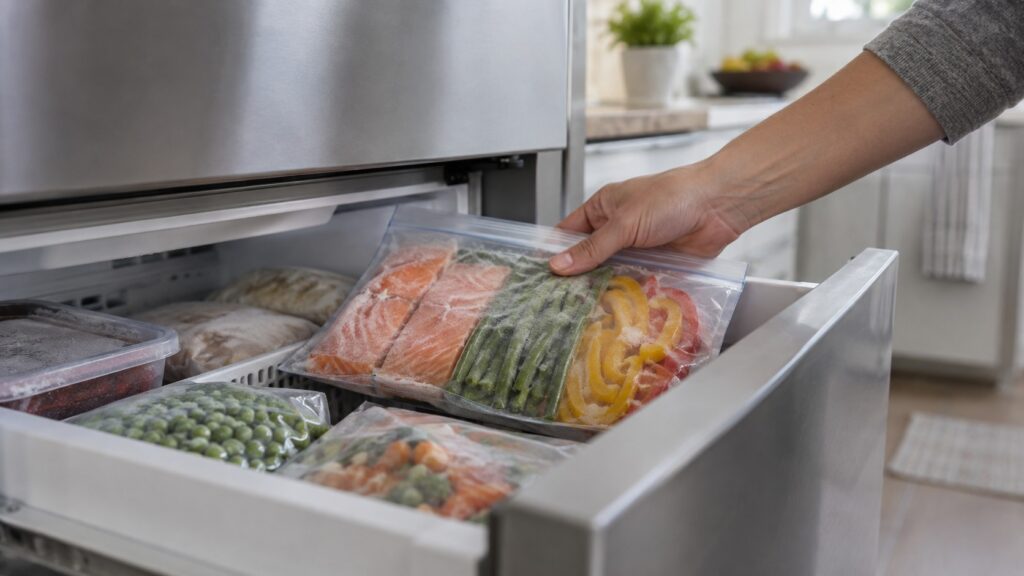
Freeze in flat packages where possible. A flat bag of mince, berries or soup freezes faster than a thick block, stacks neatly and thaws more evenly. Leave a little headroom in rigid containers for liquids, because they expand as they freeze. Write the contents and the date on each package. A simple rotation, newest to the back and oldest to the front, keeps the contents moving, as our upright freezer organization guide suggests.
When should you use SuperFrost?
SuperFrost is Liebherr’s rapid-freezing boost. It takes the freezer colder than normal for a while so a large fresh load freezes quickly, and it switches off automatically after its cycle. For a few small items you do not need it; the freezer handles a modest load fine. Reserve it for a bulk meat purchase, a batch cook or a garden harvest. Switch it on a few hours before you add the fresh food, as the guide describes, and then add the items once the freezer has dropped colder. How to activate it on your model, and how long its cycle runs, is in the manual; our SuperFrost glossary entry has the definition.
Do not leave SuperFrost on permanently. It wastes energy, which is why it cancels itself. Do not put in more fresh food than the freezer can freeze; the freezing capacity is part of the technical data for your model, and a load beyond it freezes slowly in the middle.
How do you load the drawers?
Spread fresh, unfrozen packages out in a single layer so they freeze fast, rather than stacking them in a pile. Once they are frozen hard, you can stack them. Put items you will use often where they are easy to reach, so the door is open for less time. Keep the doors closed as much as you can, because every opening lets warm air in. Do not pack food against the rear vents or the walls; a NoFrost freezer relies on circulating air, as our NoFrost explanation describes, and a blocked vent creates warm pockets. If your model has removable drawers, you can lift out a drawer and a shelf for a bulky item; the manual shows how.
What should you not freeze, or do differently?
Not everything freezes well. Foods with a lot of water, such as lettuce and some raw vegetables, turn soft. Some dairy products and sauces separate. Eggs in the shell should not be frozen. Blanching vegetables before freezing helps them keep color and texture; a good general food-safety source will give the method. Do not refreeze meat that has thawed at room temperature. When in doubt about safety, follow food-safety guidance from the FDA or your local authority and, if in doubt, throw it out.
Food-safety guidance is that a freezer should hold 0 degrees F or colder. Check it with a separate thermometer rather than trusting the display alone, and see our power cut guide for what to do when the freezer loses power.
What if food is not freezing properly?
If packages stay soft, frost builds up fast or the temperature will not hold, look at the causes: an overloaded freezer, a door that does not seal, blocked vents or a fault. Our Liebherr freezer not freezing guide lists the checks. Do not open panels to look at the fan; that is a technician’s job. If the problem persists, our freezer repair page explains how a visit works.
A last habit worth keeping is a short inventory. Note on the door or in your phone what is in each drawer and when it went in, and check it when you shop. A freezer that you can read at a glance is opened less often and for a shorter time, which protects both the temperature and the food, and it makes the next big freezing session far easier to plan.